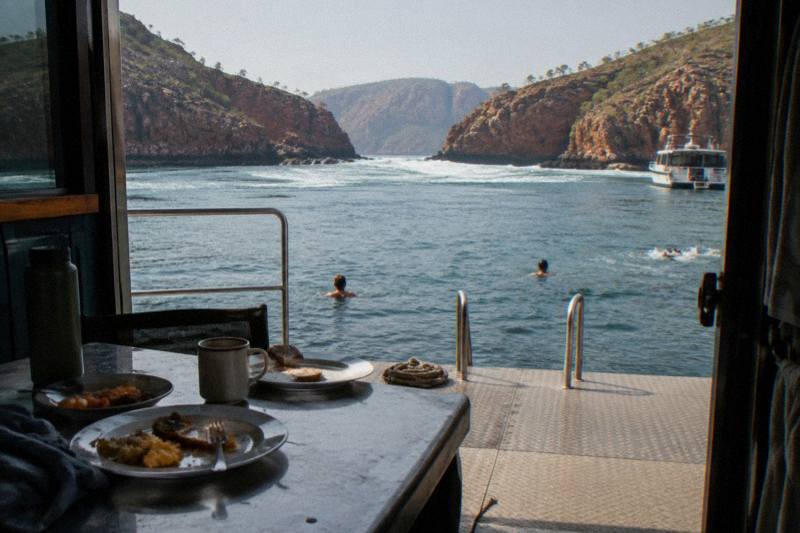
What Is The Kimberley In Australia Famous For?
The Kimberley is famous for the Horizontal Falls, the Buccaneer Archipelago, pearl farming at Cygnet Bay, extreme tides, remote coast, Cable Beach; here is what each one actually is.
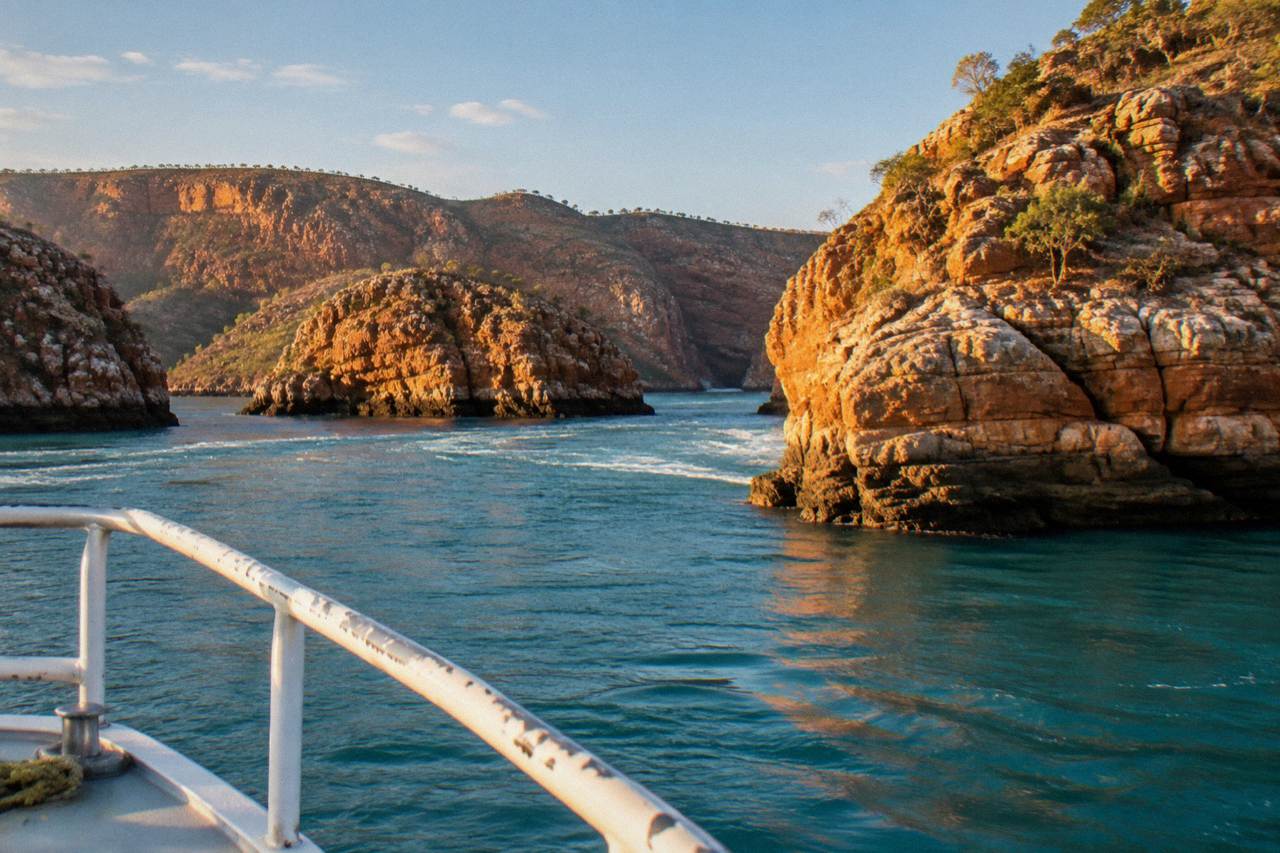
What Is The Kimberley In Australia Famous For?
The Kimberley is famous for the Horizontal Falls at Talbot Bay, where giant tides squeeze through two gaps in the McLarty Range, the Buccaneer Archipelago's scattered islands, pearl farming at Cygnet Bay, the largest tidal range in Australia at nearby Derby, and a very thinly populated coastline. Most of it can only be reached by air or by boat, which is exactly why seaplane and cruise tours dominate the region's tourism. The falls sit about 253 km from Broome by air, a distance that makes organised tours the practical option for almost everyone. If you're weighing up which style of tour suits your budget, our breakdown of what Kimberley cruises actually cost compares day trips to the falls with longer expedition sailings.
The region sits in the far north of Western Australia, and its reputation rests on scale. Tides in the area reach up to 11 metres, according to the WA Department of Transport's boating guide, and the water level on either side of the falls gaps can differ by up to 5 metres. That single fact explains most of what the Kimberley is famous for: the falls themselves, the pearl industry that grew in the tidal bays, and the boat-based tourism that grew around both. If that kind of scale appeals but the remoteness gives you pause, our honest verdict on whether the Kimberley is worth the trip weighs up access, seasons, costs and the tour options that make it work.
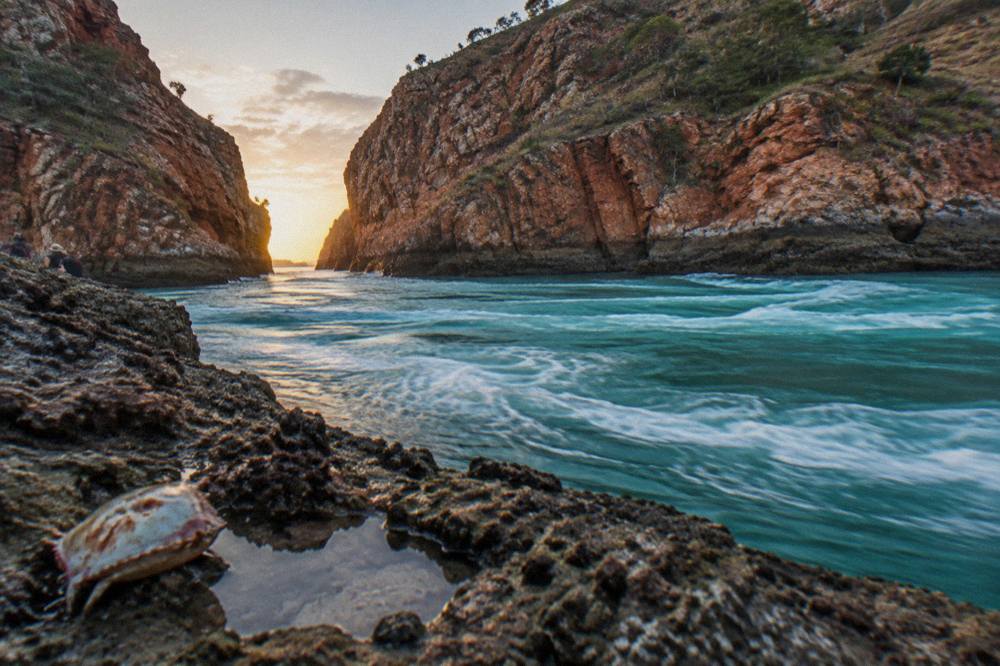
For visitors based in Broome, the two main ways to see the headline sights are a flyover tour or a full-day cruise. The Kimberley Day Cruise from Broome pairs a road transfer with a day on the water and tender boats at the falls, while scenic flights such as the Buccaneer Explorer dry season tour cross the archipelago by fixed-wing aircraft. Both routes cover country that has no road access at all. A third format, the seaplane-and-power-boat tours, lands on the water at Talbot Bay itself and rides the wide gap, and it remains the format most people picture when they imagine a Horizontal Falls trip. Before booking any of them, our breakdown of Kimberley cruise prices spells out what to budget for each style of trip.
Why Are The Horizontal Falls The Kimberley's Signature Sight?
The Horizontal Falls are two narrow gaps in the McLarty Range in Ganbadba, or Talbot Bay, where rising and falling tides force seawater through so fast that the water piles up on one side, appearing to flow horizontally rather than vertically. The WA Department of Transport's boating guide records tides of up to 11 metres in the area and warns of dangerous, unpredictable, turbulent flow, advising recreational and non-specialist vessels not to enter when the tide is rushing. The Traditional Owners, the Dambimangari people, know the falls as Garaan-ngaddim, and the surrounding waters are protected within Lalang-gaddam Marine Park.
The falls are not waterfalls in the usual sense. There is no river and no cliff drop. Instead, each tide pushes the ocean through the gaps faster than the bays can equalise, building a visible difference in water level between the two sides. On spring tides the effect is at its strongest; on mid-tide dates the water is calmer and the ride gentler. Tours do not run on neap-tide dates at all, when the tidal movement is too small to produce the phenomenon, so the tidal calendar effectively writes the tour calendar.
Boats do not go through both gaps, and have not since 2022. Licensed tour operators traverse the wide gap only, and guests view the narrow gap from a safe distance. The seaplane operator's own plan-your-visit page puts it plainly: respecting local Indigenous beliefs, only the wide gap, the first set of falls, is traversed. DBCA, the state parks authority, confirmed in April 2026 that existing licensed operators may keep traversing the wide gap until the end of the 2028 tourism season, while a transition toward Dambimangari-led cultural tourism continues, backed by $5 million in state funding. No official post-2028 closure date has been published.
Only certain tours include the boat ride through the falls. The half day seaplane tours from Broome and Derby include a power boat ride on the falls, and the Kimberley Day Cruise products reach the falls by tender boats. The fixed-wing scenic flights, including the Fly Broome, Air Kimberley and Broome Aviation listings, are flyovers only and include no boat ride, though some of them land at Cygnet Bay for a separate tidal tour. Choosing between those approaches is covered in detail in our guide to seaplane, boat and cruise options.
Guests describe the seaplane-and-boat combination vividly. One review of the Broome half day seaplane tour reads: "An amazing experience with nature. Beautiful place to visit. It's more than we expected and beyond our expectations." A review of the Derby departure calls it "an unforgettable waterfall experience", praising the flight over the Kimberley as outstanding. The Broome departure runs from A$1,495 per person for a six-hour small-group day capped at 12 guests; the Derby version, from A$1,390, trims the flying time by basing the seaplane closer to Talbot Bay.
What Is The Buccaneer Archipelago?
The Buccaneer Archipelago is a scatter of hundreds of islands, islets and rocks off the Kimberley coast between King Sound and Collier Bay, famous for its remoteness, its whirlpools and tidal races, and its near-total lack of permanent population. Official fact sheets describe it as sparsely populated: a few Aboriginal outstations, pearl farm operations at Cygnet Bay, and visiting fishers and tourists, with no large permanent communities on the islands themselves. Most Traditional Owner families with connections to the islands live in mainland towns such as Derby and the surrounding communities.
Every scenic flight from Broome to the Horizontal Falls crosses at least part of the archipelago, which is why the flight-only tours carry names like Buccaneer Explorer. From the air the pattern is unmistakable: red-brown rock islands fringed with white sand and deep turquoise channels, stitched together by tidal currents. The Air Kimberley Buccaneer Explorer dry season tour, from A$895 per person plus a A$33 fuel surcharge, spends its six hours over exactly this country, with a landing and lunch stop included. It runs to small groups of no more than 12 and lists free cancellation, so the live booking page shows the terms.
One guest review of that tour captures the mix: "Flying over the Horizontal Falls was a bucket list experience. Magical views all the way along and excellent commentary by our pilot Simmi." The same flight lands for a swim and lunch, and includes a hatchery tour with a Bardi-Jawi guide, connecting the archipelago's scenery to its living culture. If the islands themselves are the draw, our Buccaneer Archipelago guide unpacks the geography and the access options in full.
Is A Flyover Enough To See The Archipelago?
A flyover covers more of the archipelago in one day than any boat trip can, and for many visitors it is the only realistic way to grasp the scale of the island group. The trade-off is distance from the water. A cruise puts you in the channels among the islands for hours at a stretch, while a flight gives you minutes over each feature. Some tours split the difference: the Cygnet Bay Explorer dry season tour flies to the pearl farm, then adds a boat tour of the giant tides on the bay itself. It runs from A$1,220 per person plus a A$33 fuel surcharge and holds a 5.0 rating from 317 reviews.
Why Is Cygnet Bay Famous For Pearls?
Cygnet Bay, on the northern tip of the Dampier Peninsula, is famous as the home of a working cultured pearl farm, an operation that harvests pearls from the giant local tides and welcomes visitors for farm tours, pearl showroom visits and tidal boat trips. The farm sits inside the Buccaneer Archipelago's tidal system, and the same enormous water movement that creates the Horizontal Falls also flushes the pearl oyster beds. Cygnet Bay Pearl Farm remains a working business and a tourism destination in its own right, reached by a sealed road of roughly 200 to 220 km from Broome or by scenic flight in under an hour. Since the same colossal tides connect both spots, plenty of visitors arrive quoting a famous line about the falls, and what David Attenborough really said about Horizontal Falls sorts the verified facts from the myth.
Pearling is the Kimberley's oldest export industry and its most storied. Long before cultured pearls, the region's pearling luggers worked the waters around Broome, and the town's Japanese, Malay, Filipino and Aboriginal pearling communities shaped the multicultural culture that still shows in Broome's food and festivals today. The working farm at Cygnet Bay is the modern continuation of that history, and several Horizontal Falls tours build a pearl farm visit into the day, which makes it one of the few headline sights you can reach with your own vehicle as well as on a tour. More of these guides are collected on Horizontal Falls Tours.
Three listings on this site's roster include Cygnet Bay directly. The Broome Aviation Incredible Island Tour combines a buffet breakfast, a pearl farm visit and a flight over the falls, from A$895 per person, with one reviewer describing a mother whale and calf sighted on the same morning. The Cygnet Bay Sea Safari adds a ten-hour day from A$1,255 per person, with free cancellation up to six days before travel. And the Kimberley Day Cruise runs its own departures direct from Cygnet Bay Pearl Farm, no pickup offered, from A$1,075 per person, a 5.0-rated ten-hour day from 103 reviews.
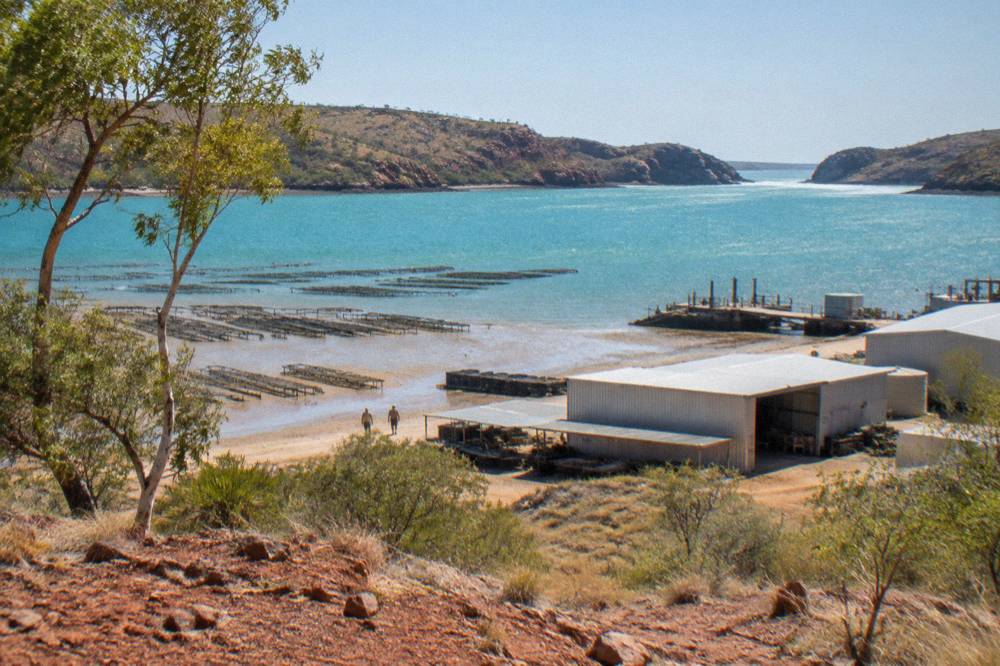
Where Are Australia's Highest Tides?
Australia's highest tides are in King Sound at Derby, on the Kimberley's central coast, where the tidal range is the largest in the country, and the same tidal engine drives the Horizontal Falls about 115 km away by air from Derby Airport. The official Transport WA boating guide for the falls records tides up to 11 metres and water level differences up to 5 metres across the gaps. Derby's position at the head of a long, funnel-shaped sound amplifies the tide, which is why the town became the operational base for seaplane tours to the falls. Seaplane tours of the falls often mention David Attenborough, and a check of the Attenborough quote shows what can actually be verified.
The tides are not a background detail. They decide when tours run. Falls tours skip neap-tide dates entirely, when the difference between high and low water is too small to produce the horizontal effect, and operators schedule around the tidal calendar published on their plan-your-visit pages. Spring tides give the most dramatic flow; mid-tide dates give a calmer ride that suits families and nervous passengers. Anyone booking a falls tour should read our Horizontal Falls tides and timing guide before picking a date, because the tide does more to shape the day than the weather does.
The tides also explain the region's geography. The huge daily movement of water carved the gaps in the McLarty Range, feeds the pearl farms, and keeps the archipelago's channels dangerous for small craft. Transport WA's advice to recreational vessels is blunt: the flow through the gaps is dangerous, unpredictable and turbulent, and non-specialist boats are advised not to enter when the tide is rushing. An anchoring restricted area exists around the falls as well, which underlines how seriously the authorities treat the water there.
| Tidal fact | Figure | Source |
|---|---|---|
| Maximum tide range at the falls area | Up to 11 metres | Transport WA boating guide |
| Water level difference across the gaps | Up to 5 metres | Transport WA boating guide |
| Largest tidal range in Australia | King Sound, Derby | Official tide references |
| Neap-tide tour operation | No tours run | Operator plan-your-visit page |
| Wide-gap boat access for licensed operators | Until the end of the 2028 tourism season | DBCA, April 2026 |
What Else Is The Kimberley Known For?
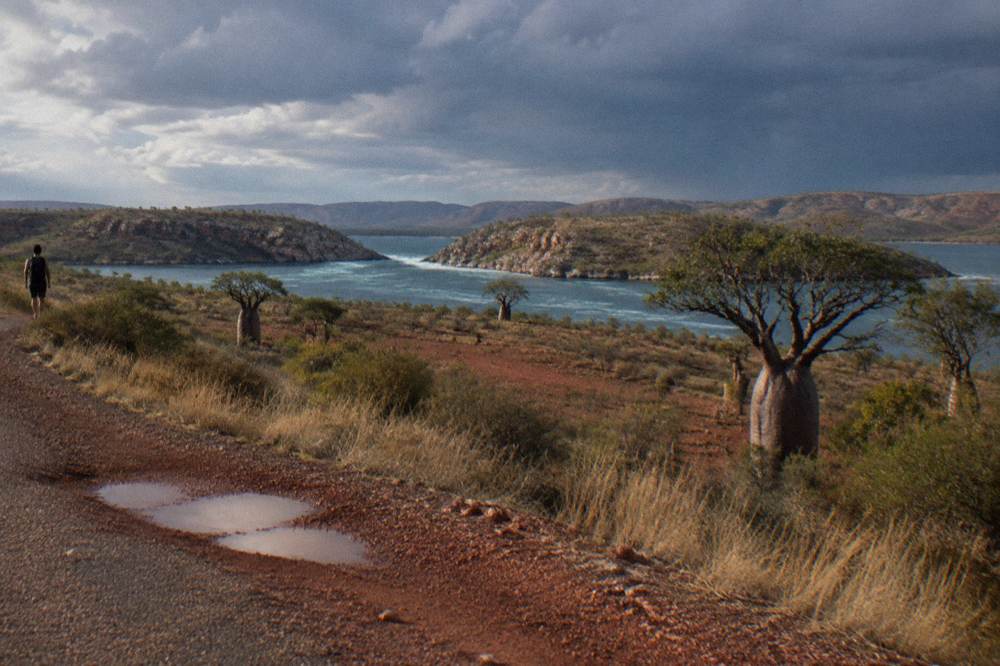
Beyond the falls, pearls and tides, the Kimberley is known for Cable Beach at Broome, ancient Aboriginal rock art across the region, the gibber plains and boab trees of the interior, and expedition cruising along a coast with almost no road access. Broome itself is the gateway: a former pearling town about 200 km of sealed road from the Dampier Peninsula communities, with Cable Beach as its postcard and the Staircase to the Moon, a full-moon optical illusion over Roebuck Bay's tidal flats, as its signature free event. Official tourism pages list the remaining 2026 Staircase dates as 27, 28 and 29 October. If those highlights tempt you but you're still weighing the distance and expense, our honest verdict on whether the Kimberley is worth the trip covers the seasons, costs and access realities.
The interior holds the Bungle Bungle Range in Purnululu National Park, the Gibb River Road cattle-station country, and Wolfe Creek Crater, though none of those are reachable on a falls day trip. The coast is where the tours on this site concentrate. Expedition cruise lines run multi-day voyages along the Kimberley coast in the dry season, roughly March or April to September or October, and day products like the Kimberley Day Cruise from Broome compress the same coastline into a single 13-and-a-half-hour day from A$1,275 per person, capped at 40 guests with hotel pickup from 4:30 am. One guest review sums up the format: "Great day out on the water, quality craft, very knowledgeable and respectful crew and skilled operators. Food was magnificent. Well worth the money."
Climate shapes everything here. Broome's dry season, the months of roughly May to October, brings mean maximum temperatures between 29.0 and 34.4 degrees and almost no rain, while the wet and cyclone season from about November to April concentrates the year's rainfall. The dry season is when the tour season runs, and the best time to visit guide breaks the trade-offs down month by month. Stinger season in Broome waters typically runs November to April, which is another reason the tour calendar concentrates where it does.
How Do You Actually See The Famous Sights?
Almost every visitor starts from Broome, and almost every headline sight requires a tour, because Talbot Bay has no road access at all; the seaplane base there is a floating pontoon. Flights from Broome reach Talbot Bay in about 1 hour 15 minutes. Derby, about 222 km from Broome by road, cuts the flying time to roughly 35 to 40 minutes, which is why the Derby half day seaplane tour undercuts the Broome departures on price at from A$1,390 per person. The full decision framework, including where to stay the night before, sits in our Broome tours and day trips guide.
For a fuller Dampier Peninsula day, the Horizontal Falls and Dampier Peninsula Discovery Tour combines 4x4 touring along the peninsula with the seaplane flight and the power boat ride on the falls, from A$1,650 per person across ten hours. A guest review of that tour captures the pace: "This was a fantastic day. Full of different activities. Breakfast and lunch YUM!! Bus, plane, boat, boat, plane." It is the most complete single-day sampler of what the Kimberley is famous for, tying the peninsula, the flight and the falls into one itinerary, though the listing shows no free cancellation.
For travelers weighing a longer commitment, the overnight options are limited to two types on the bookable roster: the Cygnet Bay eco-tent package from Kimberley Day Cruise, from A$1,910 per person across three days, and the six-day West Kimberley helicopter safari from A$24,950 per person. A seaplane-operator overnight stay cannot be booked through this site; that operator sells those stays on its own site only. The trade-offs between a day trip and an overnight stay are laid out in the day trip or overnight guide.
Cancellation terms vary widely across these listings and are worth reading before booking. The three seaplane-and-boat tours and the Kimberley Day Cruise products are non-refundable per their listings, while Fly Broome and Air Kimberley list free cancellation up to 24 hours and Broome Aviation lists free cancellation up to six days before travel. The rule is simple: check the booking page for the specific tour before you commit, because no blanket policy covers the region.
Common Questions About The Kimberley In Australia
What Is The Kimberley In Australia Famous For?
The Kimberley is famous for the Horizontal Falls at Talbot Bay, the Buccaneer Archipelago, pearl farming at Cygnet Bay, Australia's highest tides at nearby Derby, and a vast remote coastline best seen by seaplane, scenic flight or expedition cruise.
Are The Horizontal Falls Still Open To Boat Tours?
Yes. DBCA confirmed in April 2026 that existing licensed tour operators may keep traversing the wide gap until the end of the 2028 tourism season. The narrow gap has been closed since 2022 and is viewed from a distance only.
How Far Is Broome From The Horizontal Falls?
About 253 km straight line from Broome Airport to the falls, roughly 1 hour 15 minutes by seaplane. Derby is closer at about 115 km, or 35 to 40 minutes' flying.
Can You See The Buccaneer Archipelago Without A Tour?
No practical way exists to see the archipelago's core from land. Scenic flights from Broome cross it on the way to the falls, and cruise products pass through its islands by water.
Why Are The Tides In The Kimberley So Extreme?
King Sound at Derby funnels each tide into a long, narrowing bay, producing the largest tidal range in Australia, up to 11 metres in the falls area. That same tide squeezing through two gaps in the McLarty Range creates the Horizontal Falls.