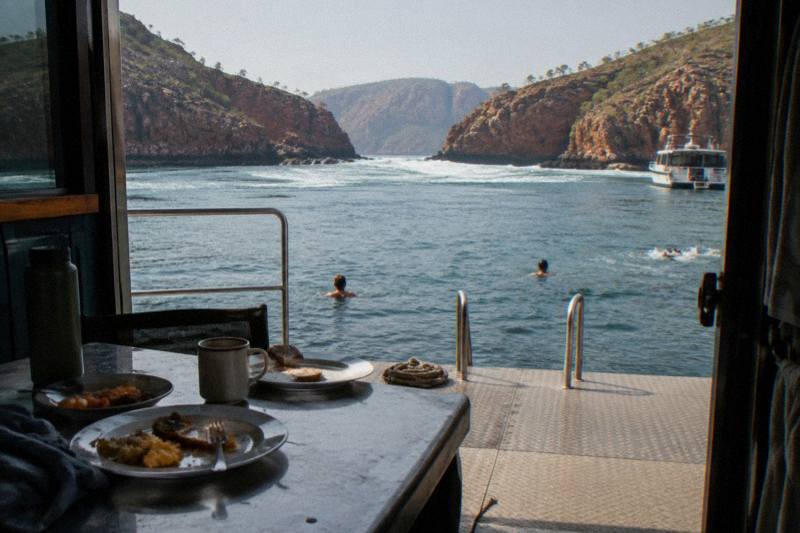
Horizontal Falls Tides: Why They Happen And When Tours Run
Horizontal Falls are a tide, not a waterfall in the ordinary sense. Two gaps in the McLarty Range hold back King Sound's enormous tidal flow, and the difference in water level on either side is what tours come to see. Tide timing decides which day you can book, which tours run at all, and how dramatic the water will be when you get there.
Short answer
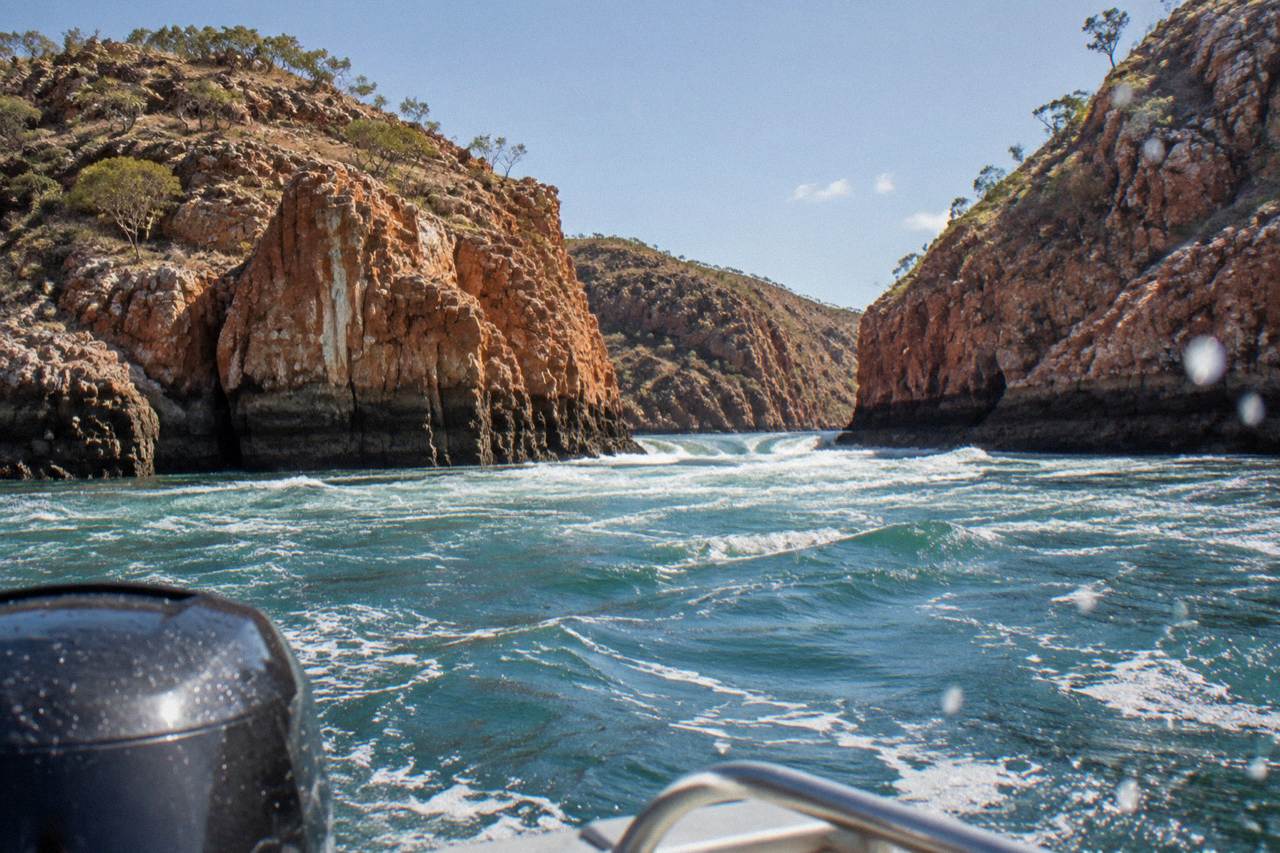
Tides at Talbot Bay reach up to 11 metres and the water level can differ by up to 5 metres on either side of the gaps, per the Transport WA boating guide. Tours do not run on neap-tide dates, when the flow is weakest. Mid-tide dates run calmer rides; spring tides produce the strongest flow. Booking windows are set by tide, season and operator schedule.
Horizontal Falls are not a waterfall in the everyday sense. They are a tide, squeezed through two narrow gaps in the McLarty Range at Ganbadba, better known as Talbot Bay, in the Kimberley. Twice a day the ocean's rise and fall pushes King Sound's water against those gaps, and the sea piles up on one side faster than it can drain through. What tours sell is that imbalance: a horizontal wall of rushing water where there should be flat sea. Seeing that rush of water up close requires a tour, and our guide to Horizontal Falls trips departing from Derby walks through the ways to reach Talbot Bay.
The traditional name for the falls is Garaan-ngaddim, and the surrounding waters sit inside Lalang-gaddam Marine Park, jointly managed by DBCA and the Dambimangari Traditional Owners. This guide covers how the Horizontal Falls tides actually work, why operators skip certain dates entirely, and how to pick a day that matches the ride you want. Plenty of visitors arrive quoting a famous David Attenborough line about the falls, and if you've heard one too, the truth behind that supposed Attenborough remark sorts out what he actually said.
What Are The Horizontal Falls Tides?
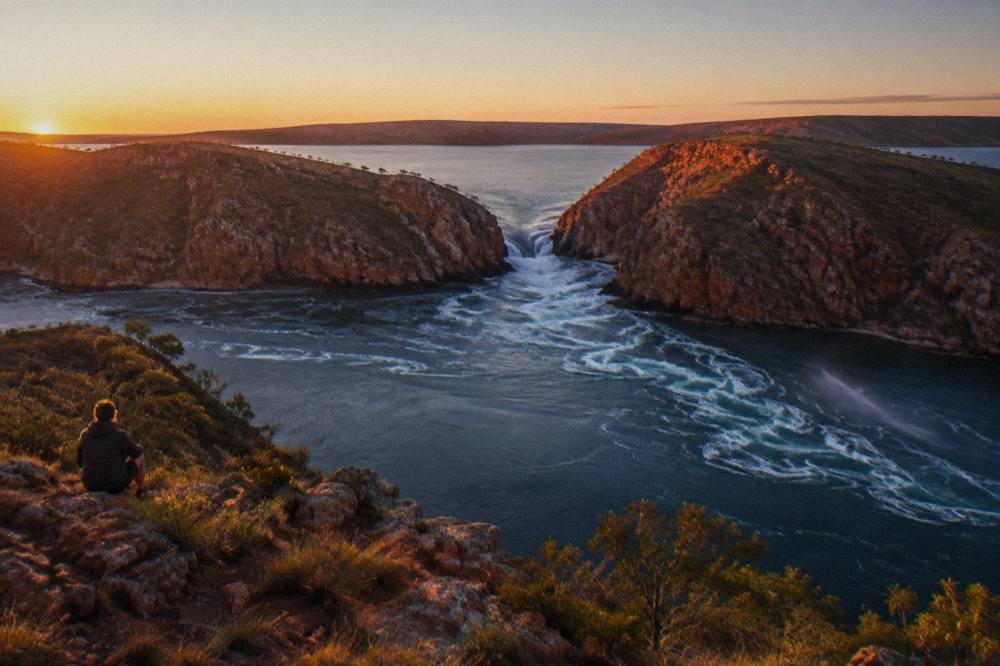
The Horizontal Falls are a tidal phenomenon, not rainfall-fed falls: tides in the area reach up to 11 metres, and the water level on either side of the two gaps can differ by up to 5 metres, per the WA Department of Transport's boating guide. The "falls" run horizontally because the tide heaps water against the McLarty Range faster than the gaps can pass it, creating a visible drop in sea level across the rock. The falls' reputation owes much to famous admirers, and a quick look at what David Attenborough actually said about Horizontal Falls shows which famous claims can be verified.
Twice each day the tide floods in, and twice it ebbs back out. On a big tide, the sheer volume of King Sound's water moving through those gaps turns calm sea into a standing rush of white water. The phenomenon reverses direction with every tidal cycle, so the falls flow one way, pause near slack water, then flow the other way a few hours later.
The Department of Transport's guide describes the flow through the gaps as dangerous, unpredictable and turbulent, and notes that death and serious injury have occurred. That official wording matters for anyone hoping to take a private vessel: recreational and non-specialist boats are advised not to enter the gaps when the tide is rushing. Licensed tour operators run the traverses, and only through the wide gap, which has been the case since the narrow gap closed in 2022.
Why Do The Falls Only Flow Strongly On Some Tides?
The moon's cycle drives tide strength: spring tides, which arrive roughly every fortnight around new and full moon, produce the largest difference between high and low water and the most violent flow at the falls. Neap tides, around the quarter moon, produce the smallest range, and on those dates the gaps barely rage at all, which is why operators do not run tours then. To witness those powerful flows at their peak, start with our guide to where Western Australia's highest tides occur.
The moon and sun line up their pull at new and full moon, and the water responds with bigger swings. A week later, at the quarter moon, their pulls partially cancel and the tidal range shrinks. At Talbot Bay that difference is not subtle: a spring tide can move an enormous volume through the gaps while a neap tide lets the water through almost politely. The effect is amplified because King Sound is a vast, shallow basin that drains and fills through a relatively narrow throat.
Derby, on the shore of King Sound, has the largest tidal range in Australia. Transport WA's boating guide records tides of up to 11 metres here, with water levels varying up to 5 metres on either side, so treat any number you see quoted elsewhere with care; what the Transport WA guide does confirm for the falls area is tides of up to 11 metres and a water level difference of up to 5 metres on either side of the gaps. If you want to witness those massive tides for yourself, the guide to where Western Australia's highest tides surge covers the best places to watch them and what to expect.
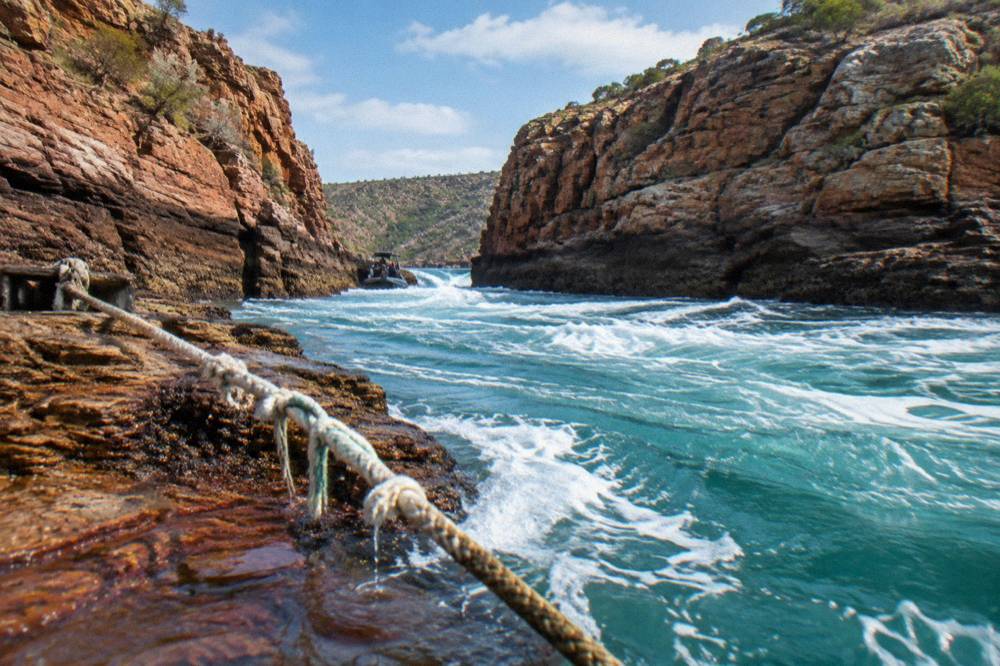
For trip planning, the takeaway is simple: every date an operator publishes is a date chosen for workable tides. You do not need to read a tide table yourself. You do need to understand why some dates simply do not exist on the calendar.
Why Horizontal Falls Trips Do Not Run On Neap-Tide Dates?
Operators including Horizontal Falls Seaplane Adventures state plainly that tours do not run on neap-tide dates, because the small tidal range leaves the falls nearly flat and the boat ride through the wide gap loses the spectacle people pay for. Mid-tide dates are bookable and calmer, while spring-tide dates deliver the strongest flow. The tide calendar, not demand, sets the schedule. Once you've picked the right tide window, the guide to Horizontal Falls tours from Derby walks through what each departure option includes.
This is the single most common surprise for travellers. You pick a week in Broome, check the tour calendar, and find gaps in it. Those gaps are the neaps. The operator's Plan Your Visit page carries the neap-tide exclusion openly, along with the note that mid-tide dates are calmer to ride and spring tides are the strongest flow. It is a trade worth understanding before you book rather than after.
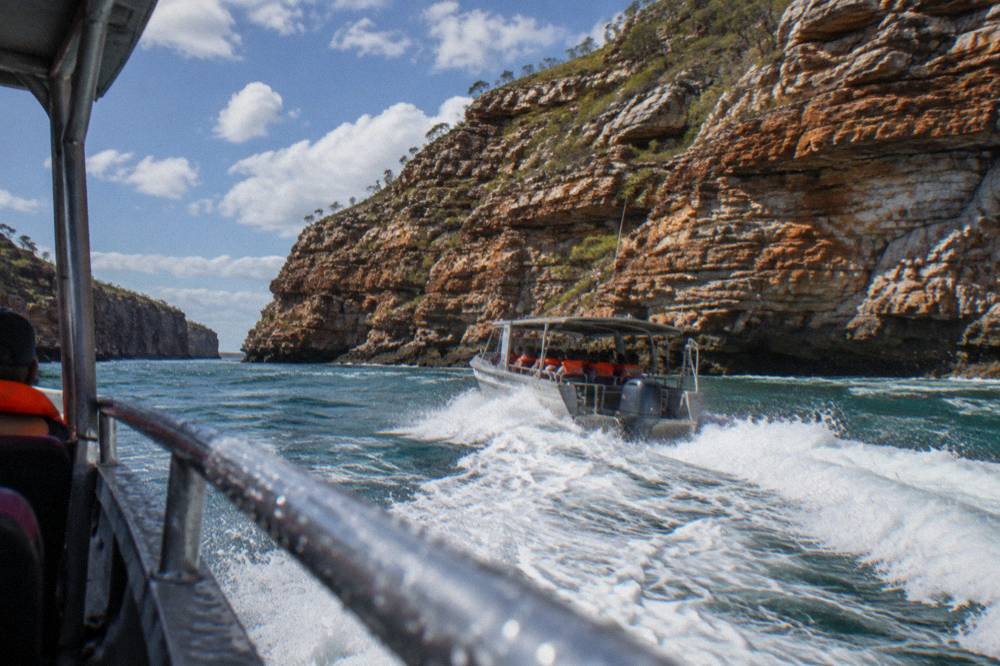
The half day seaplane tour from Broome, the operator's core product, is a 6 hour small-group trip (max 12) that includes the seaplane flight to Talbot Bay and the power boat ride through the wide gap, from A$1,495 per person, rated 4.8 from 727 reviews on its listing. Guests on that tour report what the timing delivers: one verbatim review from Oliver T reads, "An amazing experience with nature. Beautiful place to visit. It's more than we expected and beyond our expectations."
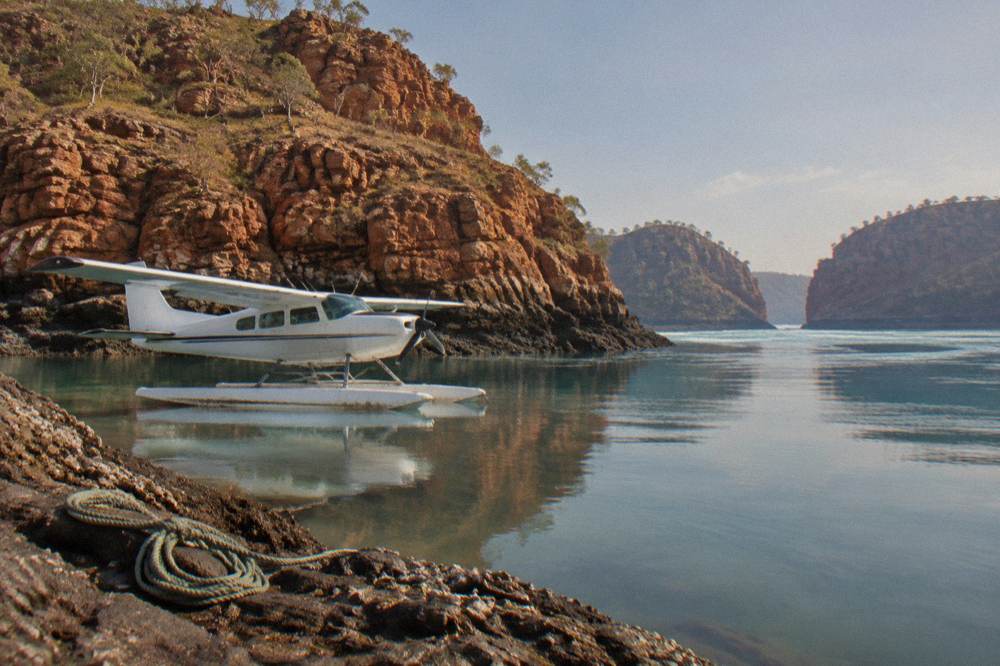
If your dates are locked and every seaplane day in that window is a neap, the scenic flights are the fallback: a flyover does not depend on the water's drama in the same way, though the falls will look gentler from above on a small tide. Our guide to seaplane, boat and cruise formats compared breaks down that trade, and the scenic flights guide lists the flyover options from A$780 per person.
Spring, Mid Or Neap Tide: Which Strength Should You Book?
Match tide strength to your priorities: spring tides give the most dramatic, most turbulent flow through the gaps and the wildest photographs from the air, mid-tide dates give a calmer, more comfortable ride that the operator explicitly recommends, and neap dates do not run at all. There is no single "best" tide; there is the tide that suits your stomach and your camera.
The operator's own guidance is that mid-tide dates are calmer, and that honesty is worth taking seriously. The power boat ride through the wide gap on a big spring tide is a genuinely rough, spray-soaked experience, which is exactly what many visitors want. Families with small children, anyone with back or neck concerns, and travellers who mainly want photographs may prefer the mid-tide compromise: real flow, real white water, less punishment.
| Tide type | When it occurs | Effect at the falls | Tour availability |
|---|---|---|---|
| Spring tide | Around new and full moon, roughly fortnightly | Strongest flow, most turbulent water, biggest visible level difference | Tours run, wildest ride |
| Mid tide | Between spring and neap peaks | Noticeable flow, calmer conditions | Tours run, operator-recommended |
| Neap tide | Around quarter moon | Minimal range, falls nearly flat | Tours do not run on these dates |
One more timing nuance: because the tide cycle drifts steadily later each day, the departure time of your tour can vary across the season. A morning half day and an afternoon half day exist as separate products for exactly this reason. Ask the operator or read your booking confirmation carefully rather than assuming a fixed clock time.
When During The Day Do The Tides Peak At Talbot Bay?
The tide cycle drifts steadily later each day, so peak flow at the falls moves through the clock across any fortnight, and tour departures shift to match: the half day seaplane product from Broome runs in morning and afternoon versions with different season windows. No fixed daily time exists, and any specific tide time quoted outside an official prediction would be invented, so plan around the operator's stated departure instead.
The morning Half Day ex Broome window runs 17 March to 31 October, while the afternoon version runs 29 April to 14 October, per the operator's Plan Your Visit page, which is the source for all season dates in this guide. The shorter afternoon window exists because late-season daylight and tide alignment make an afternoon slot workable only in the middle of the season. The wider set of guides lives on Horizontal Falls Tours.
Slack water, the brief pause between the ebb and the flood, is when the gaps look least dramatic and when boats reposition. The traverses happen on the moving tide. None of this requires you to hold a tide table: the operator picks dates and times for you, and your job is to pick which of those dates suits you.
| Departure option | 2026 season window (operator page) | Notes |
|---|---|---|
| Half Day ex Broome, morning | 17 March to 31 October | Longest window of any product |
| Half Day ex Broome, afternoon | 29 April to 14 October | Tide-dependent slot, mid-season only |
| Half Day ex Derby | 5 May to 30 September | Shorter seaplane leg from Derby |
| Half Day ex Cygnet Bay | 5 May to 30 September | Shortest flight to Talbot Bay |
| Full Day Dampier Peninsula | 29 April to 15 October | 4x4 plus seaplane and boat combo |
How Far Each Departure Point Is From The Falls?
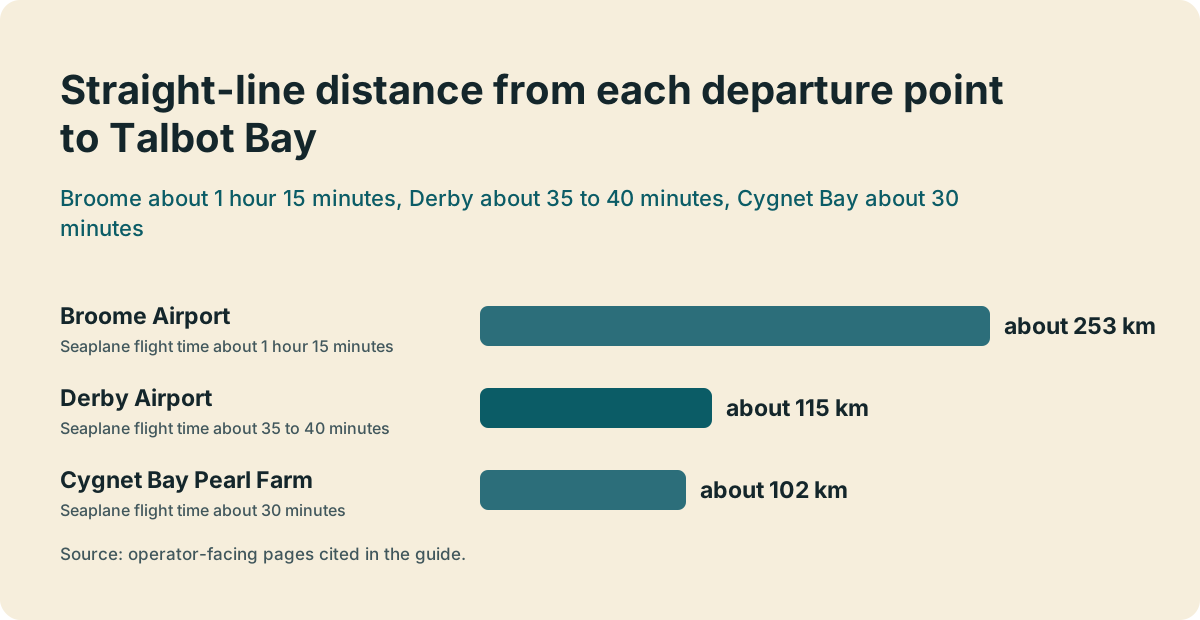
Flight time to Talbot Bay is about 1 hour 15 minutes by seaplane from Broome, about 35 to 40 minutes from Derby and about 30 minutes from Cygnet Bay, per the operator-facing pages, which matters because longer legs eat into your day and shorter legs mean more time at the water. Straight-line distances run about 253 km from Broome Airport, about 115 km from Derby and about 102 km from Cygnet Bay.
Derby's proximity is why the Derby half day exists as its own product at from A$1,390 per person, rated 4.8 from 76 reviews, with the listing including a BBQ lunch. A verbatim review from Roland B on that tour reads, "Great experience absolutely loved it. From pickup to drop off all well organised. Outstanding flight over the Kimberleys and of course an unforgettable waterfall experience." Cygnet Bay's proximity is why the Kimberley Day Cruise products, which reach the falls by vessel and view them from tender boats, depart from the pearl farm rather than Broome.
| Departure point | Straight-line distance to the falls | Approximate seaplane time |
|---|---|---|
| Broome Airport | about 253 km | about 1 hour 15 minutes |
| Derby Airport | about 115 km | about 35 to 40 minutes |
| Cygnet Bay Pearl Farm | about 102 km | about 30 minutes |
The distances explain the pricing ladder too: the from-prices across the roster, from A$780 for a non-stop flyover to A$1,495 for the full seaplane-and-boat half day from Broome, track both how close you get to the water and how far you travel to do it. Our cost comparison guide works through that ladder in detail.
Does The Season Depend On Tides Or Weather?
Both, but they cut differently: tides decide which dates within the season run at all, while the dry season, roughly March or April through October, decides when the whole operation is viable, because wet-season rain, heat and cyclone risk from November to April shut down the Kimberley tour calendar. Tide dates and season windows together form the real booking calendar.
Broome's rainfall pattern tells the weather half of the story. Bureau of Meteorology averages for Broome Airport show mean rainfall of 200.4 mm in January and 177.0 mm in February, against 1.4 mm in October and 2.1 mm in August. The wet and cyclone season runs roughly November to April. Nobody schedules a seaplane operation around that if they can avoid it, which is why every window in the table above sits inside the dry months.
The best time to visit guide and the Broome timing guide cover the shoulder-month trade-offs: early season brings post-wet waterfalls elsewhere in the Kimberley, peak season brings the most departures and the highest prices. For tide-focused planning, book a date inside your chosen product's window and let the operator's tide calendar filter out the neaps.
What About The Wide Gap, The Narrow Gap And 2028?
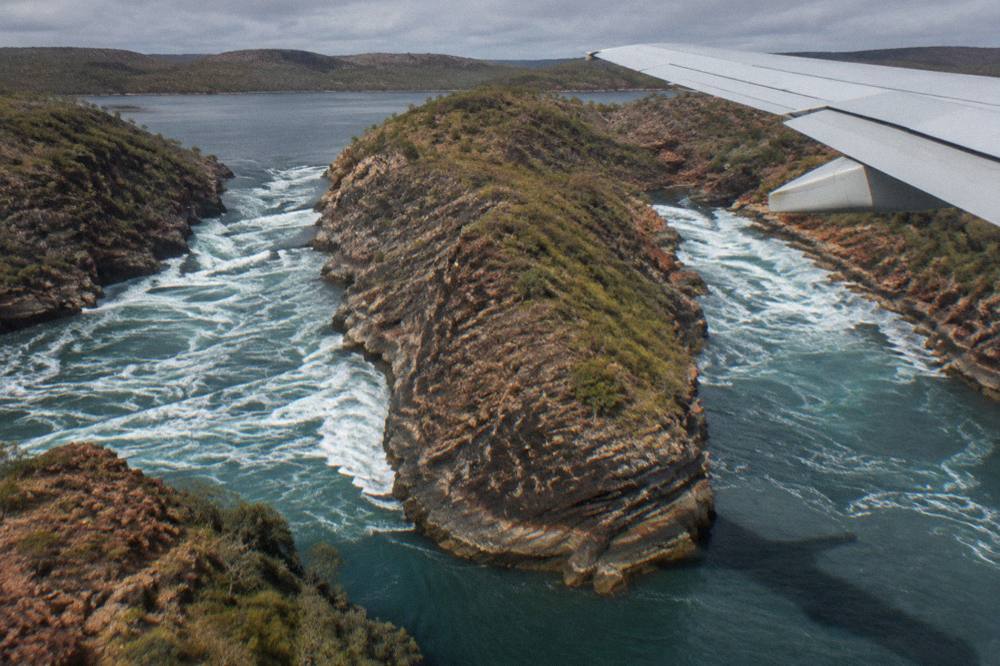
Licensed tour operators may continue traversing the wide gap through to the end of the 2028 tourism season, per DBCA's April 2026 confirmation, while the transition toward Dambimangari-led cultural tourism continues; the narrow gap has been closed to traversal since 2022, and no official post-2028 ban date has been published. Tours only ever run through the wide gap, with the narrow gap seen at a safe distance.
The operator states it plainly on its own page: "respecting local Indigenous beliefs, we only traverse the Wide Gap (first set of Falls) and do not go through the Narrow Gap (second set of Falls) however guests will see the narrow gap at a safe distance." DBCA's announcement also confirmed $5 million in the 2026-27 State Budget for Traditional Owner-led tourism at Garaan-ngaddim, including $470,000 for a feasibility study and $4.5 million for on-water infrastructure.
For a tide-timing reader, the practical point is stability: the boat ride through the wide gap remains bookable on licensed products through the 2028 season, so a 2026 or 2027 booking is not racing a closure. Post-2028 access will be reassessed, and the framing is a collaborative transition, not a published ban. Our blog post on whether the tours are still operating tracks that question directly.
Safety And The Official Tide Warnings
The Transport WA boating guide describes the flow through the gaps as dangerous, unpredictable and turbulent, records that death and serious injury have occurred, and advises recreational and non-specialist vessels not to enter when the tide is rushing, which is why the traverses are run only by licensed tour operators on dates and tides of their choosing. An anchoring restricted area also exists around the falls.
That official language is not a reason to avoid the tours; it is the reason the tours exist in their current form. Commercial power boat rides through the wide gap run with crew who read the water daily, on tide dates selected for conditions, under a licensing regime DBCA oversees. The risk picture that matters to a visitor is narrower: rough water on spring tides, and the ordinary precautions of any small-boat day. Our safety guide covers the honest version of that question.
If you are planning independent boating anywhere near Talbot Bay, read the Department of Transport guide before you launch; it is the primary source for the figures quoted throughout this page, and it is written for skippers, not tourists.
The three formats that touch the water, at a glance:
| Format | Tide dependence | Products on this site |
|---|---|---|
| Seaplane plus power boat through the wide gap | High: runs on selected tide dates only | Half Day from Broome or Derby, Full Day Dampier Peninsula |
| Cruise vessel with tender boats to the falls | Moderate: full-day tide and sea-state scheduling | Kimberley Day Cruise from Broome or Cygnet Bay |
| Fixed-wing scenic flyover | Low: falls viewed from the air, any operating day | Fly Broome, Air Kimberley, Broome Aviation tours |
The Kimberley Day Cruise from Broome is the vessel alternative: a 13 hour 30 minute day from A$1,275 per person, rated 4.9 from 177 reviews, reaching the falls by boat rather than air. A verbatim review from Paul N reads, "Great day out on the water, quality craft, very knowledgeable and respectful crew and skilled operators. Food was magnificent. Well worth the money."
Booking Around The Tide: A Practical Checklist
Book the date around three filters in order: pick a product whose season window contains your travel dates, let the operator's calendar exclude the neap tides automatically, then choose spring or mid tide dates based on how wild you want the water, remembering that cancellation terms differ by listing and the seaplane tours are non-refundable. Tide knowledge mostly protects you from booking the wrong expectations.
A few practical notes from the roster. The full day Dampier Peninsula tour pairs the seaplane and boat ride with a 4x4 day on the peninsula, from A$1,650 per person, rated 4.8 from 191 reviews; a verbatim review from Marlene S captures the shape of it: "This was a fantastic day. Full of different activities. Breakfast and lunch YUM!! Bus, plane, boat, boat, plane." On the scenic-flight side, the Cygnet Bay Explorer from Air Kimberley, from A$1,220 per person plus a A$33 fuel surcharge, rated 5.0 from 317 reviews, adds the Cygnet Bay tidal tour, a different way to see the same tidal energy that powers the falls.
Cancellation is the quiet trap in tide-based booking. The three seaplane-and-boat listings are non-refundable per their listings, while Fly Broome and Air Kimberley list free cancellation up to 24 hours and Broome Aviation up to six days. Never assume one rule covers all; read the booking page for your specific tour.
Common Questions About Horizontal Falls Tides
Why are the Horizontal Falls called horizontal?
Because the water flows sideways through two gaps in the McLarty Range rather than dropping vertically. The tide heaps water against the range until the level on one side sits up to 5 metres higher than the other, per the Transport WA boating guide, creating a visible horizontal rush of water across the gaps.
Do tours run every day in the season?
No. Operators do not run tours on neap-tide dates, when the tidal range is too small to produce the falls effect. Within the season windows, only selected tide dates are bookable, and the operator's calendar removes the neaps automatically.
Are spring tides or mid tides better for a visit?
Spring tides produce the strongest, most turbulent flow and the most dramatic spectacle. Mid-tide dates are calmer and are what the operator recommends for a more comfortable ride. Both run tours; neap tides do not.
What time of day do the falls flow?
The tide cycle drifts steadily later each day, so peak flow moves through the clock across a fortnight. Tours schedule morning and afternoon departures to match, and no fixed daily time exists. Rely on the operator's stated departure time for your date.
Can I check the tide times myself before booking?
You can consult official tide predictions for the area, but you do not need to: every bookable tour date has already been chosen for workable tides, and neap dates simply do not appear. Match your date to the product's season window and let the calendar do the filtering.
Do the tides affect the scenic flights too?
Less directly. Flyover tours view the falls from the air on any operating day, though the falls look far gentler over a neap tide. The boat ride through the wide gap is the product that depends most on tide strength.