Where In Western Australia Can You Find The Highest Tides?
The highest tides in Western Australia surge through King Sound at Derby, reaching around 11 metres, and their most spectacular result is the Horizontal Falls in Talbot Bay. Here is where to see them and how.
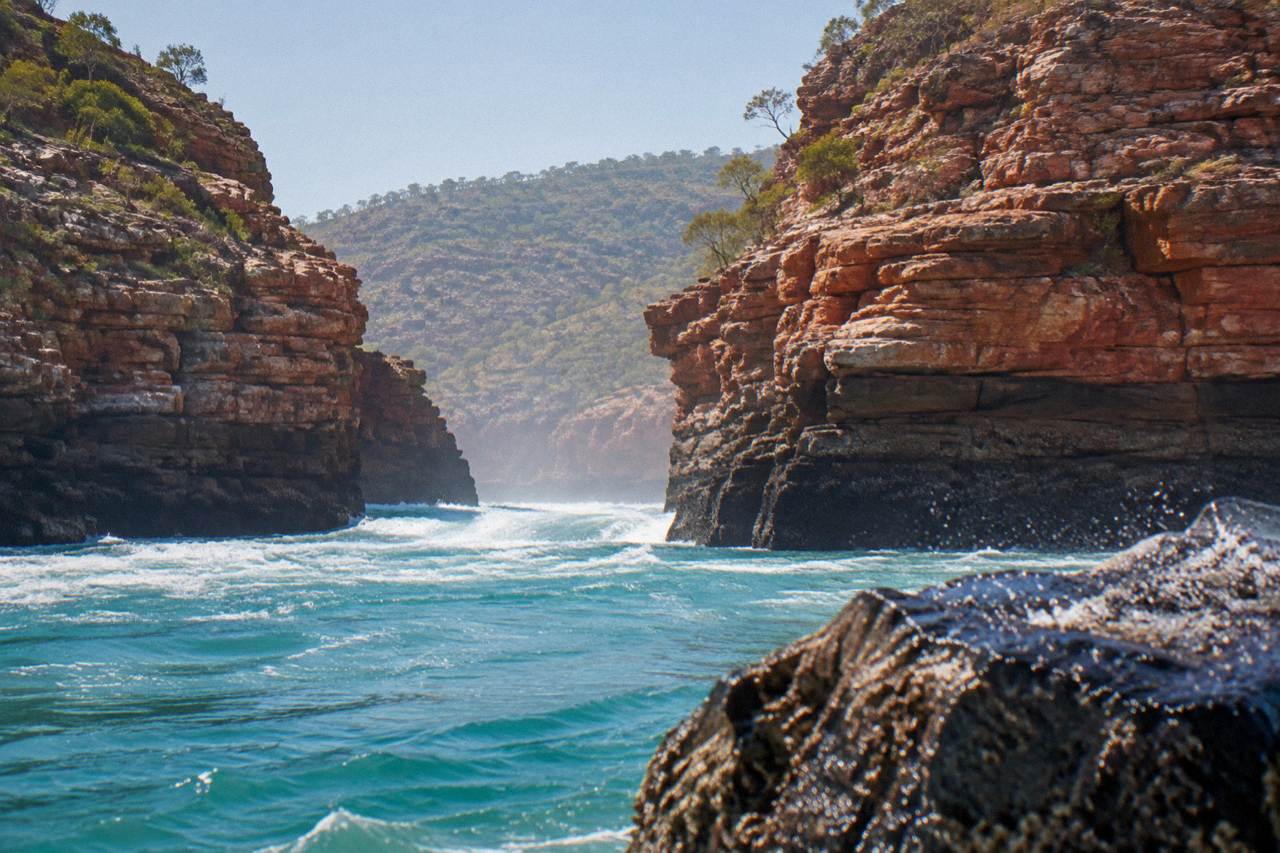
The largest tides in Australia rise and fall in King Sound, the huge funnel of water beside the town of Derby in the Kimberley region of Western Australia. The tidal range there is commonly cited at about 11 metres, and the WA Department of Transport's boating guide for the area records tides of up to 11 metres just to the north, where the ocean squeezes through two narrow gaps in the McLarty Range at Talbot Bay. That second place is better known as the Horizontal Falls, or Garaan-ngaddim in the language of the Traditional Owners, the Dambimangari people. This article looks at where the extremes are, why the Kimberley coast produces them, and how you can stand in front of the result on a tour. If you've heard a famous David Attenborough quote about the falls, our guide to what Attenborough really said about Horizontal Falls checks which claims actually hold up.
Where In Western Australia Can You Find The Highest Tides?
Western Australia's highest tides occur in King Sound at Derby, where the tidal range reaches roughly 11 metres, the largest in Australia according to tide references for the port. The same enormous tides surge through Talbot Bay about 115 km to the north, where the Department of Transport's boating guide records tides of up to 11 metres and water levels up to 5 metres apart on either side of the gaps.
Both places sit on the same stretch of coastline, and both belong to the same tidal system. Derby is the town where the numbers are measured: it is a standard port with detailed tide tables published by the Bureau of Meteorology, and its position at the head of a broad, shallow sound means the incoming tide piles up as the waterway narrows. Talbot Bay, inside Lalang-gaddam Marine Park, is where the same energy becomes visible to visitors, because the tide has nowhere to go but through two short, tight channels cut through the range. The Department of Transport's guide describes the flow through those gaps as dangerous, unpredictable and turbulent, and advises recreational and non-specialist vessels not to enter when the tide is rushing.
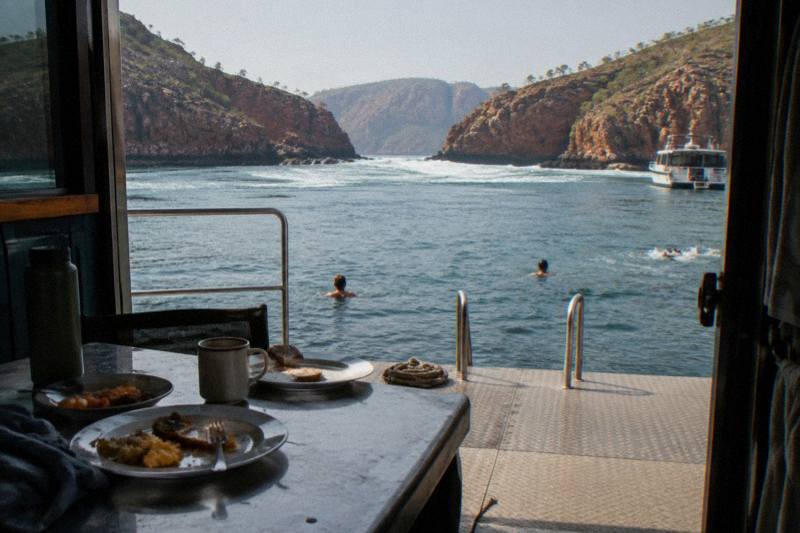
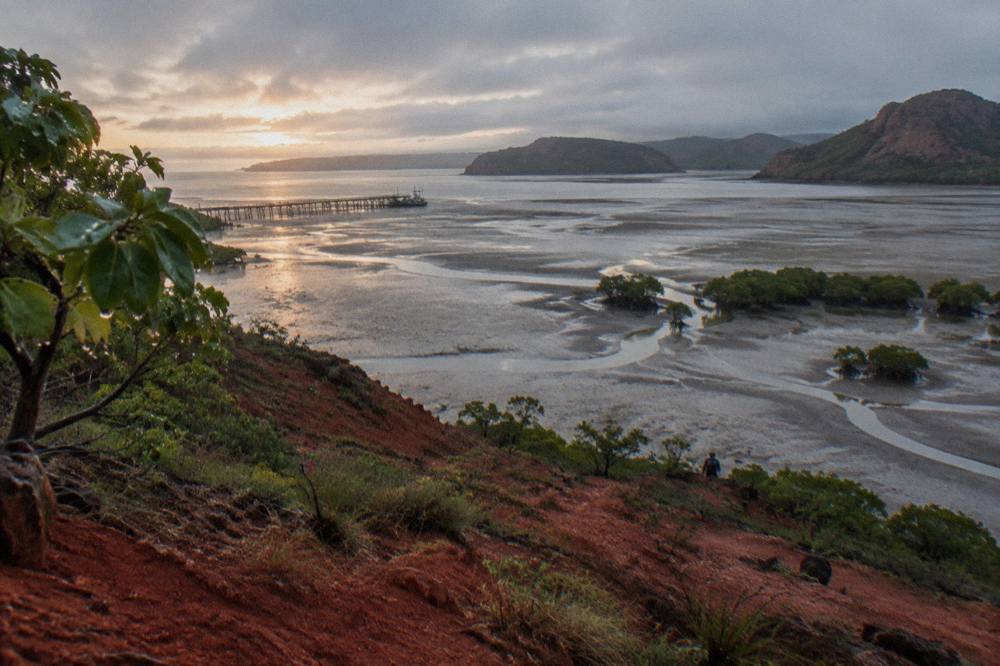
For travellers, the practical difference between the two is access. Derby is a town you can drive to, about 222 km by road from Broome, and its jetty is a free place to watch the water rise and fall across a mudflat that empties and fills twice a day. Talbot Bay has no road access at all: the seaplane base there is a floating pontoon, and the only way in is by air or by boat. That is why almost everyone who wants to see the tidal phenomenon at its most dramatic joins a tour, whether a scenic flight, a seaplane trip with a power boat ride through the wide gap, or a full day cruise. The trio below covers one option of each kind.
If you are weighing which format suits you, the comparison of seaplane, boat and cruise options breaks down the trade-offs in detail, and the guide to Horizontal Falls tides and timing explains how tide dates shape what you will see on the day.
Why Does King Sound Have Such An Extreme Tidal Range?
King Sound produces extreme tides because of its shape: the sound is a broad, shallow funnel that narrows toward Derby at its head, so each incoming tide is forced into a progressively smaller space and the water level rises higher as it compresses. The Kimberley coast also sits where large regional tidal swings already occur, and the sound's shallow seabed amplifies them further. The result, measured at Derby, is the largest tidal range in Australia.
The physics is the same reason water climbs a narrowing river estuary, just on a far larger scale. Ocean tides around northern Australia are naturally big, and when a rising tide meets a wide shallow bay that tapers to a point, the volume of water moving in has less and less room. The water has only one way to go, and that is up. On the way out the reverse happens, and the sound drains to expose kilometres of mudflat. Visitors to the Derby jetty can watch fishing boats that floated at high tide sitting on or near the bottom a few hours later.
Talbot Bay takes the same principle to its most compressed form. There the tide does not spread across a widening mudflat; it must pass through two short gaps in a rock range. The Department of Transport's boating guide for the Horizontal Falls area records tides of up to 11 metres and notes that water levels can differ by up to 5 metres on either side of the gaps, which is exactly the imbalance that makes the falls flow sideways. When the sea side is higher, water pours through toward the bay; when the bay side is higher, it reverses. The falls are therefore not a waterfall in the usual sense but a horizontal one, driven entirely by tidal head rather than elevation.
Neither Derby nor Talbot Bay is the only place in the region with big tides, but they are the extremes. The table below puts the two in context using the figures the official sources support.
| Location | What it is | Tidal character | Access |
|---|---|---|---|
| Derby, King Sound | Port town at the head of the sound | Largest tidal range in Australia, commonly cited about 11 m | Road, about 222 km from Broome; free viewing from the jetty |
| Talbot Bay, Ganbadba | Two narrow gaps in the McLarty Range, the Horizontal Falls | Tides up to 11 m; water level up to 5 m different either side of the gaps | Air or boat only; no road access, seaplane base is a floating pontoon |
| Cygnet Bay, Dampier Peninsula | Pearl farm and boat-tour base on the peninsula | Large Kimberley tides feeding King Sound approaches | Sealed road, about 200 to 220 km from Broome |
The scale of these numbers is worth pausing on. A 5 metre difference from one side of a rock ridge to the other is roughly the height of a single-storey house, and the tide creates and erases that imbalance twice a day. Tours that time their visit to the stronger tidal dates put guests in front of the most vigorous flow, while mid-tide dates are calmer, as the seaplane operator's plan-your-visit page explains.
Wondering whether the seaplane version is worth it? The Broome to Horizontal Falls Half Day Adventure runs about 6 hours with hotel pickup, includes the seaplane flight to Talbot Bay and the power boat ride through the wide gap, and is rated 4.8 from 727 reviews, from A$1,495 per person. Note that its listing states all sales are final, so read the cancellation terms on the booking page before committing.
How Do The Highest Tides Create The Horizontal Falls?
The Horizontal Falls are created when rising or falling tides force seawater through two narrow gaps in the McLarty Range, producing a sideways cascade because the water level differs by up to 5 metres from one side to the other. As the tide turns, the direction of the flow reverses, so the falls pour one way and then the other, twice daily. The gaps sit in Talbot Bay, known as Ganbadba, inside Lalang-gaddam Marine Park.
The traditional name for the falls is Garaan-ngaddim, and the marine park that protects them, Lalang-gaddam, is jointly managed by the Department of Biodiversity, Conservation and Attractions and the Dambimangari Traditional Owners. Two gaps are involved, and since 2022 tour boats have only traversed the wide gap: the operator's plan-your-visit page states that "respecting local Indigenous beliefs, we only traverse the Wide Gap (first set of Falls) and do not go through the Narrow Gap (second set of Falls) however guests will see the narrow gap at a safe distance." Under the DBCA decision of April 2026, licensed operators may keep traversing the wide gap until the end of the 2028 tourism season, after which access will be reassessed as part of a transition to Dambimangari-led cultural tourism.
What visitors actually see depends on the tide date. On spring tides, when sun and moon align, the flow is at its strongest and the water heaps visibly as it squeezes through. On neap tides the difference between the two sides is small, and tours do not run on those dates at all. Mid-tide dates are bookable and calmer. This is why the timing question matters more here than at almost any other attraction in Australia: the same tour, on a different date, can meet a churning rapid or a gently steaming channel. The Department of Transport's description of the flow as dangerous and unpredictable applies mainly to private vessels; tour operators run purpose-built boats with experienced crews, but nobody can promise conditions on a given day.
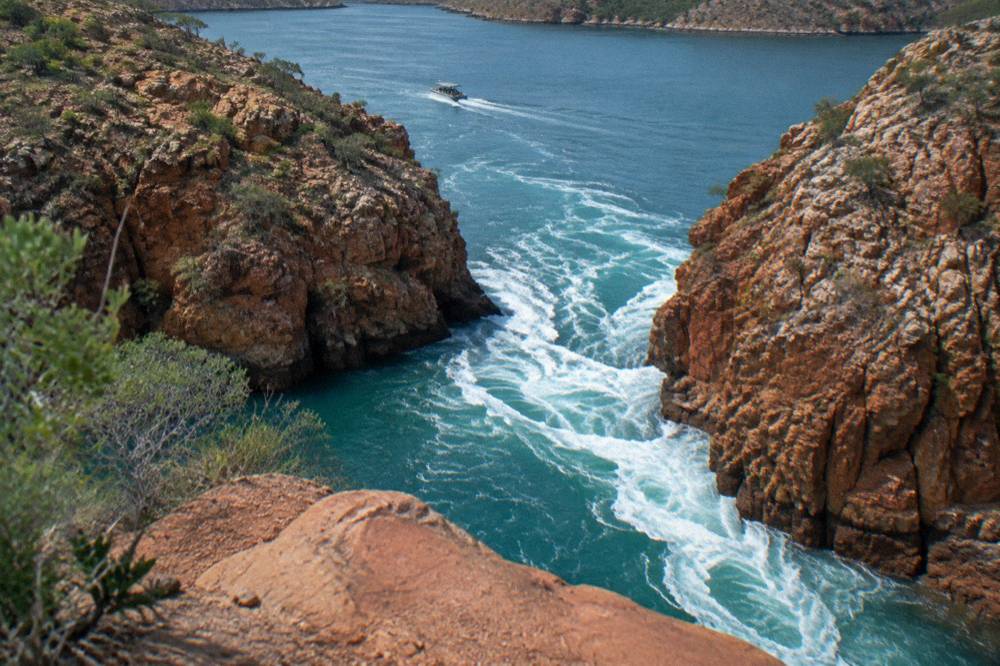
The seaplane-and-boat tours are the ones that put you in the gap itself, on a power boat riding the wide-gap flow. The flyover tours show the phenomenon from the air, which is the only way to appreciate the two gaps and the contrasting water levels side by side in a single view. A guest on the Derby half day seaplane tour described it as "an unforgettable waterfall experience" in a five-star review, alongside an "outstanding flight over the Kimberleys". Both formats answer the tide question differently, and many travellers pick based on budget and stomach rather than on which is more spectacular.
Derby, Broome Or Talbot Bay: Where Should You Go To See Them?
For free, DIY tide-watching, Derby is the answer: drive to the jetty and watch an 11 metre range empty and fill King Sound twice a day. For the dramatic, compressed version of the same tides, Talbot Bay is the answer, but it has no road access, so you need a tour by air or boat. Broome, about 222 km by road from Derby, is the main hub from which tours to Talbot Bay depart.
Derby rewards patience more than planning. The jetty is the classic vantage point, and the effect is slow and enormous: at low tide the water retreats across the flats toward the horizon, and at high tide it returns. Reading a tide table before you go turns an ordinary visit into a good one, because arriving at slack water shows you almost nothing. Derby is also a practical base for the seaplane tours that depart the town, which reach Talbot Bay in roughly 35 to 40 minutes of flying, against about 1 hour 15 minutes from Broome, since Derby Airport sits only about 115 km from the falls. If you're starting from Broome instead and don't have your own vehicle, our guide on getting around Broome without a car shows how tours with hotel pickup keep things simple.
Broome, by contrast, is where most visitors already are. It has the accommodation, the flights, and the widest choice of departures, and from there you can take the half day seaplane tour, a fixed-wing flyover, or the full day cruise option. The distance question, and the logistics behind it, are covered in detail in where the Horizontal Falls actually are, which maps every departure point against the falls themselves.
Cygnet Bay, on the Dampier Peninsula north of Broome, is the third option and the closest of all: about 102 km straight line from the falls, reached by a sealed road of roughly 200 to 220 km from Broome. The Kimberley Day Cruise operates from Cygnet Bay Pearl Farm, with tender boats to the Horizontal Falls, and the pearl farm also runs its own tidal tours on King Sound's approaches. If you want to combine huge tides, pearling history and a road trip up a newly sealed peninsula, this is the route. If you've heard that David Attenborough once described these falls as one of the world's great natural wonders, the fact check on that famous Attenborough claim about Horizontal Falls sorts out what he really said.
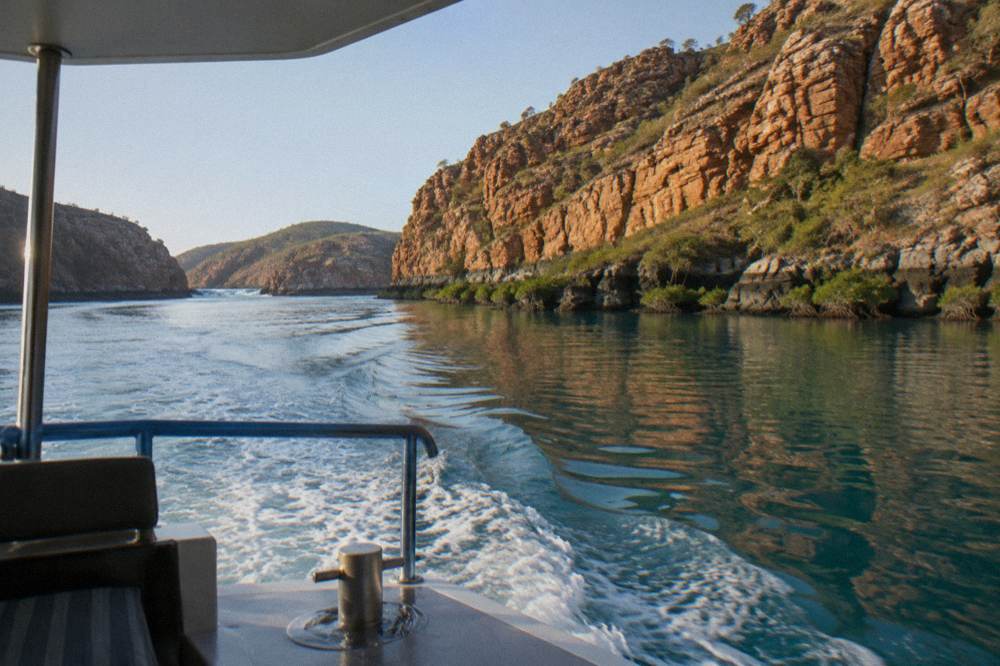
The table below matches each base to what it offers a tide-focused traveller.
| Base | Distance to the falls | What you can do there | Tour formats available |
|---|---|---|---|
| Broome | About 253 km straight line | Main tourism hub; hotel pickup on most tours | Seaplane and boat, scenic flight, full day cruise |
| Derby | About 115 km straight line | Free jetty tide-watching; closest seaplane departures | Half day seaplane and boat from A$1,390 |
| Cygnet Bay | About 102 km straight line | Pearl farm; no pickup, self-drive on sealed road | Day cruise with tender boats to the falls, from A$1,075 |
Can You See The Highest Tides On A Tour From Broome?
Yes, Broome tours can put you right in front of the highest tides, with three formats on offer: seaplane trips that land at Talbot Bay and run power boats through the wide gap, fixed-wing scenic flights over the falls, and a full day cruise with tender boats. Prices range from A$780 per person for a non-stop flyover to A$1,495 for the seaplane and boat half day.
The half day seaplane tour from Broome is the format most people picture when they think of the falls. Horizontal Falls Seaplane Adventures operates it with hotel pickup, about 6 hours door to door, a maximum of 12 guests, and the power boat ride through the wide gap, from A$1,495 per person. It carries a 4.8 rating from 727 reviews, and one guest, Oliver T, wrote simply: "It's more than we expected and beyond our expectations." Cancellation is the one caution: the listing states all sales are final, so check the terms on the booking page first. Since the tour includes hotel pickup, you can skip driving altogether, and our guide to getting around Broome without a car explains the buses and taxis that cover the rest of your stay.
The Derby departure of the same operator's tour is worth a look for tide enthusiasts, because it pairs the shortest flight to Talbot Bay with the chance to watch King Sound's own 11 metre range from the jetty on the same day. It runs from 5 May to 30 September, from A$1,390 per person, rated 4.8 from 76 reviews, with the same all-sales-final cancellation policy.
For travellers who would rather stay on the water the whole way, the Kimberley Day Cruise from Cygnet Bay is the self-drive option: 10 hours, from A$1,075 per person, rated 5.0 from 103 reviews, with tender boats to the Horizontal Falls and no pickup, so you make your own way up the peninsula.
If you are still deciding between formats, the guide to Kimberley cruises that visit the falls covers the expedition-cruise side of the question, and Horizontal Falls Tours compares every listed departure point, price and format side by side.
When Do The Biggest Tides Of The Year Happen?
The biggest tides coincide with spring tides, which occur around each new and full moon, when the gravitational pull of the sun and moon aligns, and the extremes of the year usually fall in the equinox months and early in the dry season. Tours schedule around the tide calendar: the seaplane operator does not run on neap-tide dates, when the tidal difference is too small, and mid-tide dates are bookable and calmer.
No tide timetable is printed on this page, because tide predictions shift year to year and the Bureau of Meteorology publishes the official tables for Derby and other standard ports. What matters for planning is the pattern. Spring tides bring the largest difference between high and low water, so they produce the fiercest flow through the gaps. Neap tides, around the half moon, bring the smallest difference, and on those dates there is effectively nothing to ride or to photograph, which is why the operator blacklists them.
Season matters as much as moon phase. The 2026 windows on the operator's plan-your-visit page run from mid-March to the end of October depending on the tour, with the Derby half day operating 5 May to 30 September and the full day Dampier Peninsula tour 29 April to 15 October. The dry season, when rain is minimal and access is easiest, is also when the tide-driven trips run most reliably. Anyone planning around a specific date should check both the season window and the tide calendar before booking, since weather and operator schedules make the final call. The detailed month-by-month picture is in the site's guide to the best time to visit the Horizontal Falls. Once your dates are settled, the Derby-based Horizontal Falls tour options walk through what each trip departing from town actually covers.
There is also a longer arc worth knowing about. The April 2026 announcement from DBCA, Traditional Owner-led tourism championed at Garaan-ngaddim, confirmed licensed operators can keep traversing the wide gap until the end of the 2028 tourism season, backed by $5 million in State Budget funding for feasibility work and infrastructure toward Dambimangari-led cultural tourism. Post-2028 access will be reassessed collaboratively, and no post-2028 ban date has been published. For tide chasers, the practical reading is simple: the wide-gap boat experience as it exists today has a stated runway through the 2028 season.
Common Questions About The Highest Tides In Western Australia
Where In Western Australia Can You Find The Highest Tides?
In King Sound at Derby, which has the largest tidal range in Australia, commonly cited at about 11 metres, and in Talbot Bay to the north, where tides of up to 11 metres force water through the two gaps that form the Horizontal Falls.
Are the tides at Derby bigger than at the Horizontal Falls?
They are the same tidal system. Derby sits at the head of King Sound and records the largest measured range in Australia, while Talbot Bay compresses the same tidal energy through narrow rock gaps, producing water level differences of up to 5 metres on either side.
Can you see the Horizontal Falls tides without a tour?
No. Talbot Bay has no road access, and the seaplane base there is a floating pontoon reachable only by air or boat. Derby's jetty, by contrast, is free to visit and shows King Sound's huge range emptying and filling the flats twice a day.
Which tours actually ride the tidal flow?
The seaplane-and-boat tours land at Talbot Bay and run power boats through the wide gap, and the Kimberley Day Cruise tours reach the falls by vessel with tender boats. The fixed-wing scenic flights cross the falls from the air and do not include a boat ride.
When is the tidal flow strongest?
Around spring tides, near each new and full moon, when the tidal difference is greatest. Tours do not run on neap-tide dates, when the difference is too small, and mid-tide dates are bookable and calmer.