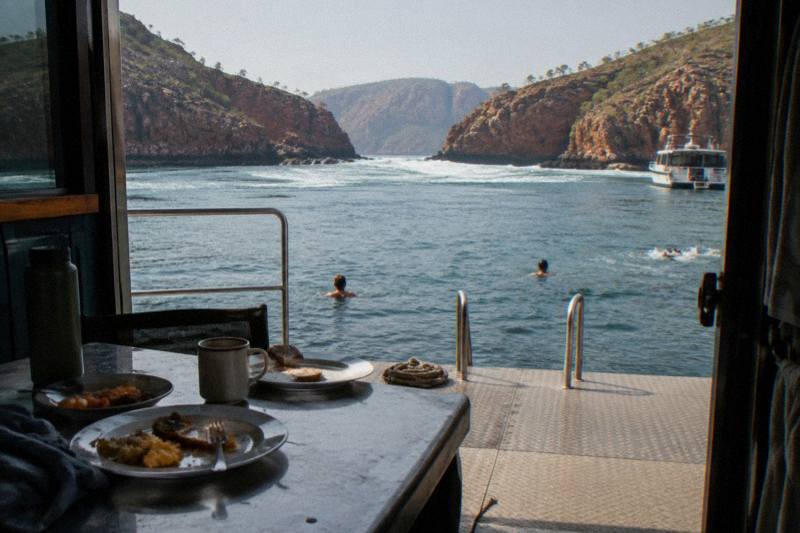
Best Time To Visit Horizontal Falls: Season, Month And Tide
The falls run on tides, not rain, but the tours that reach them run on seasons. Here is how the 2026 operator windows, the dry season months and the tide calendar line up.
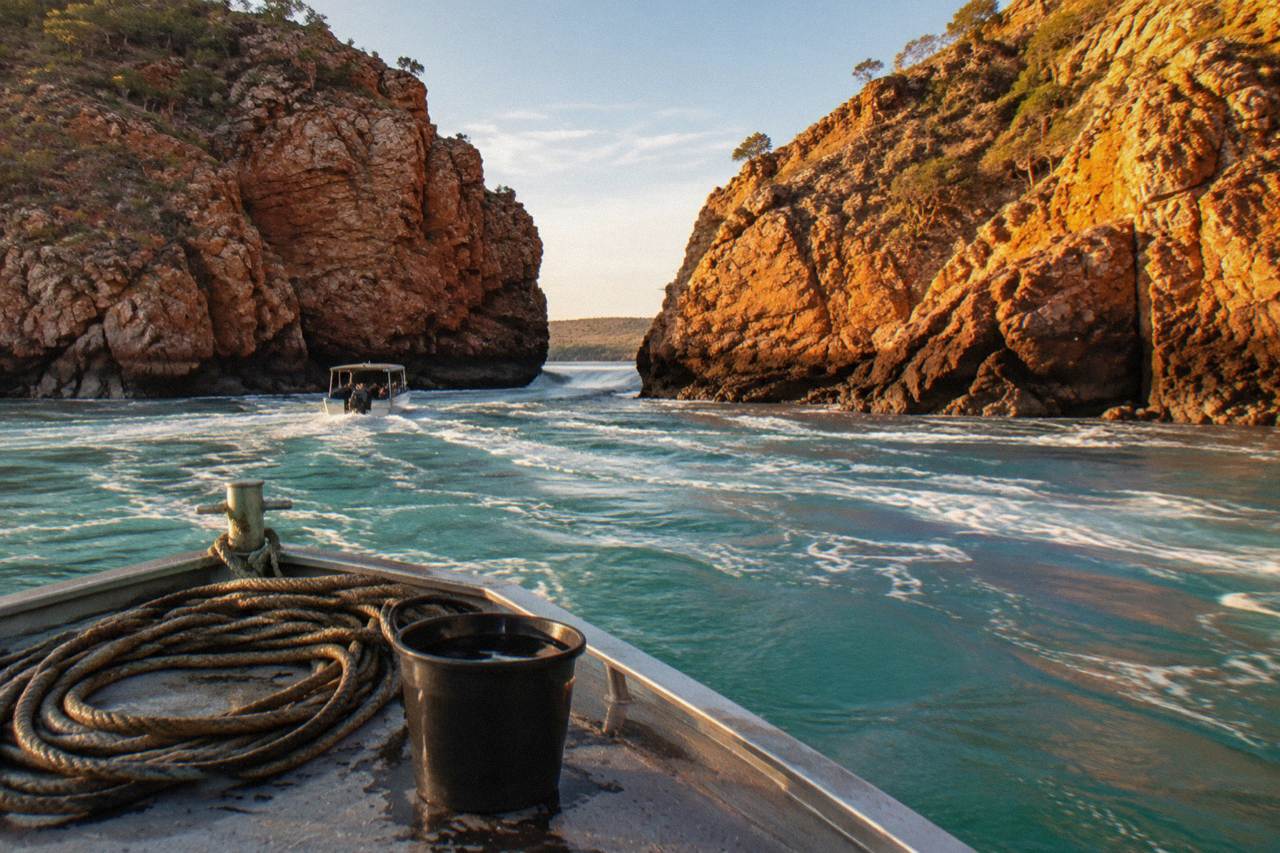
Short answer
The best time to visit Horizontal Falls is the Kimberley dry season, roughly March to October, when tours operate most often. The half day seaplane tour from Broome runs 17 March to 31 October, from A$1,495 per person. Avoid neap-tide dates, when the falls are at their weakest and many tours do not run.
Horizontal Falls is a tidal phenomenon, which means the honest answer to "when should I go" has three layers. The first is the broad tourist season, the Kimberley dry season from roughly March to October. The second is the operator's own calendar: the seaplane tours do not run every day of the season, and each departure city has its own window. The third is the tide itself, because on neap-tide dates the water barely moves and tours are pulled from the schedule entirely. Once you've settled on the right window of dates, the packing checklist for your Horizontal Falls seaplane tour covers the other half of the planning.
Get all three right and you fly out over the Buccaneer Archipelago on a clear dry-season morning and ride a power boat through churning water. Get one wrong and you are rebooking. This guide works through the season, the month and the tide in that order, using the operator's published 2026 season windows, Bureau of Meteorology climate averages for Broome and the official state guidance on the gaps.
When Is The Best Time To Visit Horizontal Falls?
The best time to visit Horizontal Falls is the dry season window from March to October, with the peak months of May to September offering the widest choice of departures and the most reliable weather. The half day seaplane tour from Broome runs 17 March to 31 October, the Derby departure runs 5 May to 30 September, and every tour skips neap-tide dates when the tidal flow is weakest. Price does not swing much by month, but availability does. Once your travel dates are set, our Horizontal Falls packing list covers exactly what you'll need for the seaplane flight and the fast boat ride through the Falls.
That three-part answer matters because Horizontal Falls is not a waterfall you drive to and admire. It is a pair of narrow gaps in the McLarty Range at Ganbadba in Talbot Bay where tides of up to 11 metres push water through and create a horizontal rush, according to the WA Department of Transport's boating guide. The Department states the water level may vary by up to 5 metres on either side and describes the flow as dangerous, unpredictable and turbulent. What you see, and how dramatic it is, depends almost entirely on which day of the lunar cycle you arrive. The falls' fame has even been tied to Sir David Attenborough, and what David Attenborough actually said about Horizontal Falls separates the verified facts from the legend.
The operator's plan-your-visit page states it plainly: tours do not run on neap-tide dates, mid-tide dates are calmer, and spring tides produce the strongest flow. So a traveller who wants the full power-boat experience picks a dry-season month first, then a date inside the operator's window, then a tide that suits their nerve. We cover each of those decisions in the sections below.
One more timing note that is unique to this destination. DBCA, the state parks agency, confirmed in April 2026 that licensed tour operators can keep traversing the wide gap until the end of the 2028 tourism season, with a collaborative transition toward Dambimangari-led cultural tourism after that. If riding a boat through the falls is the reason for your trip, the seasons through 2028 are the ones on the table right now. If you want the latest on which operators are on the water and what each trip includes, the guide to whether Horizontal Falls tours are still operating covers the details.
What Are The 2026 Operator Season Windows?
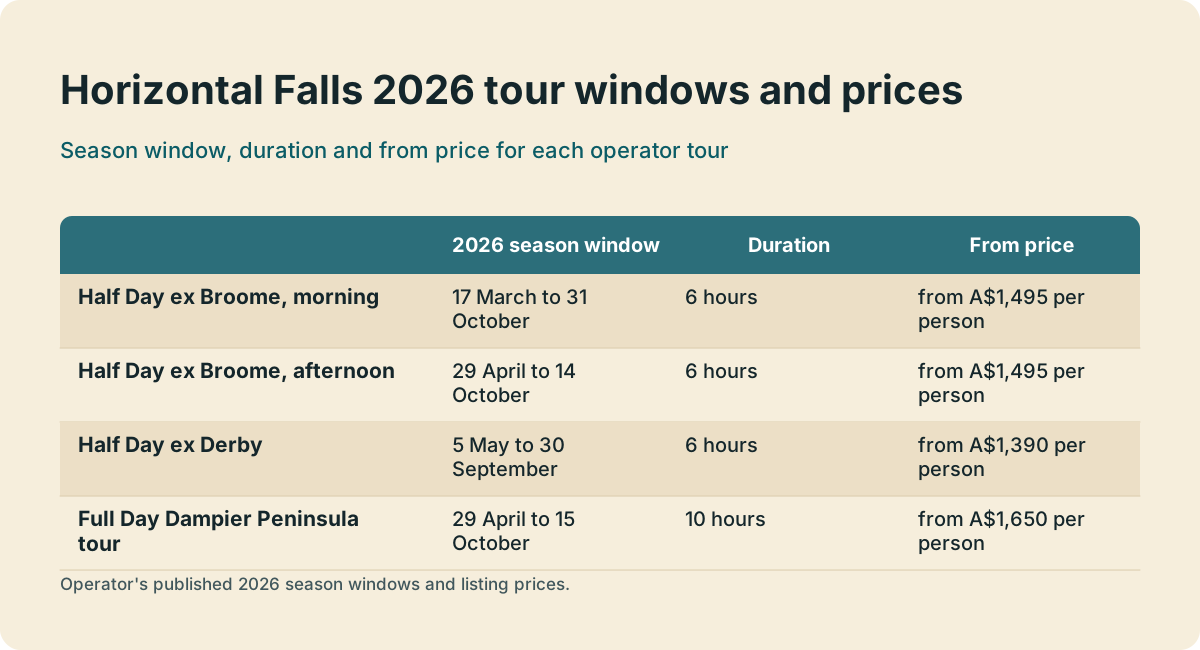
The operator's 2026 calendar opens the Broome morning half day on 17 March and closes it on 31 October, the longest window of any tour. The Broome afternoon half day runs 29 April to 14 October, the Derby half day runs 5 May to 30 September, and the full day Dampier Peninsula tour runs 29 April to 15 October. Every tour skips neap-tide dates.
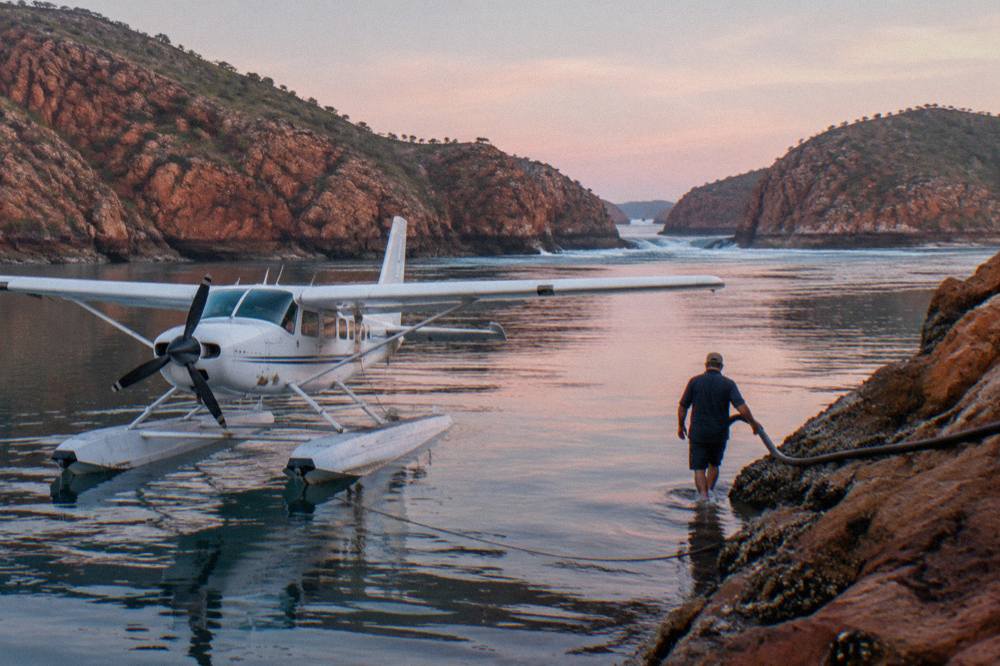
Those windows come straight from the operator's plan-your-visit page and they tell you something the month names do not: the season is stitched together from overlapping calendars, and the shoulder months shrink your options. In early March, only the Broome morning departure is running. By late May, everything is live. From early October, the Derby and afternoon options drop away one by one until only the morning Broome tour is left to close the season on Halloween. If those shrinking windows have you wondering whether the tours are still running at all, the guide to current Horizontal Falls tour operations covers exactly which operators are licensed and for how long.
Here is how the published windows compare, tour by tour:
| Tour (operator listing) | 2026 season window | Duration | From price |
|---|---|---|---|
| Half Day ex Broome, morning | 17 March to 31 October | 6 hours | from A$1,495 per person |
| Half Day ex Broome, afternoon | 29 April to 14 October | 6 hours | from A$1,495 per person |
| Half Day ex Derby | 5 May to 30 September | 6 hours | from A$1,390 per person |
| Full Day Dampier Peninsula tour | 29 April to 15 October | 10 hours | from A$1,650 per person |
| Overnight stays ex Broome, Derby, Cygnet Bay | 5 May to 29 September | 2 days | sold on the operator's own site |
The price column uses the platform listing prices: the Broome half day is from A$1,495 per person with a rating of 4.8 from 727 reviews, the Derby half day is from A$1,390 and the full day Dampier Peninsula tour is from A$1,650. The overnight stays appear in that table for completeness only: they are sold on the operator's own site, not through the listings compared on this site, so do not read that row as a bookable platform product.
If the seaplane-and-boat format is what you came for, these are the three listings to compare side by side. The band below shows the flagship Broome half day next to a pair of fixed-wing flyover alternatives that run on a different rhythm and a different budget.
The dry-season Buccaneer Explorer, from Air Kimberley, is from A$895 per person plus a A$33 fuel surcharge listed under exclusions, with a 4.9 rating from 716 reviews. Its wet-season twin carries the same from-price and a 5.0 rating from 6 reviews, and it exists precisely because the flyover format can keep flying when the boat calendar tightens. Neither of those two is a boat ride through the falls; both are fixed-wing flights over them, and the listings are clear about that distinction.
Dry Season Or Wet Season: Which Fits Your Trip?
The dry season, roughly March to October, is when nearly every Horizontal Falls tour operates, with warm days, almost no rain and the full range of seaplane, flyover and cruise products on the water. The wet and cyclone season, roughly November to April, brings heat, humidity, heavy rain and a much thinner tour schedule, though the scenic-flight operators keep flying and the falls themselves keep working on every tide.
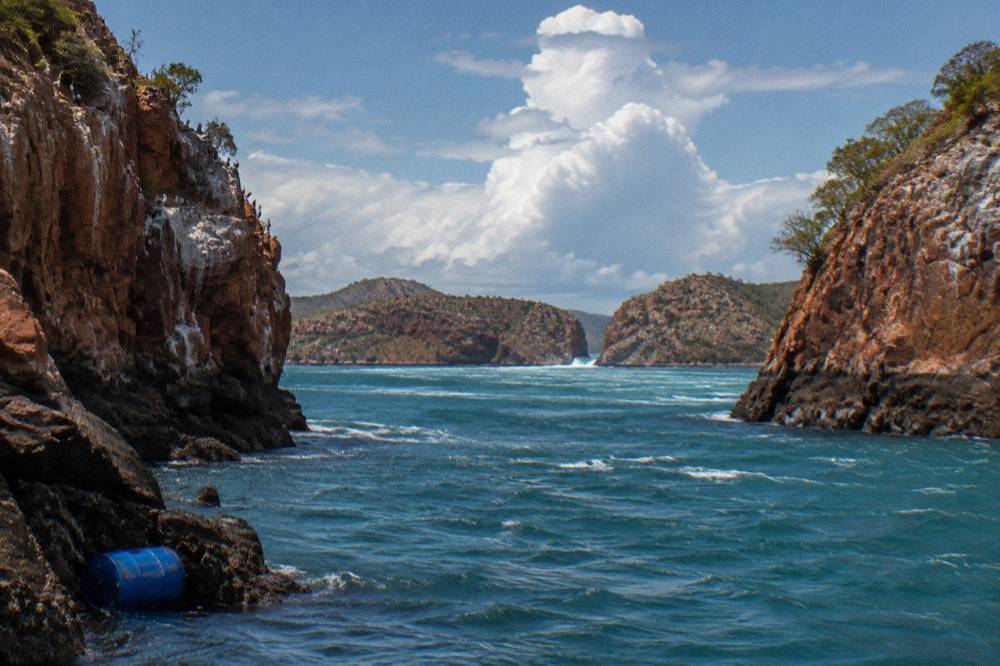
The Bureau of Meteorology's Broome Airport averages make the contrast plain. The wet months of January and February average 200.4 mm and 177.0 mm of rain respectively, while August and September average 2.1 mm and 1.5 mm. Mean daily maximums sit in the low thirties all year, from 29.0 in July to 34.4 in April, so it is rain and cyclone risk, not temperature, that defines the two halves of the year. The Bureau and DFES place the cyclone season across November to April.
For most travellers this settles the question: come between May and September, when the seaplane windows, the cruise calendar and the driest weather all overlap. A June morning in Broome averages a 15.3 degree overnight minimum and a 29.3 degree maximum, which is about as kind as the tropics get. Our best time to visit Broome guide works through the town side of that equation if you are building a longer itinerary.
The wet season is not a dead zone, though, and it helps to understand why. The falls are driven by tides, not rainfall, so the spectacle itself does not switch off in January. What switches off is access comfort and operator appetite: boats are exposed, landing on water in storm weather is a different proposition, and the seaplane calendar simply does not extend into the wet. The flyover operators step into that gap.
Air Kimberley runs a wet-season version of its Buccaneer Explorer flyover at the same from-price of A$895 per person plus the A$33 surcharge, and it carries a 5.0 rating, though from only 6 reviews, so treat that number as a thin pool rather than a verdict. For a traveller in Broome in January who wants to see the falls from the air, it is the logical pick, and it is a fixed-wing flight with no landing at the falls, not a boat ride.
Which Month Should You Choose?
May to September is the sweet spot: every tour format is running, rain is rare, and the Derby window (5 May to 30 September) sits fully inside it. March and April suit travellers who want early-season quiet and the biggest post-wet landscapes, October stretches the Broome morning season to the 31st, and November to February belong to the scenic flights. Match the month to your tour format before you match it to your holiday dates.
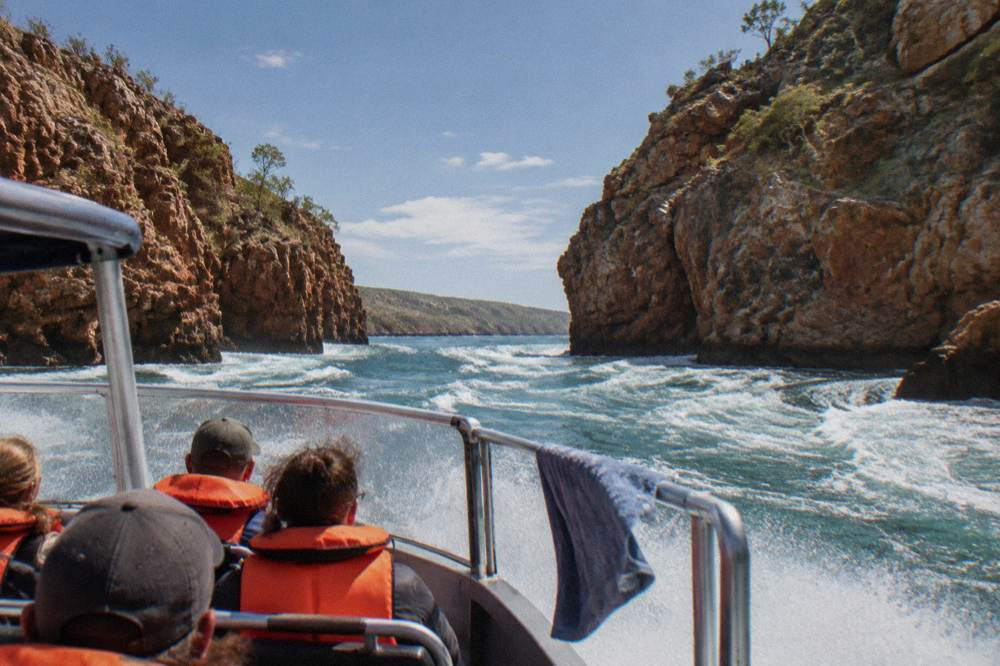
This ribbon table is the month-by-month decision in one view. It is built from the operator's published windows and the Bureau's monthly rainfall averages, so it reflects what is actually on sale rather than what the brochures imply. The rest of the planning pages sit on Horizontal Falls Tours.
| Month | Seaplane and boat tours | Scenic flights | Typical conditions |
|---|---|---|---|
| January | Not running | Wet-season flyovers operate | Wet season, 200.4 mm mean rain |
| February | Not running | Wet-season flyovers operate | Wet season, 177.0 mm mean rain |
| March | Broome morning half day from 17 March | Dry-season flights begin | Wet easing, 98.4 mm mean rain |
| April | Broome morning half day | Dry-season flights | Shoulder month, 25.6 mm mean rain |
| May | All windows open by 5 May | Dry-season flights | Dry, warm, full choice |
| June | All tours running | Dry-season flights | Coolest nights, 18.1 mm mean rain |
| July | All tours running | Dry-season flights | Peak dry, 6.2 mm mean rain |
| August | All tours running | Dry-season flights | Driest month, 2.1 mm mean rain |
| September | All tours to the 30th | Dry-season flights | Warming, derby window closes 30 Sep |
| October | Broome tours only, to the 14th or 31st | Dry-season flights | Hot, dry, season winding down |
| November | Not running | Wet-season flyovers | Wet season returns |
| December | Not running | Wet-season flyovers operate | Wet season, 64.3 mm mean rain |
Two details in that table are worth pulling out. First, the Derby departure has both the shortest window and the shortest flight: Derby Airport sits about 115 km from the falls in a straight line versus about 253 km from Broome, and our Horizontal Falls tours from Derby guide covers the case for basing yourself there. Second, October is a longer season than most people assume, but only for the morning Broome departure; if you want an afternoon on the water, the calendar shuts that door on 14 October.
The Derby half day itself is from A$1,390 per person, rated 4.8 from 76 reviews, and a guest review on the listing calls it "a great experience absolutely loved it. From pickup to drop off all well organised. Outstanding flight over the Kimberleys and of course an unforgettable waterfall experience." Non-refundable, though, like the other seaplane listings, so the date you pick is the date you fly.
How Do Tides And Neap-Tide Dates Change The Plan?
Every Horizontal Falls tour skips neap-tide dates, when the tidal range flattens and the falls run at their weakest, so the tide calendar can delete days from your chosen month before weather ever gets a vote. Spring tides give the most powerful flow, mid-tide dates give a calmer ride, and the operator's neap-tide calendar is on its plan-your-visit page. Check it before you fix your flights, not after. While you're circling tide dates, it's a good moment to settle what David Attenborough really said about Horizontal Falls, since that famous line gets repeated far more often than it gets verified.
This is the layer of planning most first-time visitors miss, and it is the one that matters most to the spectacle. The Department of Transport's boating guide records tides of up to 11 metres in the area and warns recreational and non-specialist vessels not to enter when the tide is rushing, precisely because the flow is dangerous and unpredictable. Licensed tour operators run purpose-built boats through the wide gap only; the narrow gap has been closed to traversal since 2022, and guests view it from a safe distance.
The operator's own wording on the wide-gap policy is explicit: "respecting local Indigenous beliefs, we only traverse the Wide Gap (first set of Falls) and do not go through the Narrow Gap (second set of Falls) however guests will see the narrow gap at a safe distance." That is a cultural and safety boundary set with the Dambimangari Traditional Owners, whose country this is, in the marine park DBCA names Lalang-gaddam and whose traditional name for the falls is Garaan-ngaddim.
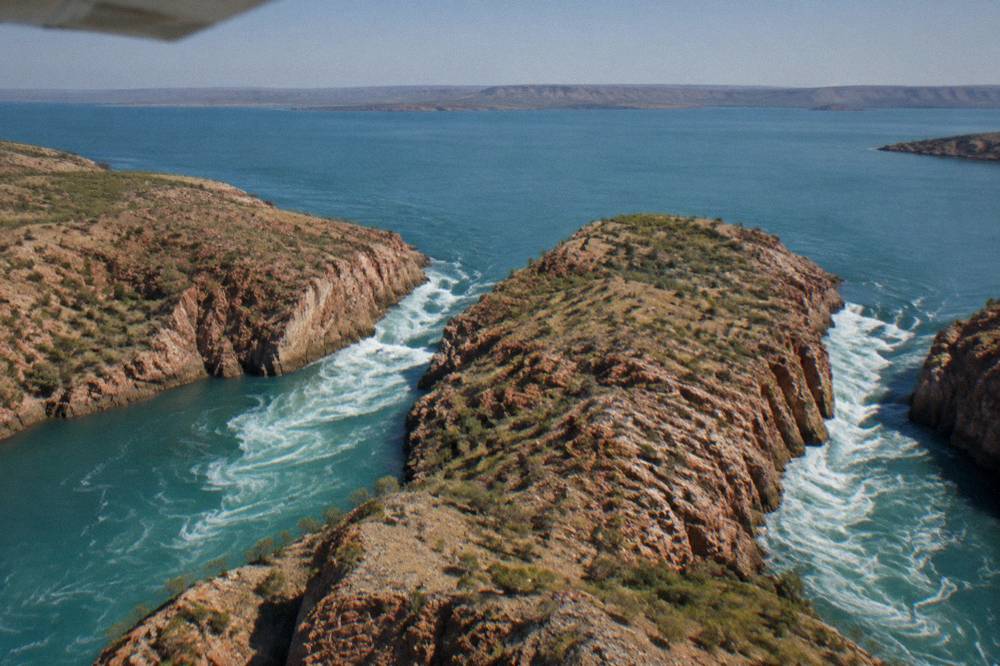
For date planning, the practical sequence is: pick your month from the ribbon above, then open the operator's tide calendar, then book around the neap dates. If you want the fiercest water, aim for a spring-tide date. If you want a gentler ride, mid-tide dates are the calmer bookable option. Our deeper tides and timing guide unpacks the lunar mechanics for readers who want to chase the biggest flow.
The tide logic also explains why the cruise products behave differently. The Kimberley Day Cruise from Broome, from A$1,275 per person and rated 4.9 from 177 reviews, is a 13-and-a-half-hour day that runs a vessel to Talbot Bay and uses tender boats for the close-up viewing, in the listing's own wording. It is weather-and-tide dependent too, but a big stable vessel reads the calendar differently from a seaplane operation. A guest review on that listing sums up the day: "Great day out on the water, quality craft, very knowledgeable and respectful crew and skilled operators. Food was magnificent. Well worth the money."
What Does Broome Weather Do Across The Year?
Broome's climate is warm year round, with mean daily maximums between 29.0 and 34.4 degrees, and the practical difference between months is rain: August averages 2.1 mm while January averages 200.4 mm. Nights range from a 13.7 degree July mean minimum to a 26.4 degree January mean minimum. For tour planning, June to August are the most comfortable months and November to April carry the wet and cyclone season.
These are Bureau of Meteorology averages from the Broome Airport station, all years of record, and they are the numbers to hold in your head when a discount fare to Broome in February looks tempting. February is the second-wettest month on the table and sits squarely inside the cyclone season; the seaplane tours are not running and the falls are best seen from a fixed-wing flyover, if conditions allow a flight at all.
| Month | Mean max (C) | Mean min (C) | Mean rain (mm) | Tour picture |
|---|---|---|---|---|
| January | 33.4 | 26.4 | 200.4 | Flyovers only |
| February | 33.0 | 26.1 | 177.0 | Flyovers only |
| March | 34.0 | 25.5 | 98.4 | Seaplanes from the 17th |
| April | 34.4 | 22.7 | 25.6 | Broome morning half day |
| May | 31.7 | 18.3 | 28.2 | All windows open |
| June | 29.3 | 15.3 | 18.1 | Full season, coolest |
| July | 29.0 | 13.7 | 6.2 | Peak dry season |
| August | 30.5 | 14.9 | 2.1 | Peak dry season |
| September | 32.0 | 18.6 | 1.5 | Derby closes the 30th |
| October | 33.0 | 22.6 | 1.4 | Broome tours wind down |
| November | 33.7 | 25.3 | 9.6 | Flyovers only |
| December | 34.0 | 26.6 | 64.3 | Flyovers only |
Rain is the headline, but stinger season matters to swimmers: it typically runs November to April, and swimming off Broome is not recommended in those months. If your trip mixes a falls tour with beach time at Cable Beach, the dry months solve both problems at once. Crocodile sightings can also close Broome beaches for at least 24 hours, a reminder that this is a wild coastline, not a resort lagoon.
One planning nuance for the flyover format: the scenic flights do not land at the falls at all, so their season is less tide-bound and more weather-bound. The Fly The Falls half day from Fly Broome, from A$895 per person plus a A$45 fuel surcharge listed under exclusions, is rated 4.9 from 285 reviews and includes a Cygnet Bay lunch stop rather than a boat ride. A guest review captures the day: "Such an amazing experience! The staff were friendly and inviting. Lachlan (tinsel) was very entertaining and also informative! A once in a lifetime experience! Oyster farm was interesting and food was excellent."
How Far Ahead Should You Book?
Book two to six months ahead for the May to September peak, earlier for the full day Dampier Peninsula tour, whose small group of 10 sells out fastest, and never assume a same-week seat in July or August. The seaplane listings carry small groups of 10 to 12, the non-refundable terms leave no room for date changes, and the neap-tide calendar means fewer bookable days than the season dates imply. Shoulder months are more forgiving.
The capacity numbers explain the booking pressure. The Broome and Derby half day tours carry a maximum of 12 guests per departure; the full day Dampier Peninsula tour carries 10. The flyover tours carry 12 to 15. That is a small number of seats spread across each season window, and July and August absorb the national school-holiday surge on top.
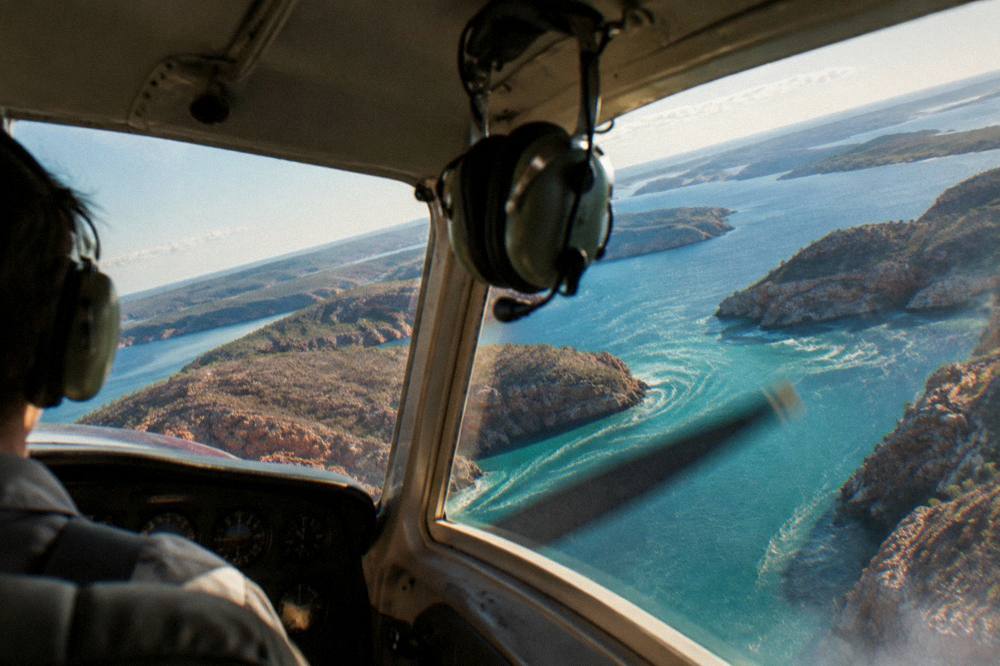
Cancellation terms sharpen the point. The seaplane-and-boat listings are all-sales-final per their booking pages, so a late change of plan has a real cost. The flyover operators are more flexible: Fly Broome and Air Kimberley list free cancellation, with Air Kimberley's cut-off on its listing, and Broome Aviation lists cancellation free up to six days before travel. That asymmetry is worth weighing if your dates are soft; our tour cost comparison lays out the full price ladder.
Timing the booking also means timing your position in the week. A morning half day departs early enough that a hotel pickup in Broome lands at the Air Kimberley terminal with daylight to spare, and travellers often pair the tour with a wider Kimberley stay. Our seaplane tours guide compares the three departure cities in detail. Whatever you choose, the operator's live listing shows the dates that still have seats, and that is the calendar that counts.
Common Questions About Timing A Horizontal Falls Trip
When Is The Best Time To Visit Horizontal Falls?
The dry season, roughly March to October, with May to September offering the widest choice of tours. The Broome morning half day runs 17 March to 31 October, the Derby departure runs 5 May to 30 September, and all tours skip neap-tide dates.
Are Horizontal Falls Tours Still Operating In 2026?
Yes. DBCA confirmed in April 2026 that licensed operators can continue traversing the wide gap until the end of the 2028 tourism season. The operator's published 2026 windows run to 31 October for the Broome morning half day.
What Month Has The Best Weather In Broome?
July and August are the driest, with mean rainfall of 6.2 mm and 2.1 mm and mean maximums of 29.0 and 30.5 degrees. June to August are the most comfortable months for a falls tour combined with beach time.
Can You Visit Horizontal Falls In The Wet Season?
Not by seaplane and boat, but scenic flights still operate. Air Kimberley runs a wet-season Buccaneer Explorer flyover from A$895 per person plus a A$33 fuel surcharge. It is a flight over the falls, not a boat ride.
Why Do Tours Not Run On Neap-Tide Dates?
On neap tides the tidal range flattens and the falls flow at their weakest, so the spectacle drops away. The operator's plan-your-visit page publishes the neap-tide calendar; spring tides give the strongest flow and mid-tide dates are the calmer option.
How Far Ahead Should I Book A Horizontal Falls Tour?
Two to six months for the May to September peak, earlier for the 10-guest full day Dampier Peninsula tour. The seaplane listings are non-refundable, so confirm your dates and the tide calendar before booking.