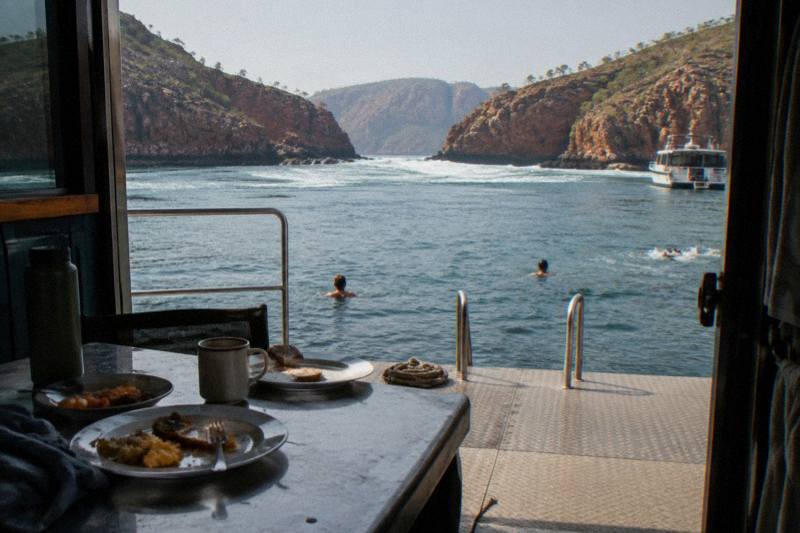
Are The Kimberleys Worth Visiting?
An honest assessment of the Kimberley region in Western Australia: scale, access, seasons, costs and the tour options that make the trip work.
Are The Kimberleys Worth Visiting?
Yes, for most travellers who make the journey, the Kimberley earns the effort. The region's appeal rests on things you cannot see elsewhere in Australia: the enormous tidal waterfalls of Talbot Bay, the Buccaneer Archipelago, pearl farming at Cygnet Bay and rock country whose Traditional Owners, the Dambimangari, co-manage the marine park. The honest caveat is cost and season: almost everything sits far from a sealed road, and a single day tour can pass A$1,000 per person. Since nearly every Kimberley itinerary runs through Broome, our straightforward take on whether Broome deserves your time makes a useful next read.
The Kimberley is the vast northern wedge of Western Australia, and its reputation rests on remoteness rather than infrastructure. Getting to the good parts means light aircraft, boats or helicopters, which is why almost every visitor experiences the region through a booked tour of some kind. The Horizontal Falls at Talbot Bay, the Buccaneer Archipelago and the gorges of the coast are the headline draws, and none of them are reachable by conventional vehicle. For a region-level overview of what the area is known for, the companion piece on what the Kimberley is famous for covers the wider ground.
The value question deserves a straight answer rather than a brochure answer. This article works through what the region actually delivers, when to go, what the realistic costs look like using verified tour prices, and which styles of trip suit which budgets. The figures below come from the Bureau of Meteorology climate record and the published listings. Where a figure matters to your decision, it comes from a verified listing; where something is genuinely unknowable in advance, such as daily tide behaviour, the article says so rather than guessing.
For most readers the practical first step is one of three formats: a full-day boat cruise to the falls, a seaplane and power boat half day, or, at the far end of the budget scale, a multi-day helicopter safari.
What Are You Actually Paying For In The Kimberley?
You are paying for access. The region's defining features, the Horizontal Falls in Talbot Bay, the islands of the Buccaneer Archipelago, the pearl farm at Cygnet Bay and the gorges along the coast, sit behind long distances and almost no road network. A seaplane from Broome to Talbot Bay takes about 1 hour 15 minutes, and the straight-line distance from Broome Airport to the falls is about 253 km. That geography is the product.
The numbers frame the remoteness. From Derby the falls are about 115 km away straight line and roughly 35 to 40 minutes by seaplane; from Cygnet Bay on the Dampier Peninsula, about 102 km and around 30 minutes. Broome to Derby is about 222 km by road, which makes Derby the closer launching point even though most visitors base in Broome, where the accommodation and flight options concentrate. Every one of these figures describes empty distance: water, islands and range country, with no town between departure and destination.
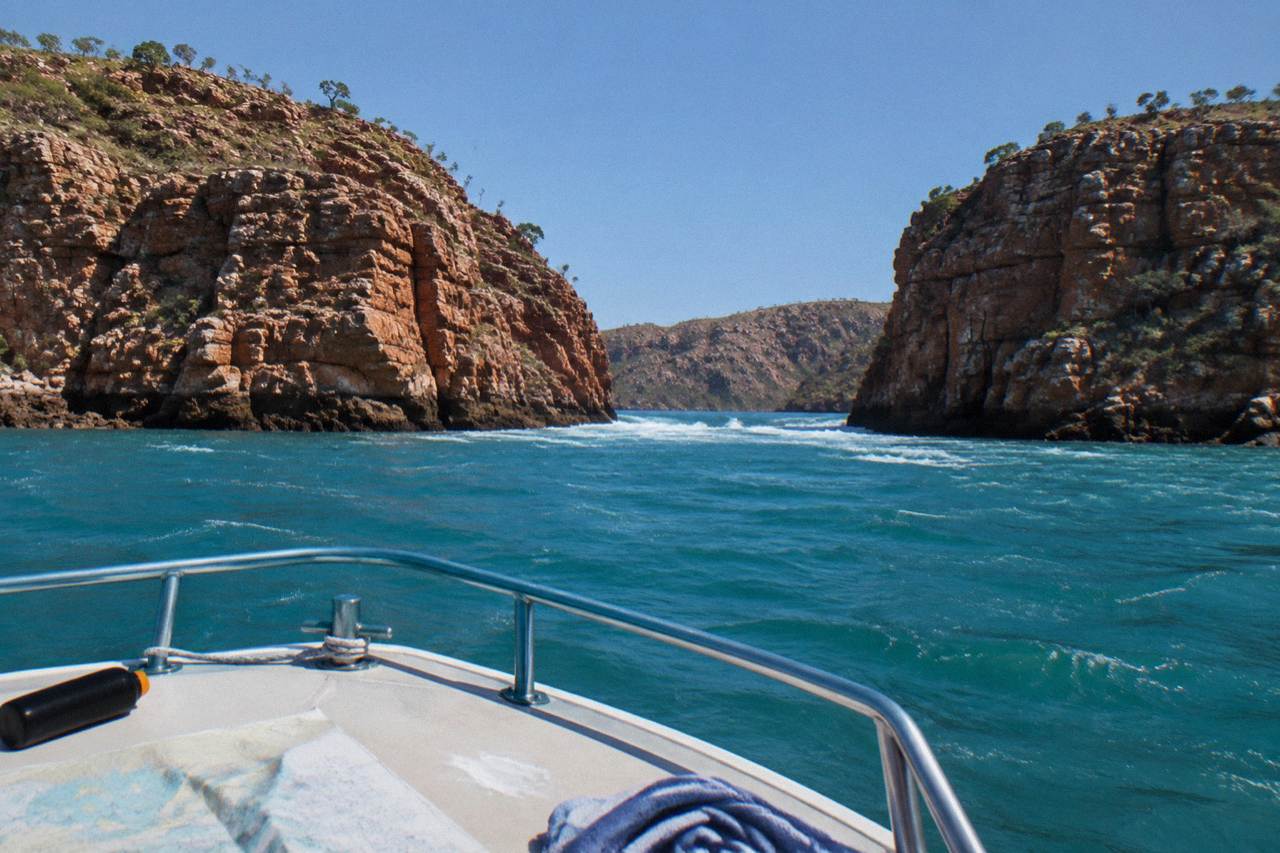
The Horizontal Falls themselves are the region's signature phenomenon. Tides in the area run to up to 11 metres, and the water level on either side of two narrow gaps in the McLarty Range can differ by up to 5 metres, producing the horizontal cascade the area is named for. The traditional name is Garaan-ngaddim, and the falls sit inside Lalang-gaddam Marine Park, jointly managed with the Dambimangari Traditional Owners. The WA Department of Transport's boating guide describes the flow through the gaps as dangerous, unpredictable and turbulent, and advises recreational vessels not to enter, which is exactly why visitors experience it on licensed tours. That safety framing, and the detail that only the wide gap is traversed while the narrow gap has been closed since 2022, is covered fully in the guide to the jet boat ride at the falls.
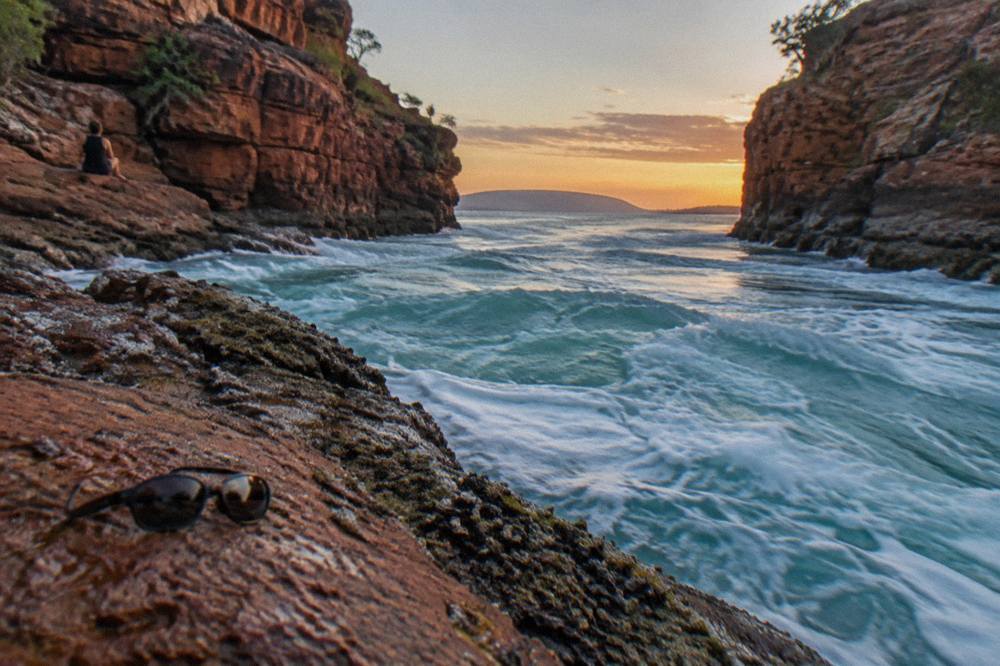
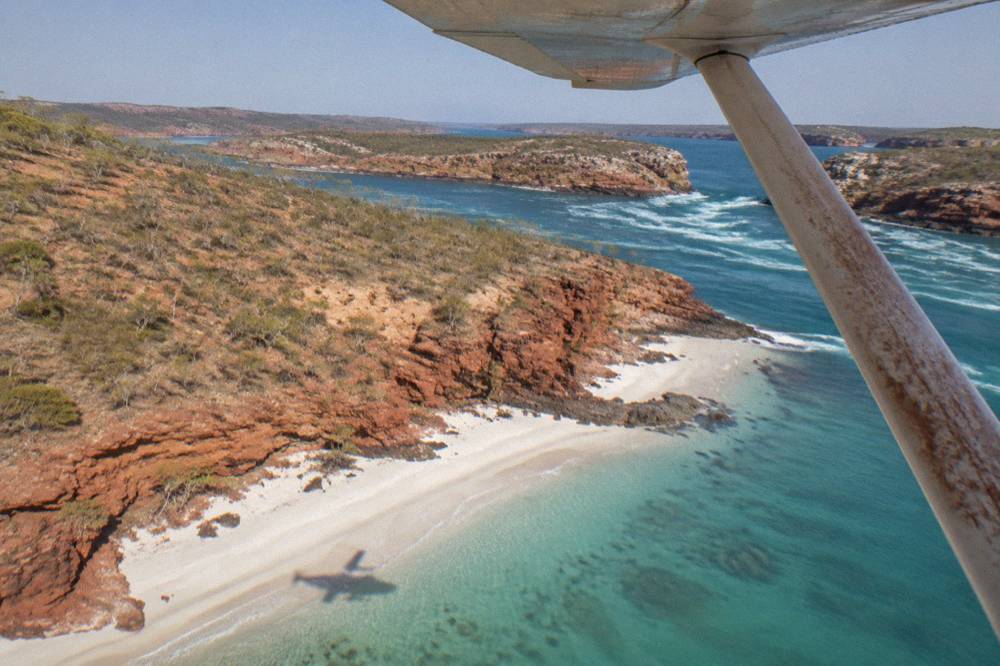
The other half of the region's appeal is the Buccaneer Archipelago, a scatter of islands between King Sound and Collier Bay that is sparsely populated, home to a few Aboriginal outstations and the pearl farm at Cygnet Bay, and otherwise empty of large settlements. Flying over it is one of the standard formats: several fixed-wing tours from Broome combine a Horizontal Falls flyover with a landing at Cygnet Bay. One guest review of the Buccaneer Explorer dry season flight calls it "a bucket list experience", praising the pilot's commentary and a beach swim and lunch, which reflects what these tours actually deliver: aerial spectacle plus a ground stop, not a boat ride through the falls. Since most of these scenic flights depart from Broome anyway, it makes sense to first weigh whether the town itself justifies the journey, a question our honest look at whether Broome is worth visiting takes on directly.
There is also a cultural transition underway that matters to anyone planning ahead. In April 2026 the state confirmed that licensed operators can continue traversing the wide gap until the end of the 2028 tourism season, with a transition toward Dambimangari-led cultural tourism after that. No post-2028 ban date has been published; the reassessment is collaborative, and the state has committed $5 million toward Traditional Owner-led tourism at Garaan-ngaddim through the 2026-27 budget.
When Should You Visit The Kimberley?
Visit in the dry season, roughly March or April through September or October, when rainfall is minimal, roads are open and touring operations run their full calendars. The wet and cyclone season runs roughly November to April, and it concentrates nearly all of Broome's rain into a handful of months. Booking outside the dry season means fewer departures, possible weather disruptions and, for some tours, no operation at all.
The Bureau of Meteorology's long-term averages for Broome Airport make the pattern plain. Mean rainfall falls from 200 mm in January to single figures from July through October, and mean maximum temperatures sit between 29.0 and 34.4 degrees across the dry months. The pattern is why expedition cruise lines schedule their Kimberley voyages between March and September, and why the falls operators publish narrow season windows: the Horizontal Falls Seaplane Adventures half day from Broome runs its morning departures from 17 March to 31 October in the operator's current listing, while the Derby departure window is shorter, 5 May to 30 September. Tours also skip neap-tide dates, when the falls barely flow.
The wet season is not simply a rainier version of the same trip. Operators suspend or narrow their calendars, unsealed roads degrade, and cyclone activity can close airports and beaches for days at a time. Even within the dry season, tours do not run on neap-tide dates, so the calendar that matters is a tide calendar as much as a weather one. Mid-tide dates are bookable and calmer, while spring tides produce the strongest flow through the gaps. If dramatic water is the priority, plan around the bigger tides; if a gentler ride is, plan around the middle of the range.
The shoulder months deserve a mention. Early-season departures, April and May, are promoted by cruise operators for post-wet waterfall flow, while August and October offer dependable weather and whale activity along the coast. The trade-off is price and crowds: peak dry season is when every format is running, and when the region's limited accommodation fills. The site's guide to the best time to visit the falls breaks the tide and season interaction down further.
How Do You Actually See The Kimberley?
Three formats cover almost every visitor: scenic flights over the falls and archipelago from Broome, seaplane tours that land at Talbot Bay for a power boat ride through the wide gap, and boat cruises that travel the coast by water. Flights start from A$780 per person for a non-stop flyover, seaplane and boat combos start from A$1,390, and full-day cruises from A$1,075. Each format buys a different experience.
The flight-only option is the budget entry and the fastest overview. Operators including Air Kimberley, Fly Broome and Broome Aviation run fixed-wing tours of roughly 3 to 10 hours, most pairing the Horizontal Falls flyover with a Cygnet Bay landing, pearl farm visit and lunch. These never include a boat ride through the falls, that is the seaplane operators' territory, but they deliver the archipelago from the air. One recent review of the Buccaneer Explorer flight describes "magical views all the way along and excellent commentary", a fair summary of the format's strengths.
The seaplane format is the signature Kimberley day. Horizontal Falls Seaplane Adventures flies guests from Broome, Derby or Cygnet Bay to a floating pontoon base at Talbot Bay, then runs power boats through the wide gap. A review of the Broome half day reads: "An amazing experience with nature. Beautiful place to visit. It's more than we expected and beyond our expectations." Another, from the Derby departure, praises "an outstanding flight over the Kimberleys and of course an unforgettable waterfall experience." These are the tours people picture when they imagine the region.
There are hybrids worth knowing about too. The Horizontal Falls & Dampier Peninsula Discovery Tour strings a 4x4 leg down the peninsula together with the seaplane and boat day over 10 hours, rated 4.8 from 191 reviews and from A$1,650 per person; a guest review sums up the variety plainly: "Bus, plane, boat, boat, plane." At the overnight end, Kimberley Day Cruise sells a three-day package pairing the cruise with an eco-tent stay at Cygnet Bay, from A$1,910 per person. Note that the seaplane operator's own overnight stays are sold on its own site only, and no such product appears on this roster.
If the aerial overview plus a pearl farm stop is the format that fits your budget, the flight side of the roster is worth a close look.
The cruise format is the slow, immersive version. The Kimberley Day Cruise runs a full-day vessel tour from Broome, with hotel pickup from 4:30 am, or direct from Cygnet Bay on the Dampier Peninsula, using tender boats for close-up viewing at the falls. A guest review of the Broome departure reads: "Great day out on the water, quality craft, very knowledgeable and respectful crew and skilled operators. Food was magnificent. Well worth the money." Beyond day cruises, multi-day expedition ships run 10-night Darwin to Broome itineraries and longer, through the gorges of the far coast; the Kimberley cruises that visit the falls covers that end of the market.
Is The Kimberley Worth The Money?
Yes, provided you judge it per memory rather than per day: verified from-prices run from A$780 for a non-stop scenic flight to A$24,950 for a six-day helicopter safari, with most full-day experiences clustered between A$1,000 and A$1,650 per person, and since the scenery cannot be reached independently, the aircraft and vessel costs of this remote region are real, not padded.
The table below sets out the honest spread across the main formats, using only the verified from-prices from the current listings.
| Format and tour | Operator | From price (AUD) | Duration | Falls boat ride |
|---|---|---|---|---|
| Non-stop scenic flight, no landing | Broome Aviation | A$780 | 3 hours | No |
| Buccaneer Explorer flyover, dry season | Air Kimberley | A$895 plus A$33 surcharge | 6 hours | No |
| Fly the Falls, Cygnet Bay lunch | Fly Broome | A$895 plus A$45 surcharge | 6 hours | No |
| Kimberley Day Cruise from Cygnet Bay | Kimberley Day Cruise | A$1,075 | 10 hours | Yes, by tender |
| Seaplane half day from Derby | Horizontal Falls Seaplane Adventures | A$1,390 | 6 hours | Yes |
| Seaplane half day from Broome | Horizontal Falls Seaplane Adventures | A$1,495 | 6 hours | Yes |
| Kimberley Day Cruise from Broome | Kimberley Day Cruise | A$1,275 | 13 hours 30 minutes | Yes, by tender |
| 6-day West Kimberley helicopter safari | Ventur Atlas | A$24,950 | 6 days | Yes, per the listing |
Read the table as three tiers. Under A$1,000 buys the aerial overview. Between A$1,000 and A$1,650 buys either the seaplane and power boat day or the full-day cruise, and both include the on-water falls experience by different means. Above that, the multi-day safari tier is a different category of trip entirely, closer to a private expedition than a tour. Note the fuel surcharges: the Fly Broome and Air Kimberley listings exclude A$45 and A$33 per person respectively, charged on top of the from-price.
Cancellation terms vary sharply and are worth checking before committing. The Fly Broome and Air Kimberley listings show free cancellation windows; the seaplane tours and the Kimberley Day Cruise listings are largely non-refundable. Never assume a blanket policy: read the specific booking page for the tour you choose, because the cutoffs differ listing by listing.
For the middle tier, the cruise format pairs well with a few nights in Broome, and the Kimberley Day Cruise from Broome is the article's featured option: a 13 hours 30 minutes day rated 4.9 from 177 reviews, from A$1,275 per person with hotel pickup.
Who Should Skip The Kimberley?
Be honest on three points: if you cannot travel in the dry season window, if a budget ceiling sits below the A$780 entry flight, or if long transits in small aircraft and boats sound unpleasant rather than adventurous, the Kimberley will frustrate you. A seaplane day from Broome runs about 6 hours door to door; the cruise from Broome means a 4:30 am pickup. This region rewards people who want to be there. And if the cruise is the part of the trip you keep circling back to, our honest take on whether a Kimberley cruise justifies its price weighs a day on the water against a scenic flight.
Travellers who dislike heat, remote distances or itinerary dependency should also weigh alternatives. There is no wandering up on a whim: the falls have no road access, the pontoon base floats in Talbot Bay, and even Cygnet Bay, which does have a road, is about 200 to 220 km from Broome along the now-sealed Cape Leveque Road. The trade is that the crowds, commercial strips and traffic of better-connected destinations simply do not exist here. One reviewer of the Cygnet Bay Explorer tour captured the balance honestly: "It was a long day and not cheap but it was worth it."
By the same measure, the region suits some travellers unusually well. Photographers, birders and anyone drawn to geology get country that changes character with every tide. Visitors with limited mobility should check the listing details carefully, because boarding a seaplane pontoon or a tender boat involves steps and uneven surfaces that the listings describe rather than soften. And travellers who enjoy a plan, who like knowing exactly where the day goes and what it costs before it starts, tend to thrive here: the tours are tightly scheduled because the distances force them to be.
For those who decide the region is worth it, the planning sequence that works is straightforward. Pick the format first, flight, seaplane or cruise, then pick the departure point that suits your base, Broome or Derby, then book early in the dry season you plan to visit, since the small group sizes, max 12 on the seaplane tours, max 40 on the cruise, fill. The seaplane versus boat versus cruise comparison walks that decision in detail.
Whichever way you go, the region answers the worth-it question with geography. There is a reason the roster is dominated by aircraft and boats: the Kimberley's best places were never going to be reachable any other way, and on Horizontal Falls Tours the full spread of those options, from a three-hour flyover to a six-day safari, sits in one place to compare.
Common Questions About The Kimberleys
Are The Kimberleys Worth Visiting?
For most travellers, yes. The region offers tidal waterfalls, the Buccaneer Archipelago and a roadless coast that cannot be seen anywhere else in Australia. The trade-offs are cost, with most full-day tours between A$1,000 and A$1,650 per person, and a dry season of roughly March to October.
How many days do you need in the Kimberley?
Three to five days based in Broome or Derby covers one or two flagship tours plus downtime; the falls day trips run from 6 hours to 13 hours 30 minutes each. A fuller expedition cruise runs 10 nights or more. How long you need depends mostly on whether you add a multi-day cruise or safari to a day tour.
What is the best month to visit the Kimberley?
Between May and September, when rainfall is near zero and every operator is running. April and October are workable shoulder months with fuller waterfalls or warmer weather respectively. Tours do not run on neap-tide dates, so exact days matter as much as months.
Can you see the Kimberley on a budget?
Partly. The cheapest verified entry point is a non-stop scenic flight from A$780 per person, which shows the falls and the archipelago from the air but includes no boat ride. There is no independent road access to the falls, so every on-water experience is a paid tour.
Is a Kimberley cruise better than a flight?
They serve different trips. A scenic flight gives the overview in hours; a cruise gives sea-level access to the coast and the falls over a full day or multiple days. If seeing the falls by water matters, choose a tour whose listing includes the boat or tender experience.