Buccaneer Archipelago Guide: Islands, Reefs And Tours
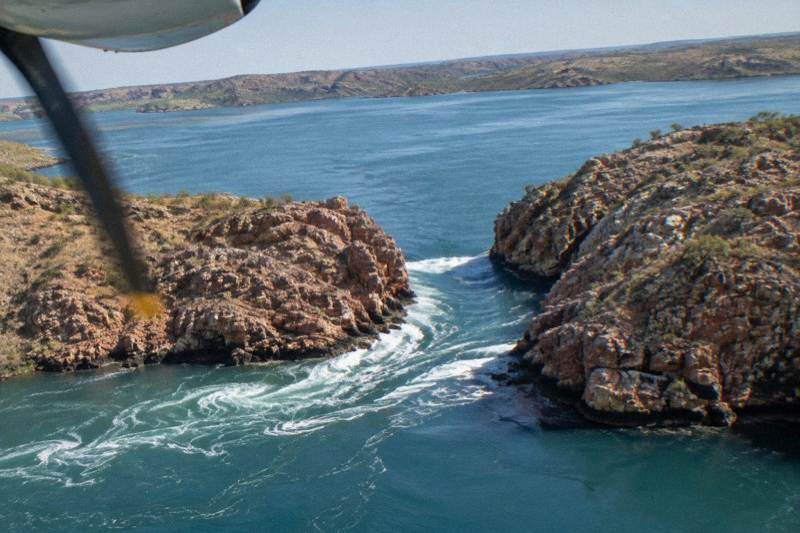
The Buccaneer Archipelago is the island-studded stretch of the Kimberley coast that every Horizontal Falls flight crosses: hundreds of islands, pearl farms, some of the highest tides in Australia and almost no permanent residents.
Short answer
The Buccaneer Archipelago is a group of islands spread across King Sound and the adjoining Kimberley coast, traditional country of the Dambimangari people. It has no road access, so tours reach it by fixed-wing flight, seaplane or boat, from about A$780 per person for a flyover from Broome.
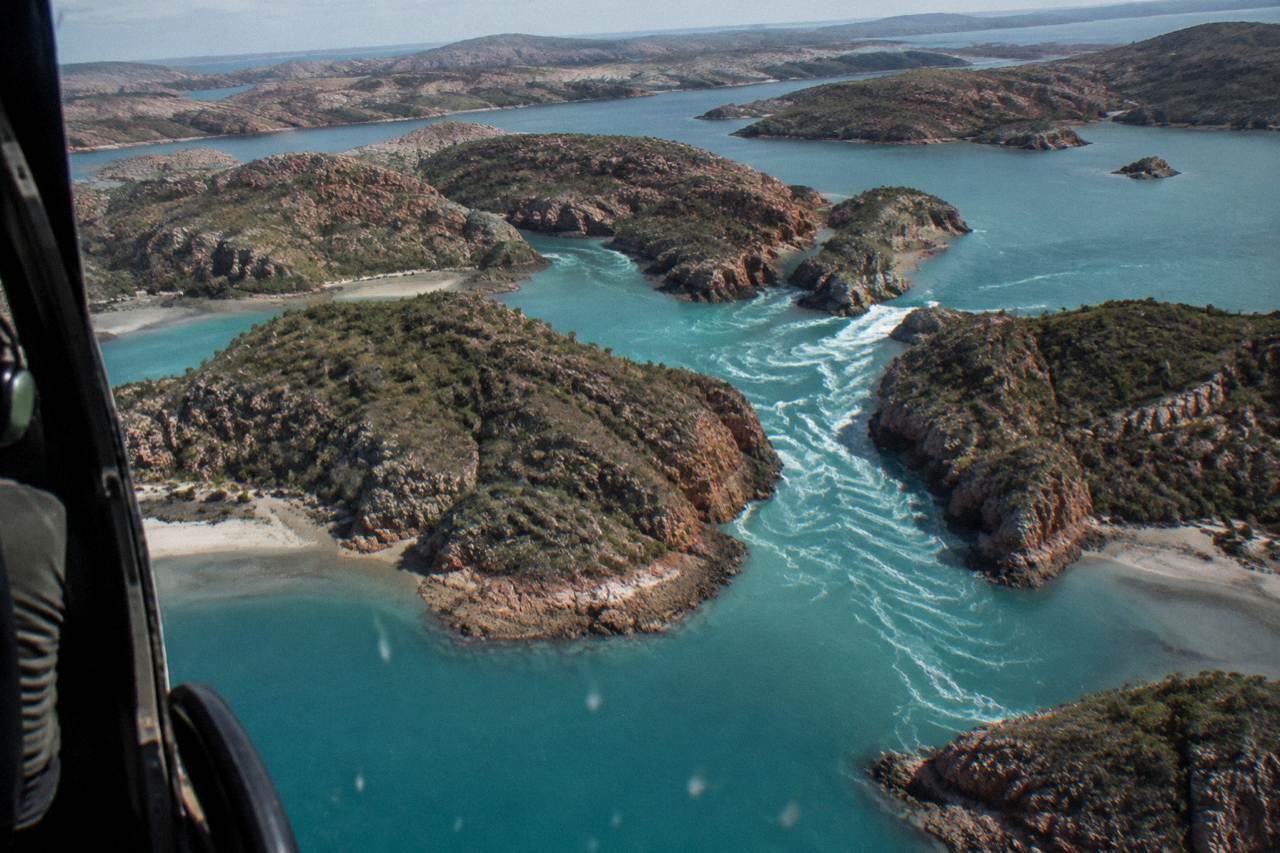
The Buccaneer Archipelago is the maze of islands that fills the sea between King Sound and Collier Bay on the Kimberley coast, and it is the scenery almost every Horizontal Falls tour crosses to get there. Passengers who book a flyover from Broome spend as much time over these islands and reefs as over the falls themselves. The archipelago is sparsely populated: a few Aboriginal outstations, pearl farming at Cygnet Bay, and no large permanent communities on the islands, according to Western Australian fisheries fact sheets and the Dambimangari Aboriginal Corporation's own community pages. If you're curious about who actually spends time out there, our guide to the Buccaneer Archipelago's residents introduces the pearling families, outstation caretakers, and visiting scientists who pass through each season.
The name "Buccaneer" sticks to the whole region, from Cockatoo and Koolan islands in the south to the reef-choked channels around Talbot Bay. For most travellers it is the single most photogenic stretch of the Kimberley coast. This guide covers what the archipelago is, how its extraordinary tides work, which tours actually cross it, and how to plan a visit.
What Is The Buccaneer Archipelago?
The Buccaneer Archipelago is a scattered group of islands on the Kimberley coast of Western Australia, lying in and around King Sound and Collier Bay, roughly between the towns of Derby and the Mitchell Plateau. It is traditional country of the Dambimangari people, jointly managed with the state as part of the Lalang-gaddam Marine Park. There is no road access and no ferry: every visitor arrives by light aircraft, seaplane or boat.
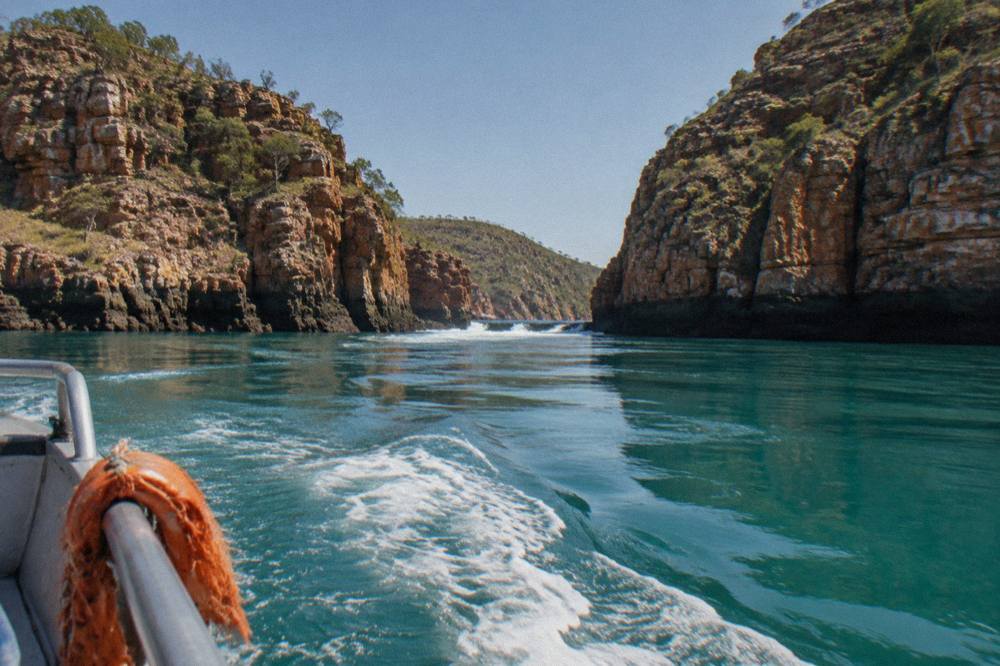
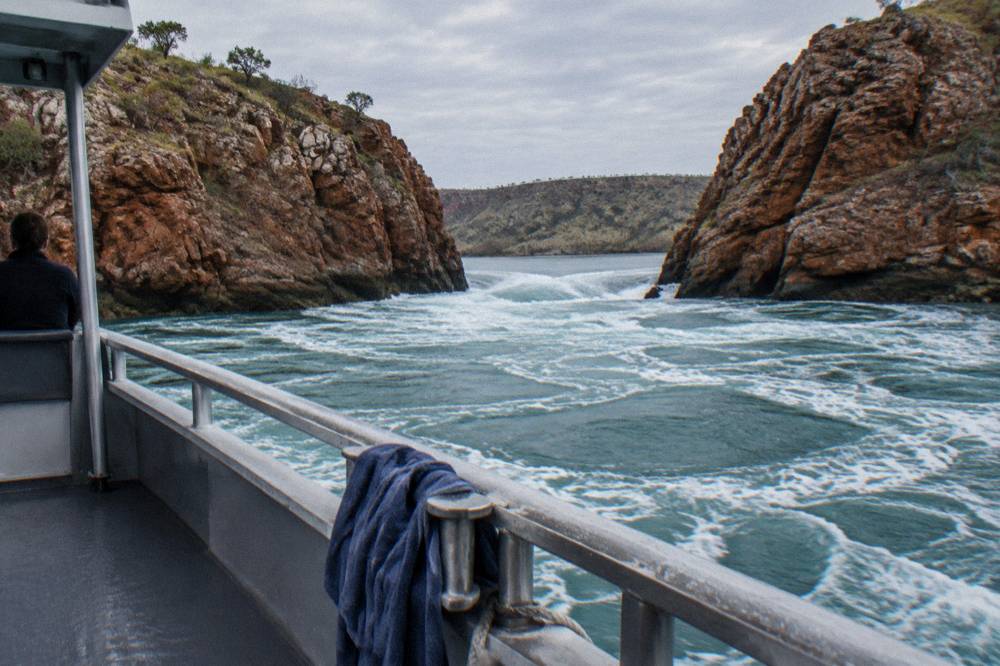
The archipelago is best understood as drowned ranges: the King Leopold Ranges run off the land and into the sea, and their sandstone tops become islands while their valleys become deep, tide-scoured channels. The result is island after island, many of them steep-sided and ironstone-red, separated by water that runs fast and changes depth dramatically with every tide. The Horizontal Falls themselves, known traditionally as Garaan-ngaddim, sit at Talbot Bay on the eastern side of the archipelago, where the tide forces through two narrow gaps in the McLarty Range.
The whole area now sits inside Lalang-gaddam Marine Park, an amalgamation of the earlier Lalang-garram marine parks, jointly managed by the Department of Biodiversity, Conservation and Attractions (DBCA) and the Dambimangari Traditional Owners. Visitors will hear both names: Garaan-ngaddim for the falls, and the Dambimangari connection to the islands and waters.
What makes the archipelago unusual, beyond its raw scenery, is how empty it is. The islands have no towns, no mains power and no vehicle access. Tourism is the main traffic, and pearling at Cygnet Bay on the Dampier Peninsula side is the best-known industry in the wider region. If your mental image of the Kimberley coast is empty red islands and racing turquoise water, the Buccaneer Archipelago is that image.
Where Is The Buccaneer Archipelago And How Do The Tides Work?
The archipelago stretches off the Kimberley coast due north of Derby, with King Sound to its south and Collier Bay to its north-east. Derby sits about 115 km straight-line from the Horizontal Falls, while Broome is about 253 km away, which is why flights from Derby reach Talbot Bay in roughly 40 minutes versus about 1 hour 15 minutes from Broome. The same tides that drain King Sound are what power the falls.
The tides are the engine of the whole archipelago. Derby, at the head of King Sound, records the largest tidal range in Australia, and the water that floods in and out of the Sound twice a day has to squeeze through the archipelago's channels. The WA Department of Transport's boating guide records tides of up to 11 metres in the Talbot Bay area and warns that flow through the gaps can be dangerous and unpredictable, with water levels up to 5 metres different on either side of the falls. Recreational boats are advised not to enter when the tide is rushing, which is one reason almost all visitors see this coast from a licensed tour.
| Departure point | Straight-line distance to the falls | Approximate flight time to Talbot Bay |
|---|---|---|
| Broome | about 253 km | about 1 hour 15 minutes |
| Derby | about 115 km | about 35 to 40 minutes |
| Cygnet Bay Pearl Farm | about 102 km | about 30 minutes |
The geography explains the touring patterns. Broome is the biggest base and the departure point for most flyover tours, but it is the farthest away, so a full morning or afternoon is needed. Derby, about 222 km from Broome by road, is much closer to the archipelago and suits travellers already touring the west Kimberley. Cygnet Bay, at the tip of the Dampier Peninsula, is closest of all, and a couple of tours start right there.
Which Tours Cross The Buccaneer Archipelago?
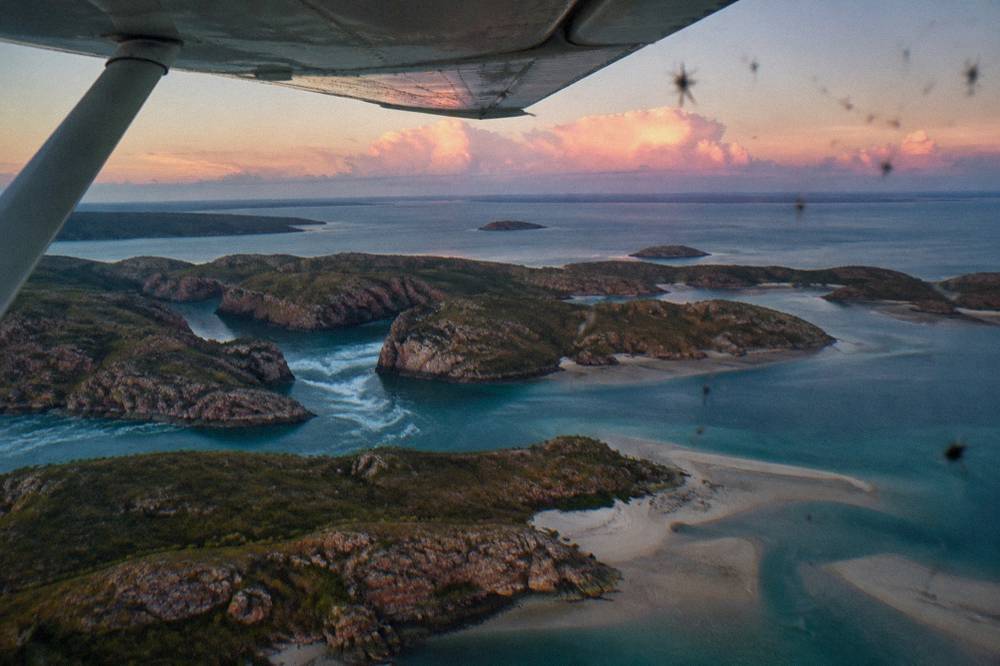
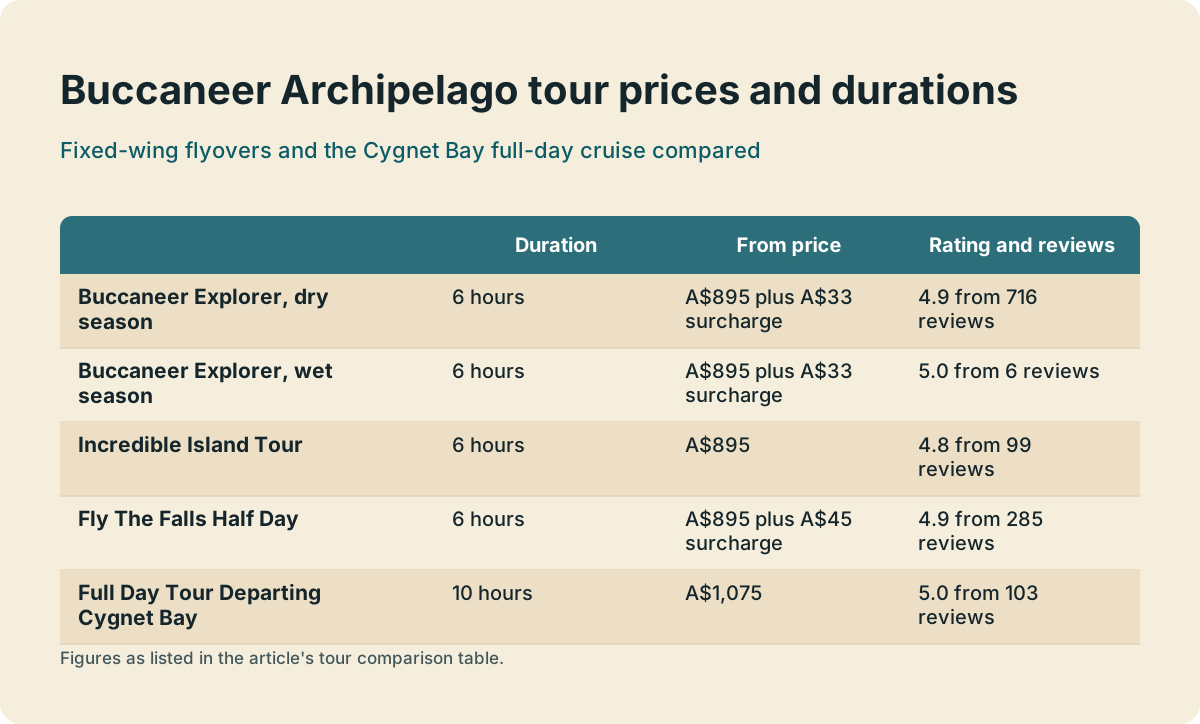
Nearly every Horizontal Falls tour from Broome crosses the archipelago, but the fixed-wing scenic flights cover the most islands for the least money. The Buccaneer Explorer dry-season flight from Air Kimberley runs from A$895 per person plus a A$33 fuel surcharge, and the Broome Aviation Incredible Island Tour also starts from A$895. Boat-based options include the Kimberley Day Cruise tours from Cygnet Bay, from A$1,075 per person.
The name is no accident: tours with "Buccaneer" in the title were built around this archipelago. The Buccaneer Explorer, dry-season version, is Air Kimberley's six-hour flight from Broome, rated 4.9 from 716 reviews on its listing. It overflies the falls and the archipelago, lands at Cygnet Bay, and includes the pearl farm and island coastline in one loop. A review from Katy M on the listing calls it "a bucket list experience" with "magical views all the way along and excellent commentary by our pilot". A wet-season version of the same flight, rated 5.0 from 6 reviews, also runs from A$895. All prices are from-figures that vary by date, so treat them accordingly.
| Tour | Operator | Mode | Duration | From price | Rating and reviews |
|---|---|---|---|---|---|
| Buccaneer Explorer, dry season | Air Kimberley | fixed-wing flyover | 6 hours | A$895 plus A$33 surcharge | 4.9 from 716 reviews |
| Buccaneer Explorer, wet season | Air Kimberley | fixed-wing flyover | 6 hours | A$895 | 5.0 from 6 reviews |
| Incredible Island Tour | Broome Aviation | fixed-wing flyover | 6 hours | A$895 | 4.8 from 99 reviews |
| Fly The Falls Half Day | Fly Broome | fixed-wing flyover | 6 hours | A$895 plus A$45 surcharge | 4.9 from 285 reviews |
| Full Day Tour Departing Cygnet Bay | Kimberley Day Cruise | cruise ship and tender boats | 10 hours | A$1,075 | 5.0 from 103 reviews |
Note the pattern in that table: every fixed-wing flight is a flyover of the falls, not a boat ride through them. Only the seaplane-and-jet-boat tours and the Kimberley Day Cruise products include a boat experience at the falls, described in the listings as a power boat cruise or tender boats to the Horizontal Falls. If crossing the archipelago by air is the priority, a flyover is the cheapest way to do it; if being on the water between the islands matters, the cruise from Cygnet Bay is the value pick. The full comparison of flight, seaplane and cruise formats is in our seaplane versus boat versus cruise guide, and the wider field is covered in the Horizontal Falls scenic flights roundup.
For travellers weighing the two A$895 flyovers, the difference is mostly the operator and the ground program. The Buccaneer Explorer's listing shows free cancellation up to 24 hours before departure; Broome Aviation's Incredible Island Tour, rated 4.8 from 99 reviews, lists free cancellation up to six days before travel, and its listing mentions breakfast, the Cygnet Bay Pearl Farm and whale watching in season, without promising any sighting. A review from Dorothy R describes "a great morning which included a buffet breakfast, seeing a mother whale and calf" and "a beautiful flight over the horizontal falls".
The Buccaneer Explorer dry-season flight is the one this site features for the archipelago, and you can read the full breakdown on the Buccaneer Explorer tour page, or Check availability if you already know your dates.
What About Cygnet Bay And The Pearl Farms?
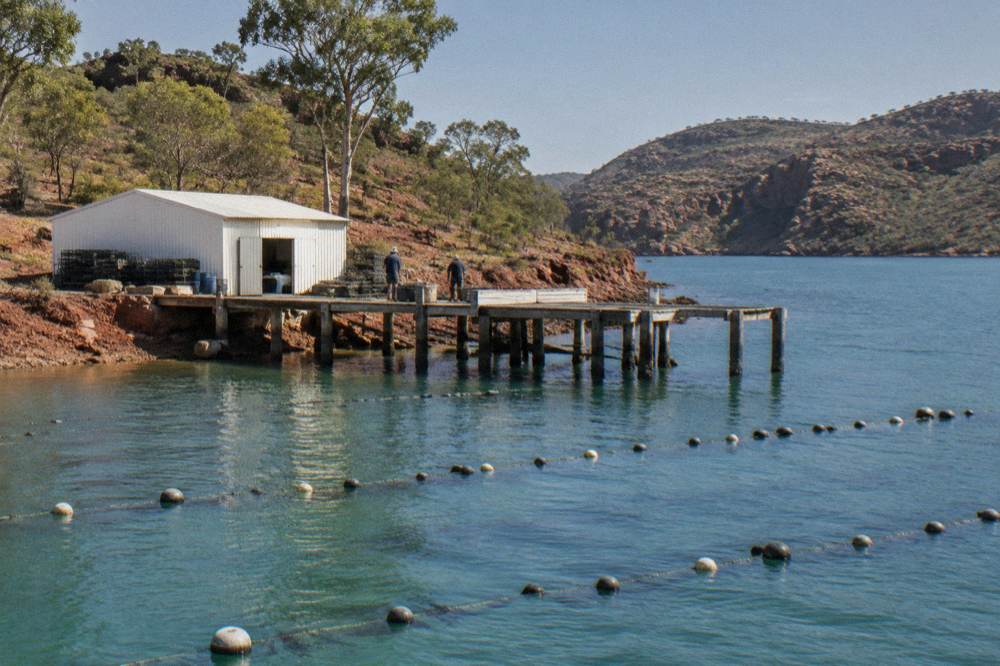
Cygnet Bay, at the tip of the Dampier Peninsula, is home to a working pearl farm and is the closest land base to the archipelago, about 102 km straight-line from the falls. Several tours pair an archipelago flyover with a landing at Cygnet Bay, and the Kimberley Day Cruise departs from the pearl farm itself. It is the one place in the region where a tour departure point and a working industry share the same jetty.
Pearling is the archipelago's old economy. The Kimberley coast was long a centre of Australia's pearling industry, first for shell and later for cultured pearls, and Cygnet Bay Pearl Farm carries that tradition today as one of the region's known operators. The fisheries and community fact sheets describe aquaculture and pearl farming as the main ongoing industry presence among the islands, alongside a handful of outstations.
For a planner, Cygnet Bay matters for three practical reasons. First, it is a departure point: the Full Day Tour Departing Cygnet Bay, rated 5.0 from 103 reviews and from A$1,075 per person, puts you on a cruise vessel among the islands rather than above them, with tender boats to the falls. Second, it is a lunch stop on several flyovers, including the Buccaneer Explorer. Third, it is reachable by road: the Broome to Cape Leveque road is now sealed for essentially its full length, roughly 200 to 220 km from Broome, and the Shire of Broome's road report lists it as open. The last few kilometres to the pearl farm are unsealed.
Travellers combining the archipelago with the Dampier Peninsula can also look at the Horizontal Falls and Cape Leveque combo guide, which covers the same territory by land and air.
Does Anyone Live In The Buccaneer Archipelago?
Very few people live among the islands permanently. Official fact sheets describe the Buccaneer Archipelago as sparsely populated, with a few Aboriginal outstations, pearling operations at Cygnet Bay and no large permanent communities on the islands themselves. Most Dambimangari community members live in mainland towns such as Derby, and the islands remain primarily traditional country rather than settled land.
That is a striking fact for a region so close, in tourism terms, to Broome. The islands have no reticulated services, no schools and no scheduled transport links. The people with the deepest connection to the archipelago are the Dambimangari and related Traditional Owner groups, whose country covers the islands and waters of Lalang-gaddam Marine Park. Their corporation's community pages describe most members living on the mainland while maintaining strong customary connections to the islands, including ranger work and joint management of the marine park with DBCA.
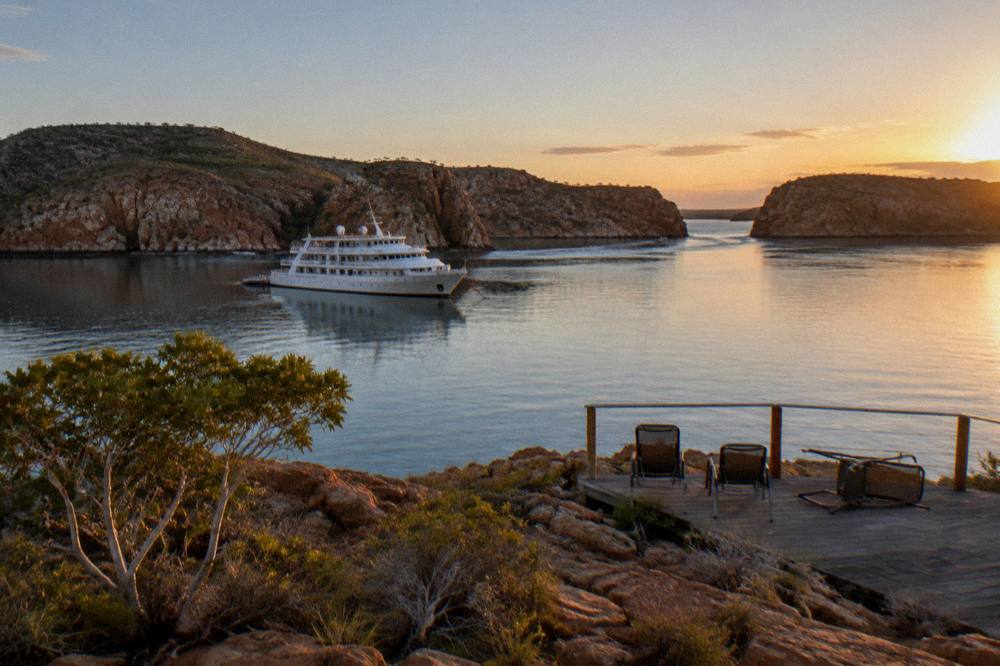
For visitors, this emptiness is the point. There are no hotels among the islands, no shops and no phone coverage in most of the archipelago, so a day tour by air or a cruise is the standard way in, and the rare overnight product is the Cygnet Bay eco-tent package. Our longer treatment of the question, including who manages what, is in the post does anyone live in the Buccaneer Archipelago.
When Should You Visit The Buccaneer Archipelago?
The dry season, roughly April to October, is the standard window: Broome's mean maximum temperatures run from about 29 to 34 degrees and rainfall is minimal from May through October, while the wet and cyclone season runs roughly November to April. Tour season dates matter too: the seaplane operator's plan-your-visit page lists its half-day tours from Broome between 17 March and 31 October 2026, with some variants on narrower windows.
The climate data makes the choice fairly stark. At Broome Airport, the Bureau of Meteorology's long-term averages show mean rainfall collapsing from March into April and staying near zero from July to October. Temperatures are warm year-round, but the November-to-April wet season brings cyclone risk and heavy rain, and tour schedules thin out. The seaplane operator's 2026 dates hedge further: the Derby half day runs 5 May to 30 September, and the Dampier Peninsula full day 29 April to 15 October, with no tours on neap-tide dates because the falls need moving water to perform.
| Month group | Broome mean max | Broome mean rainfall | Tour picture |
|---|---|---|---|
| May to July | about 29 to 32 C | under 30 mm | Peak dry season, all tours running, coolest mornings |
| August to October | about 30 to 33 C | 1 to 2 mm | Dry, warm, whale season referenced in listings |
| November to April | about 33 to 34 C | 25.6 to 200.4 mm | Wet and cyclone season, limited departures |
Within the dry season, spring tides produce the strongest flow at the falls and mid-tide dates are calmer, per the operator's own guidance. Book the A$895-class flyovers for the aerial views, and if the boat ride through the wide gap is the priority, aim for a date the seaplane tours are running, remembering that the DBCA has confirmed licensed operators may keep traversing the wide gap until the end of the 2028 tourism season. The best time to visit Horizontal Falls guide unpacks tide timing in detail.
Broome, Derby Or Cygnet Bay: Where Should You Start?
Start from Broome if you want the most departures and the fullest tours, from Derby if you are already in the west Kimberley and want the shortest flight, and from Cygnet Bay if you are staying on the Dampier Peninsula or want a boat-based day among the islands. Every one of the fourteen verified tours on this site starts from one of these three bases, and the choice changes both price and what you actually do at the falls.
Broome is the transport hub: it has the region's main airport, the widest range of accommodation, and hotel pickup on essentially every tour in the roster. The trade-off is distance, about 253 km straight-line to the falls, so even half-day tours run around six hours door to door. The Derby departures suit travellers driving the Gibb River Road circuit, and the Derby half-day seaplane tour, from A$1,390 per person and rated 4.8 from 76 reviews, spends less time in the air and more at Talbot Bay. Its listing is non-refundable, so read the booking page before committing.
Cygnet Bay suits a different trip entirely: a Dampier Peninsula stay, with the pearl farm as your launch point. The cruise from Cygnet Bay needs no flight at all, and travellers staying in Broome can reach the peninsula by road transfer on the sealed Cape Leveque road. The ten-hour day is long, and the listing for that tour shows no pickup, so you need to be at the pearl farm to start.
The seaplane-and-boat format is a third choice again, with the half-day seaplane tour from Broome, from A$1,495 and rated 4.8 from 727 reviews, the most-reviewed product of that type on this site, and a Dampier Peninsula full-day version pairing the 4x4 drive with the flight. Those options, and the overnight eco-tent package, are compared in the tours from Broome overview, and the same reasoning is laid out for the northern base in the tours from Derby guide. Whichever base you choose, the listings, prices and cancellation terms are compared side by side across Horizontal Falls Tours.
What Does A Buccaneer Archipelago Tour Actually Cost?
Fixed-wing flyovers from Broome start from A$780 per person for the short non-stop islands flight, from A$895 plus a fuel surcharge for the full six-hour circuits, and the cruise-based days run from A$1,075 to A$1,275. Seaplane-and-boat tours cost from A$1,390, and the only overnight products are the Cygnet Bay eco-tent package from A$1,910 and the six-day helicopter safari from A$24,950.
| Tour type | Cheapest verified from-price | What you get at the archipelago |
|---|---|---|
| Non-stop flyover | A$780 | Archipelago and falls from the air, no landing, about 3 hours total |
| Full flyover circuit | A$895 plus A$33 or A$45 surcharge | Islands, falls flyover, Cygnet Bay landing, 6 hours |
| Cruise from Cygnet Bay | A$1,075 | A day on the water among the islands, tender boats to the falls |
| Seaplane and power boat | A$1,390 | Flight in, power boat ride through the wide gap, flight out |
| Overnight package | A$1,910 | Cruise plus eco-tent stay at Cygnet Bay, 3 days |
All of these are from-prices that vary by date and group size. Fuel surcharges deserve a line of their own because they sit outside the headline price: the listing exclusions show A$45 per person on the Fly Broome circuit and A$33 on the Air Kimberley dry-season flights. Cancellation terms also vary sharply, from free cancellation up to 24 hours on the Air Kimberley and Fly Broome listings to free cancellation on the Broome Aviation sea safari up to six days before travel and non-refundable terms on the seaplane and cruise products. There is no blanket rule, so read the booking page for the specific tour before you pay. The full price picture, including what drives the differences, is in how much Horizontal Falls tours cost.
Common Questions About The Buccaneer Archipelago
What is the Buccaneer Archipelago?
A scattered group of islands off the Kimberley coast of Western Australia, in and around King Sound and Collier Bay, traditionally owned by the Dambimangari people and jointly managed as part of Lalang-gaddam Marine Park. It includes the Horizontal Falls at Talbot Bay and the Cygnet Bay pearling area on the nearby peninsula.
Can you stay in the Buccaneer Archipelago?
Not among the islands themselves: there are no towns or hotels on the islands. The overnight products on this site's roster are a three-day Cygnet Bay eco-tent package from A$1,910 per person and a six-day helicopter safari from A$24,950, both based around the region's tour infrastructure rather than island settlements.
Which tour covers the most of the Buccaneer Archipelago?
The fixed-wing flyover circuits are built around the archipelago: the Buccaneer Explorer and the Incredible Island Tour, both from A$895 per person for six hours from Broome. The cruise from Cygnet Bay covers the islands from water level instead, from A$1,075.
Are the Horizontal Falls in the Buccaneer Archipelago?
Yes, the falls, known traditionally as Garaan-ngaddim, sit at Talbot Bay within the archipelago, where tides of up to 11 metres force water through two gaps in the McLarty Range. Licensed tour boats traverse only the wide gap, and that is confirmed until the end of the 2028 tourism season.
How do you get to the Buccaneer Archipelago?
By air or by boat only: there are no roads or ferries to the islands. Tours depart from Broome, about 253 km from the falls by air, from Derby, about 115 km, and from Cygnet Bay Pearl Farm, about 102 km, at the end of the sealed Cape Leveque road.