What Is The Best Time Of Year To Do A Kimberley Cruise?
The Kimberley cruise season runs roughly March or April to September or October. This guide explains why, what changes month to month, and how to time a Horizontal Falls day cruise.
The Kimberley coast is a fair-weather destination in the most literal sense. Expedition ships, day cruisers and seaplanes work a window that opens around March or April and closes around September or October, and outside that window the operators largely stand down. The pattern is set by the wet season, cyclone risk, and the enormous tides of King Sound, not by marketing calendars. This guide walks through the season as operators actually publish it, what changes between early and late dry season, and how a traveller planning a Horizontal Falls day cruise should read the same calendar. Once you know when you can travel, the next question is what to see, and our guide to what the Kimberley is famous for covers the Horizontal Falls, the Buccaneer Archipelago and the rest.
The single most useful booking inside this window is the Kimberley Day Cruise from Broome, a 13 hour 30 minute round trip to Talbot Bay priced from A$1,275 per person, rated 4.9 from 177 reviews. One guest review on the listing calls it a "great day out on the water, quality craft, very knowledgeable and respectful crew and skilled operators. Food was magnificent. Well worth the money" (Paul N, 5 stars). For travellers deciding when to go rather than whether to go, the rest of this article is the timing layer. If you're still weighing up that kind of spend, our honest guide to whether a Kimberley cruise justifies the price compares the day trip with a scenic flight so you can judge the value for yourself.
What Is The Best Time Of Year To Do A Kimberley Cruise?
The best time to do a Kimberley cruise is the dry season, roughly April to September, with most expedition operators sailing between March or April and September or October, and the busiest, most reliable months falling from June to August. Coral Expeditions schedules its Kimberley voyages from March to September, while Kimberley Quest runs departures from roughly March to October. Early season brings the strongest post-wet waterfall flow on the coast, midseason brings the most stable weather, and late season brings heat building back toward the November wet. Any month inside the window can deliver a strong trip; the differences are about what kind of landscape and heat you prefer.
Why the coast closes for half a year comes down to three forces. The first is the wet season itself: Bureau of Meteorology averages for Broome Airport show January collecting a mean 200.4 mm of rain against 1.4 mm in October, and rain is concentrated from December to March. The second is cyclone risk, which the weather bureau and DFES place across November to April. The third is simply that operators, aircraft and vessels are scheduled around that reality, so the published calendars line up with the safe window almost exactly.
The dry season also lines up with the Horizontal Falls tourism season, which matters if your cruise plans include a day trip or a flyover. The seaplane operator's plan-your-visit page lists its 2026 half day ex Broome morning departures from 17 March to 31 October, the afternoon version from 29 April to 14 October, and the ex Derby half day from 5 May to 30 September. Tours do not run on neap-tide dates, which is a separate timing filter explained further down.
For travellers matching a bigger expedition voyage to shore-based tours, the practical read is simple: book anything shared between the two calendars between May and September, when both the cruise fleets and the falls operators are running at full spread. The shoulder month of April is workable but check the specific departure, because the falls season opens progressively through it.
Planning a full Kimberley itinerary around the same window? Our best time to visit Horizontal Falls guide breaks the tide and season calendar down further, and the Kimberley cruises that visit Horizontal Falls roundup compares the sailing options.
Should You Book A Day Cruise Or An Expedition Voyage?
The two products share a season but not a price bracket or a time commitment. A day cruise such as the Kimberley Day Cruise from Broome costs from A$1,275 per person for a single very long day, while Coral Expeditions lists its 10-night Darwin to Broome voyage from $11,815 per person twin share for the 2027 season, and Kimberley Quest sells itineraries of 4 to 21 days. The day product suits travellers based in Broome with one or two spare days; the expedition product suits a dedicated trip built around the coast.
The table below compares what is actually bookable from this site's roster against the wider expedition market.
| Product | Duration | Season basis | From price | Rating and reviews |
|---|---|---|---|---|
| Kimberley Day Cruise from Broome | 13 hrs 30 min | Dry season, ex Broome with hotel pickup | A$1,275 pp | 4.9 from 177 reviews |
| Kimberley Day Cruise from Cygnet Bay | 10 hrs | Dry season, self-drive to Cygnet Bay | A$1,075 pp | 5.0 from 103 reviews |
| Cygnet Bay overnight package (day cruise + eco tent) | 3 days | Dry season, no pickup | A$1,910 pp package | 5.0 from 5 reviews |
| Coral Expeditions 10-night Darwin to Broome | 10 nights | March to September (2027 season) | $11,815 pp twin share | on the operator's release |
| Kimberley Quest expeditions | 4 to 21 days | approx March to October | on the operator's page | on the operator's page |
Cancelling is where the two markets differ sharply. The Kimberley Day Cruise listings are non-refundable or may be non-refundable per their booking pages, so a dry-season date locked in early should be treated as committed. Cancellation rules differ by listing, so read the booking page before you pay.
Why The Dry Season Sets The Whole Kimberley Calendar
The dry season sets the Kimberley calendar because it is the only window in which cruising is possible: the wet season delivers rain, cyclones and unsafe sea conditions from roughly November to April, leaving the coast effectively shut to scheduled cruising for half of every year, which is why every operator runs its voyages in the dry months. Broome's mean rainfall tells the story: 200.4 mm in January, 177.0 mm in February and 98.4 mm in March, collapsing to 25.6 mm in April and under 7 mm a month from July to October. Expedition operators state the dry season gives them the weather and access they need, with early-season departures featuring the post-wet landscape at its most dramatic. Nothing sails the height of the wet.
Temperature follows the same curve, and it shapes comfort on deck as much as safety. Broome's mean daily maximum runs from 29.0 C in July to 34.4 C in April, with overnight minima dropping to a genuinely cool 13.7 C in July. Derby, the port on King Sound, runs hotter: mean maxima reach 37.4 C in October and 38.2 C in November. Late-season cruises in September and October trade smaller crowds for real heat, which is worth weighing if you tolerate high temperatures poorly.
The Bureau of Meteorology's climate averages for Broome Airport are the underlying dataset, published at the bureau's Broome climate table. Stinger season in these waters typically runs November to April, which is one more reason swimming stops being part of the itinerary outside the dry months.
The dry season is also when the Traditional Owner-managed marine park operates its full tourism program. DBCA confirmed in April 2026 that licensed operators may keep traversing the wide gap at the falls through to the end of the 2028 tourism season, part of a transition toward Dambimangari-led cultural tourism in Lalang-gaddam Marine Park, as set out in the DBCA announcement. The falls experience you can book today is unchanged through 2028; what comes after is still being designed.
Month By Month Through The Kimberley Cruise Season
The Kimberley cruise season unfolds month by month: April and May deliver the most dramatic post-wet scenery, June to August brings the most stable and coolest weather, and September and October offer heat, lower crowds, and a shrinking menu of departures as the season winds down. Operators themselves frame it this way: expedition lines point to April and May for flowing waterfalls and powerful creeks after the wet, and to the mid-dry months for reliable conditions. The trade-off is between landscape drama and comfort, and there is no wrong answer inside the window.
The climate data backs the framing. By June, Broome averages just 18.1 mm of rain across the month and a mean maximum of 29.3 C, the coolest and driest stretch of the year. September warms to a 32.0 C mean maximum and October to 33.0 C, while Derby pushes a mean maximum of 37.4 C in October. Rain stays negligible through all four months, so the difference is heat, not storm risk.
The falls-specific calendar adds a second layer of timing, because the seaplane operator's season windows do not all open on the same date. The morning half day from Broome runs the longest, from 17 March to 31 October, while the Derby departures only run from 5 May to 30 September. A late-March or April traveller has fewer departure options than a June traveller, whatever the cruise calendar says.
| Month | Broome mean max | Broome mean rain | Falls tours running | Cruise season read |
|---|---|---|---|---|
| March | 34.0 C | 98.4 mm | Morning half day from 17 March | Earliest expedition departures begin |
| April | 34.4 C | 25.6 mm | Afternoon half day and full day from 29 April | Early season, post-wet scenery |
| May | 31.7 C | 28.2 mm | Derby and Cygnet Bay departures from 5 May | Full season open, waterfalls still flowing |
| June | 29.3 C | 18.1 mm | All windows open | Peak stable weather |
| July | 29.0 C | 6.2 mm | All windows open | Coolest month, peak demand |
| August | 30.5 C | 2.1 mm | All windows open | Stable, popular |
| September | 32.0 C | 1.5 mm | Derby half day ends 30 September | Late season, warmer |
| October | 33.0 C | 1.4 mm | Morning half day to 31 October, afternoon to 14 October | Tail of season, very warm |
One timing filter no month table captures: the falls operators do not run on neap-tide dates, when the water barely moves through the gaps. Mid-tide dates are bookable and calmer, spring tides produce the strongest flow. If your whole reason for the trip is the falls at full power, the tide calendar matters more than the month, and our Horizontal Falls tides and timing guide explains how to read it.
For a mid-season land-based alternative, the 4x4 Dampier Peninsula full day, formally the Horizontal Falls & Dampier Peninsula Discovery Tour, runs 10 hours from A$1,650 per person and is rated 4.8 from 191 reviews. Its booking page shows no free cancellation, so lock a dry-season date with confidence.
Early Season Or Late Season: What Actually Changes
Early season, from April to May, delivers the strongest waterfall flow and the freshest green landscapes right after the wet, so everything looks and sounds at full power. Late season, from September to October, trades that drama for heat, noticeably thinner crowds, and a shorter list of running departures, which is why your choice comes down to spectacle versus space and flexibility. Operators such as Odyssey Expeditions explicitly market April and May departures around post-wet drama: powerful waterfalls and flowing creeks. By September much of that surface water has gone, but the coast's rock art, gorges and fishing are unaffected and the weather is still reliably dry.
Crowding follows the southern winter school-holiday rhythm. June and July are the busiest months on the Kimberley coast, coinciding with the coolest weather, so cabins and small-group tours book out furthest ahead. May and September sit in the shoulders: nearly all the same product is running, with a little more heat and a little more availability. October is the thinnest month for choice, since the Derby falls departures finish on 30 September and the afternoon Broome half day stops on 14 October.
Heat is the honest differentiator. A September expedition day on deck in Derby's 35.7 C mean maximum is a different experience from July's 30.9 C, and the difference compounds on small vessels with limited shade. Travellers who struggle in heat should target May to August; travellers chasing photographs of flowing falls should target the earliest dates they can get.
Flight-based options run on the same logic. The Cygnet Bay Explorer dry-season air tour from Air Kimberley, a 9 hour boat-and-brunch day from A$1,220 per person plus a A$33 fuel surcharge, is rated 5.0 from 317 reviews, and one guest review calls it "a fabulous trip" with "a very enjoyable lunch and then a boat tour" led by a pilot the reviewer names and praises (maureen t, 5 stars). It is a flyover of the falls plus a Cygnet Bay tidal tour, not a falls boat ride, which is the distinction that matters when comparing formats.
Why The Wet Season Closes The Kimberley Coast
From roughly November to April the Kimberley coast sits in its wet and cyclone season, and cruise operators do not schedule itineraries through the height of it, which is why no expedition calendar you will find runs across the southern summer. The Bureau of Meteorology and DFES both frame November to April as cyclone season for this coast, and the rainfall averages explain why: Broome collects the overwhelming majority of its 631.2 mm annual total between December and March. Visibility, sea state and access all degrade together, and the economics of running expedition ships collapse with them.
Travellers sometimes ask whether a wet-season trip is a bargain. The honest answer is that the product mostly does not exist: the expedition fleets reposition, and the falls operators' own season dates end in October. What remains in the wet is the town-based Broome experience, markets, pearl showrooms and the November build-up, which our best time to visit Broome guide covers on its own terms.
The tides do not take a wet-season break, and they are the other reason this coast demands respect. Transport WA's boating guide records tides of up to 11 m in the area and water levels that can differ by up to 5 m on either side of the falls, with dangerous, unpredictable, turbulent flow; recreational vessels are advised not to enter when the tide is rushing. Derby, on King Sound, has the largest tidal range in Australia. It is a coast built for licensed commercial operators, which is exactly what the cruise season sells.
For readers weighing the whole question of value, the timing answer and the worth answer are linked: the coast is worth it inside its window and largely unavailable outside it. Our longread are the Kimberleys worth visiting takes that question on directly.
How To Time A Horizontal Falls Day Cruise Within The Season
Time it by choosing your month within the season first, then picking your tide date, and finally selecting your departure point, because each filter removes options and the order you apply them decides what you can actually book; reversing that sequence often leaves you with dates or departures that simply do not exist. The Kimberley Day Cruise runs from Broome with hotel pickup from 4:30 am, or directly from Cygnet Bay for self-drivers, and both put you on tender boats to the Horizontal Falls. The Broome departure costs from A$1,275 per person for 13 hours 30 minutes; the Cygnet Bay departure costs from A$1,075 per person for 10 hours with no pickup. Same sea, same falls, two very different days. Since the Broome departure takes up most of a day, our day-by-day guide to planning your Broome stay shows how to fit Cable Beach, Gantheaume Point and a Kimberley cruise into a single visit.
The road factor matters for the Cygnet Bay option. Broome to Cygnet Bay and Cape Leveque is about 200 to 220 km, and the Cape Leveque Road is now sealed, with the Shire of Broome reporting it open. Self-drivers should still confirm conditions before setting out, and note the pearl farm driveway is a short unsealed stretch. The road has made the Cygnet Bay departure genuinely practical for travellers with a rental car.
Both cruise listings carry firm cancellation warnings: the Broome listing may be non-refundable, and the Cygnet Bay listing is listed as non-refundable on its booking page. A dry-season date should be booked with the same seriousness as a non-refundable flight. This is the one timing decision on this page where getting it wrong costs real money, so confirm your Broome accommodation before you commit, and our where to stay in Broome before a falls tour guide helps with exactly that.
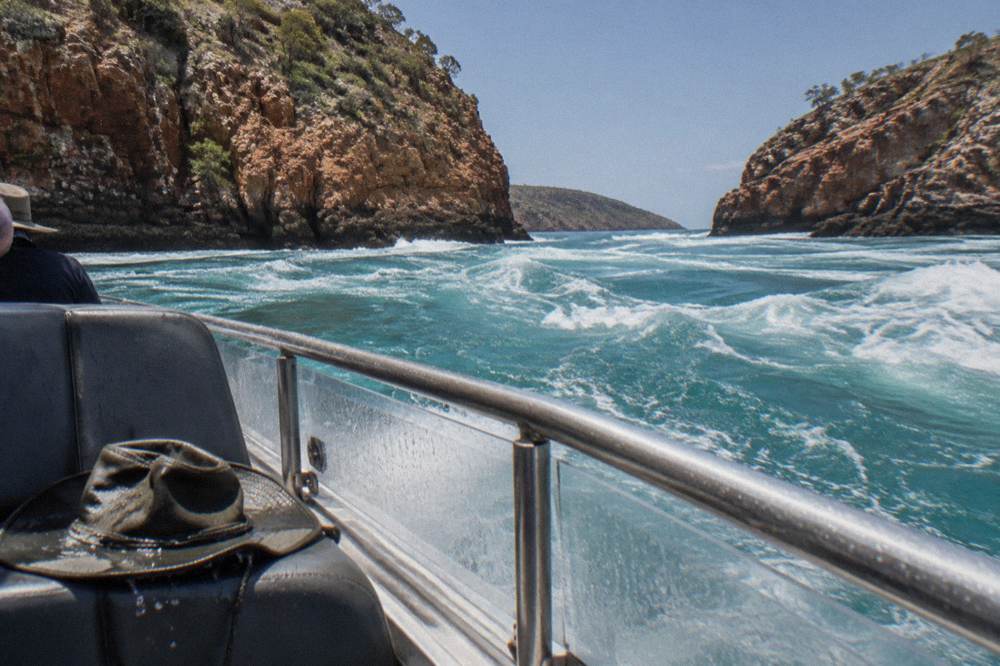
Tide timing deserves the final word. The operator's calendar excludes neap-tide dates entirely, and mid-tide dates run calmer while spring tides produce the strongest flow through the wide gap. Only the wide gap is traversed; the narrow gap has been closed since 2022 and guests view it from a safe distance. As the operator's page puts it, "respecting local Indigenous beliefs, we only traverse the Wide Gap (first set of Falls) and do not go through the Narrow Gap (second set of Falls) however guests will see the narrow gap at a safe distance."
The wider question of how long trips last, what the wet season looks like from town, and whether a full expedition is worth the fare is covered across this site. On this site, Horizontal Falls Tours keeps the full roster of seaplane, scenic flight and cruise options with live pricing, so you can see which departure windows remain open on your dates before you plan anything else around them.
Booking Windows, Prices And How Far Ahead To Commit
Dry-season Kimberley product sells months ahead, with June and July the tightest months to secure, and prices sit in clearly separated brackets that run from A$780 non-stop flyovers up to the A$24,950 per person six-day helicopter safari at the top of the roster. At that top end, the 6-Day West Kimberley Helicopter Safari Tour ex. Broome from Ventur Atlas runs from A$24,950 per person, rated 4.9 from 9 reviews, with helicopter, seaplane and power boat modes and a listing that shows no refund option. At the accessible end, the same season sells non-stop scenic flights from A$780 per person.
For most readers the practical bracket runs from the A$1,075 Cygnet Bay day cruise to the A$1,910 per person three-day eco-tent package, which covers the day cruises and the flyover-with-landing days in between. The rule of thumb across the roster: the more hours and the more modes of transport, the higher the from-price climbs, and fuel surcharges on the Air Kimberley and Fly Broome flights are extra costs listed under exclusions, A$33 and A$45 per person respectively.
Timing your booking is about matching the two calendars. Choose a month between May and September for full availability; choose April or October only after confirming your specific tour still runs; then choose a tide date that is not a neap. Commit early for mid-season, since small-group caps of 10 to 15 on the air tours and 40 on the cruise mean a handful of seats per departure. Every figure here moves with date and group size, so treat from-prices as the floor, not the quote.
Common Questions About Timing A Kimberley Cruise
What Is The Best Time Of Year To Do A Kimberley Cruise?
The dry season, roughly April to September, with expedition operators sailing from March or April to September or October. April and May deliver the strongest post-wet waterfall flow, June to August the most stable weather, and September and October warmer, quieter late-season conditions.
Do Kimberley cruises run all year?
No. The wet and cyclone season, roughly November to April, closes the coast to scheduled cruise itineraries. Operators such as Coral Expeditions sail March to September, and Kimberley Quest runs from about March to October. The Horizontal Falls tour season similarly runs within the dry months, ending between mid-October and 31 October depending on the departure.
What is the hottest month for a Kimberley cruise?
Of the months cruises actually run, September and October are the warmest. Broome's mean daily maximum reaches 32.0 C in September and 33.0 C in October, and Derby reaches 37.4 C in October. July is the coolest sailing month at a 29.0 C mean maximum in Broome.
Does the tide affect when I can visit Horizontal Falls?
Yes. Falls tours do not run on neap-tide dates, when little water moves through the gaps. Mid-tide dates are calmer and spring tides produce the strongest flow. Tides in the area reach up to 11 m, so the tide calendar matters as much as the month you choose.
Is April too early for a Kimberley cruise?
Not necessarily. April sits inside the expedition season and operators market it around post-wet waterfall flow. On the falls side, the Broome afternoon half day and the Dampier Peninsula full day only open on 29 April, and Derby departures start 5 May, so verify your specific tour's dates before booking an April trip.
Can I book a Kimberley day cruise at short notice?
Sometimes, but do not count on it in peak months. Group sizes are capped, at 40 on the Kimberley Day Cruise and 10 to 15 on air tours, and the cruise listings are non-refundable or may be non-refundable, so a late booking still needs a committed date. June and July fill furthest ahead.