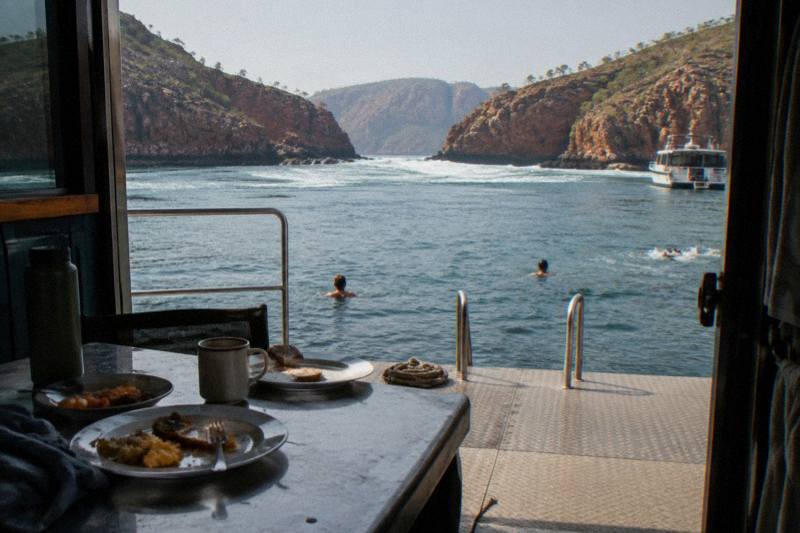
Is Horizontal Falls Safe? Accident History And Operator Practice
The tides at Talbot Bay are among the most powerful in Australia, and the official safety record there is genuinely serious. Here is what the regulators, the operators and the accident history actually say, so the safety question can be answered with facts rather than folklore.
Short answer
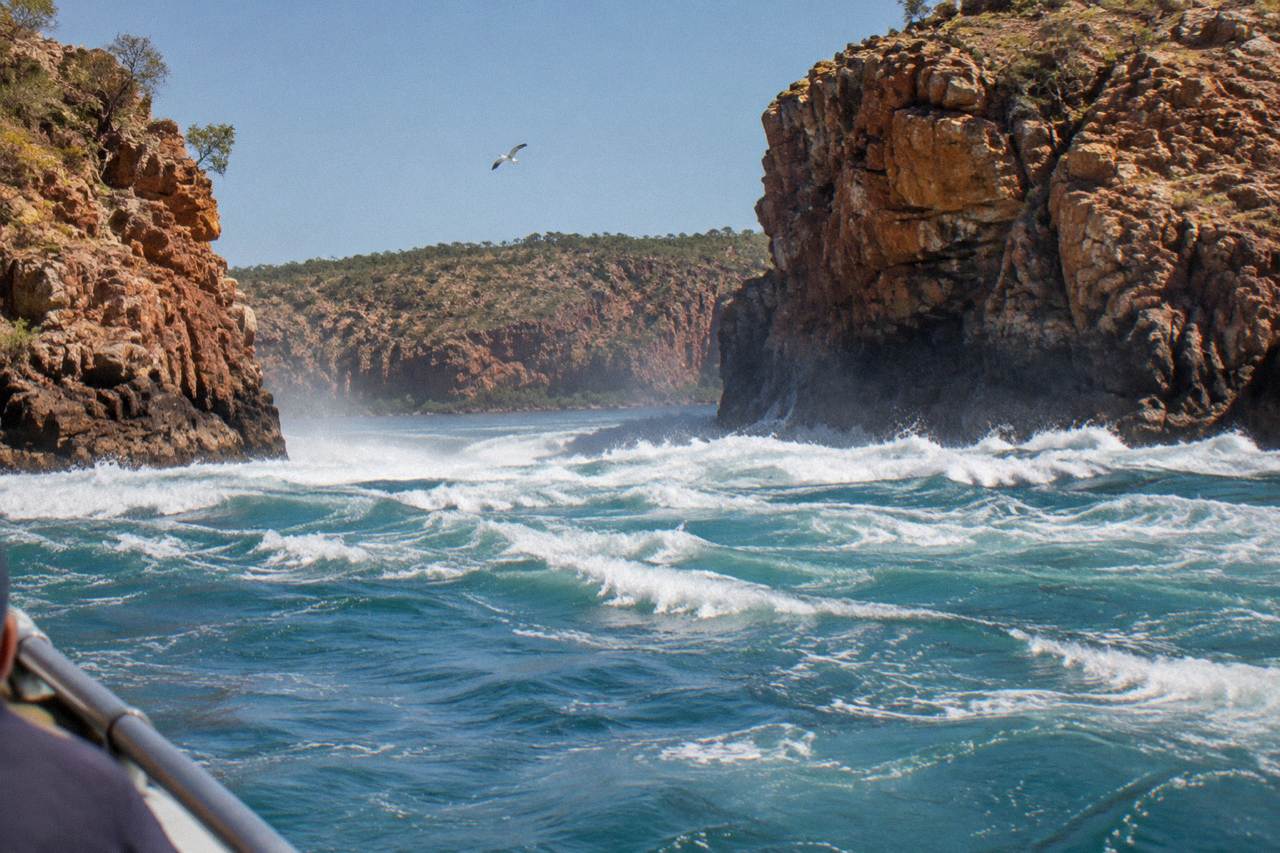
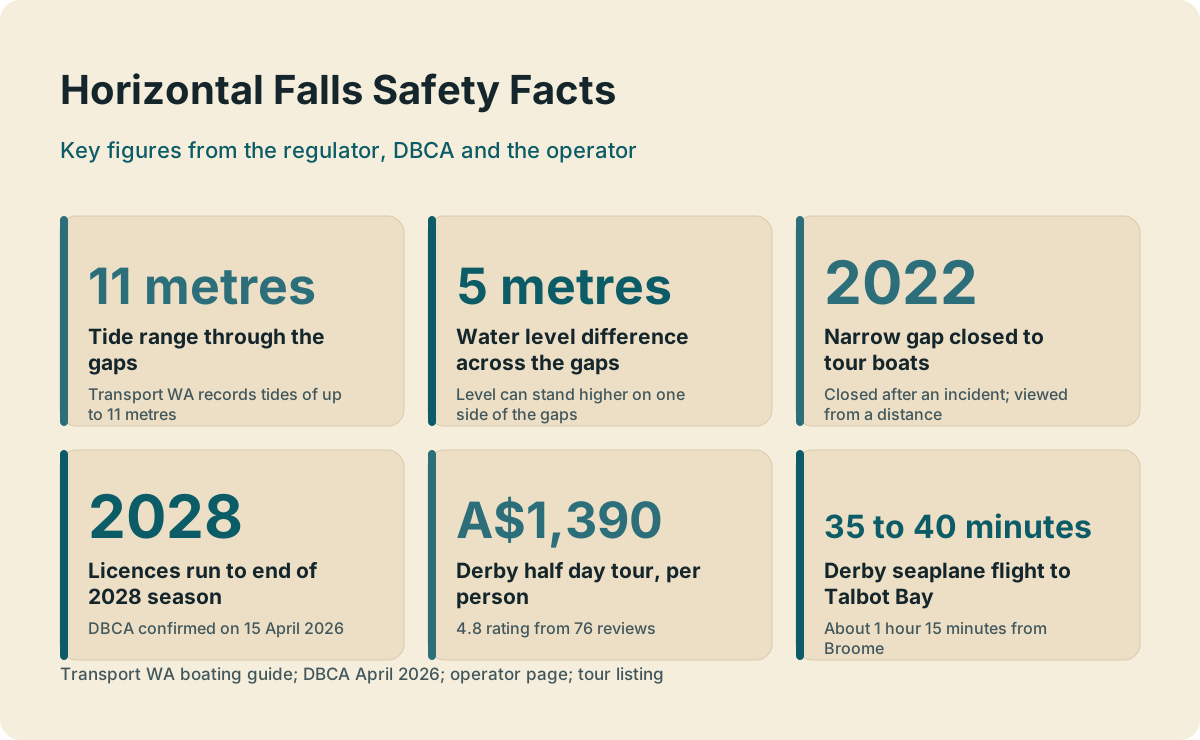
Yes, for almost everyone who visits on a licensed tour. Tides at Talbot Bay reach up to 11 m and the water level can differ by up to 5 m either side of the gaps, which is why recreational vessels are officially advised not to enter. The narrow gap has been closed to tour boats since 2022; licensed operators traverse the wide gap only, through to the end of the 2028 tourism season.
The water at Garaan-ngaddim, the Horizontal Falls, does not behave like an ordinary rapid. Tides of up to 11 metres push through two narrow gaps in the McLarty Range in Ganbadba, Talbot Bay, and the water level can stand up to 5 metres higher on one side than the other. WA's marine safety regulator describes the flow as dangerous, unpredictable and turbulent, and advises recreational and non-specialist vessels not to enter when the tide is rushing. Yet thousands of visitors each year see the falls on licensed tours and come home with photographs, not injuries. This guide separates the real risks, the ones regulators publish warnings about, from the managed risks that licensed operators build their whole schedules around. It draws on the Transport WA boating guide, the Department of Biodiversity, Conservation and Attractions (DBCA), and the practice the tour operators themselves publish. For the wider planning picture, start with the guide to tours from Broome.
Is Horizontal Falls Safe For Tourists?
For tourists on licensed tours, yes, with conditions worth understanding. The danger at the falls is concentrated in the water, specifically in the turbulent tidal flow through the gaps, and licensed tours manage that danger with purpose-built boats, local crews and tide-based scheduling. The risks that regulators warn about apply chiefly to private and recreational vessels, which are formally advised not to enter the gaps when the tide is running. Tour operations sit under a different regime entirely.
That distinction is the heart of the matter. The Transport WA boating guide for the area, published by the state's marine authority, is written for people taking their own boats into Talbot Bay. It notes that tides reach up to 11 metres, that the water level may vary by up to 5 metres on either side of the gaps, that the flow is dangerous, unpredictable and turbulent, and that death and serious injury have occurred. It also records an anchoring restricted area nearby. None of that is hidden; it is the public safety record, and any honest article about visiting the falls should print it.
What the same record does not say is that licensed tourism is dangerous. Commercial operations at the falls run under licence from DBCA in the jointly managed Lalang-gaddam Marine Park, with Dambimangari people as Traditional Owners. Operators work the tide tables rather than against them: the seaplane operator's own plan-your-visit page states that tours do not run on neap-tide dates, when the water is at its slackest and least spectacular, and that spring tides bring the strongest flow. Scheduling around the tide is the first and most important safety control, not a marketing detail.
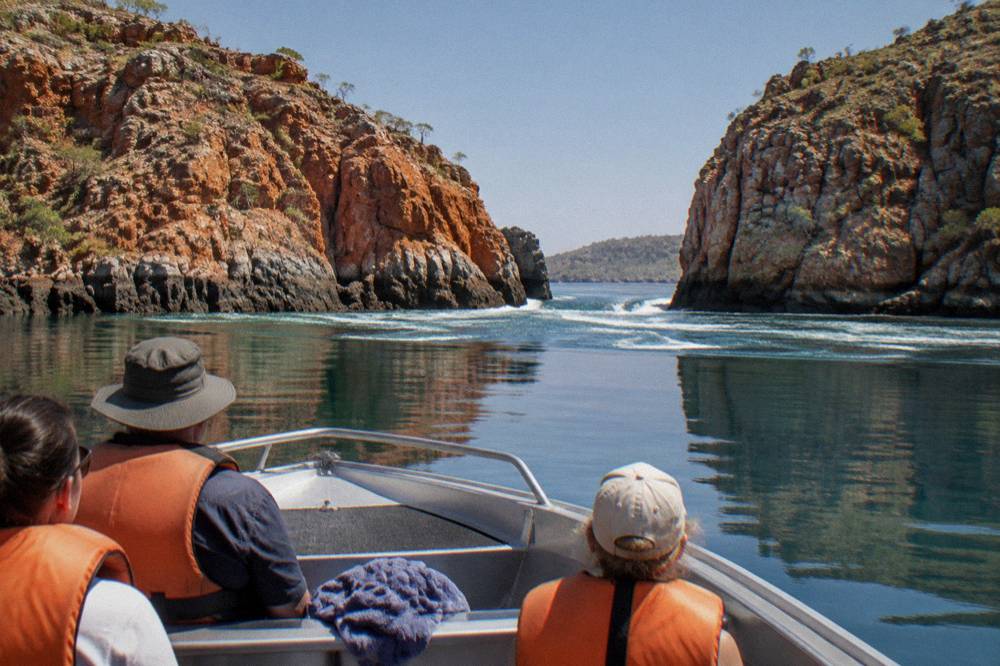
The second control is where the boats go. Since 2022, tour boats have not entered the narrow gap at all. The operator's page puts it plainly: respecting local Indigenous beliefs, the operator only traverses the wide gap, the first set of falls, and does not go through the narrow gap, the second set, though guests see the narrow gap from a safe distance. That sentence is doing double duty as both a cultural practice and a safety measure, and it comes directly from the operator rather than from a summary.
| Safety question | Short answer | Source of the answer |
|---|---|---|
| Are the tides dangerous? | Yes: up to 11 m tides, up to 5 m water-level difference, turbulent flow | Transport WA boating guide |
| Are recreational boats allowed in? | Advised not to enter when the tide is rushing | Transport WA boating guide |
| Do tour boats use both gaps? | No: wide gap only; narrow gap closed since 2022 | Operator plan-your-visit page |
| Are tours currently licensed? | Yes, through to the end of the 2028 tourism season | DBCA, April 2026 |
| Has anyone been hurt? | Transport WA records death and serious injury have occurred in the area | Transport WA boating guide |
Read this alongside the full guide to the jet boat ride, which covers what the through-the-falls experience actually involves.
Why The Tides At Talbot Bay Are So Powerful
The Horizontal Falls are a tidal phenomenon, not a river rapid, and that changes the risk profile completely. King Sound, next door at Derby, has the largest tidal range in Australia, and each rising or falling tide forces enormous volumes of water through two narrow gaps in the McLarty Range. Transport WA records tides of up to 11 metres and warns the resulting flow is dangerous, unpredictable and turbulent, with water levels up to 5 metres apart on either side. If that turbulence makes you wonder about getting in the water yourself, our guide on where you can and cannot swim at Horizontal Falls explains which tour swim stops are safe and why the gaps themselves stay off limits.
The mechanics are simple enough to explain in a sentence: the tide heaps water on one side of the range faster than it can drain through the gaps, so the sea itself pours sideways through the rock like a horizontal waterfall. Simple mechanics do not mean gentle water. The state's own boating guide uses the word turbulent and pairs it with a recorded history of death and serious injury in the area. That history is why the narrow gap was closed to tour boats in 2022, a decision covered in the next section.
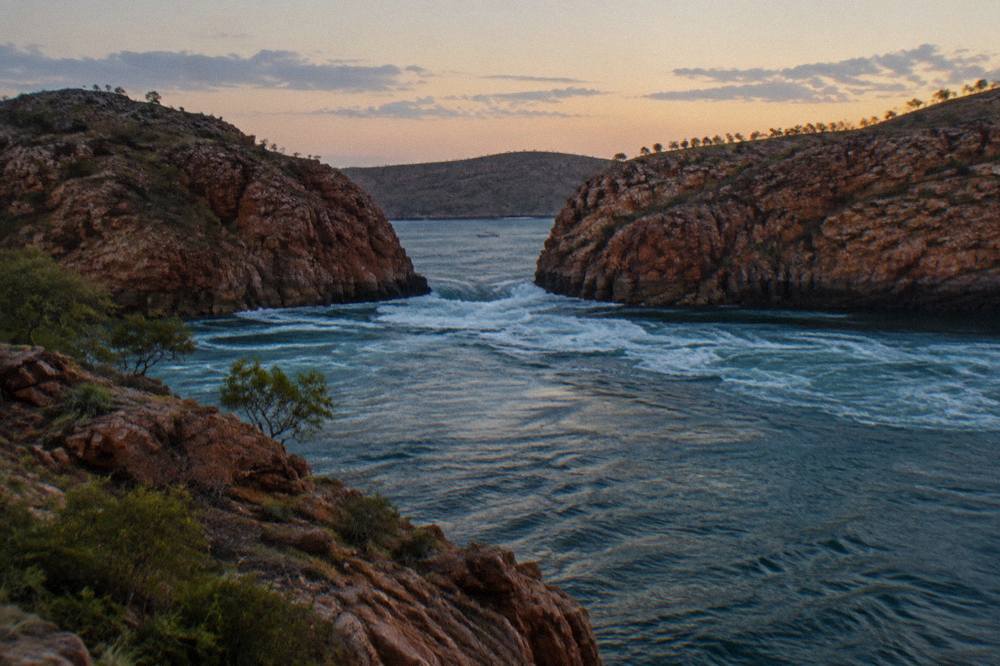
For a private boater, the practical advice from the regulator is blunt: recreational and non-specialist vessels are advised not to enter when the tide is rushing, and an anchoring restricted area exists in the vicinity. For a tour passenger, the same physics is the attraction. The operators who are licensed to traverse the wide gap do so in purpose-built power boats with local crews who run the same water through an entire season, and they schedule around the tide calendar rather than the clock. The seaplane operator states outright that tours do not run on neap-tide dates, when there is too little movement to show the falls at all.
The tide is also why timing questions dominate planning. The tides and timing guide explains the difference between spring, mid and neap tides in detail, and the best time to visit guide covers the season windows that follow the tide calendar.
If you are weighing which format suits your comfort level, these three are the site's most-booked ways to see the falls, from the full seaplane-and-boat experience to flyover and cruise options:
The Narrow Gap Closure Since 2022
The narrow gap at the Horizontal Falls has been closed to tour boats since 2022, following an accident, and no licensed operator goes through it. Guests still see the narrow gap, but from a safe distance, while boats traverse only the wide gap. The operator frames this as respecting local Indigenous beliefs as well as a safety practice, and DBCA has confirmed licensed operators may keep traversing the wide gap through to the end of the 2028 tourism season.
That closure is the single most important fact in the accident history, and it is worth stating precisely. The facts in the public record are these: the narrow gap closed in 2022 following an incident, tour boats have not entered it since, and a 2023-era review on one listing notes jet boats were not operating after the earlier incident. Beyond that, this article deliberately does not detail the accident; the verified safety record that matters to a prospective visitor is the closure and the practice that replaced it.
The current operator practice, quoted from the seaplane operator's plan-your-visit page, is that the company only traverses the wide gap and does not go through the narrow gap, though guests see the narrow gap at a safe distance. Two gaps, one traversed, one observed. Any tour description that implies boats run both gaps is out of date.
What happens after 2028 is a live policy question, but not an open-ended one. DBCA confirmed on 15 April 2026 that existing licensed tour operators may continue traversing the wide gap through to the end of the 2028 tourism season, while a collaborative transition continues toward Dambimangari-led cultural tourism. The same announcement committed $5 million through the 2026-27 State Budget: $470,000 for a business case and feasibility study led by DBCA, and $4.5 million for infrastructure delivery. No official post-2028 ban date has been published; access beyond that point is to be reassessed. The DBCA release carries the full wording.
| Gap | Current status | Who says so |
|---|---|---|
| Wide gap (first set of falls) | Traversed by licensed operators until the end of the 2028 tourism season | DBCA, April 2026 |
| Narrow gap (second set of falls) | Closed to tour boats since 2022; viewed from a safe distance | Operator page; DBCA |
| Recreational vessels | Advised not to enter the gaps when the tide is rushing | Transport WA boating guide |
Safety doubt is usually the last objection before booking, and it is a fair one given the regulator's language. If you have read this far and feel reassured rather than alarmed, the half day seaplane tour from Broome is the classic way to do this safely: a licensed seaplane flight to Talbot Bay, about 1 hour 15 minutes from Broome, and a crewed power boat ride through the wide gap. It carries a 4.8 rating from 727 reviews, from A$1,495 per person, and its cancellation terms are final, so read the booking page before committing.
For readers who want the fuller story of what changed and what continues, the blog post on whether Horizontal Falls tours are still operating tracks the current state of play.
How Licensed Seaplane Operators Manage Risk
Licensed operators manage the falls through four layers of control: tide-based scheduling, purpose-built vessels, local crews and licensed access. The seaplane operator publishes that tours skip neap-tide dates entirely, that only the wide gap is traversed, and that guests view the narrow gap from a distance. DBCA licenses the traversal itself, which means the state's park authority, jointly managing the marine park with Dambimangari Traditional Owners, oversees who may run boats through the gap at all.
Consider each layer in turn. Tide scheduling means the calendar, not customer demand, decides departure dates; neap tides, when the water barely moves, are simply not sold. Vessel design means power boats built for the conditions rather than adapted pleasure craft. Crew knowledge means skippers who run the same body of water day after day through a season. And licensing means the whole arrangement exists inside Lalang-gaddam Marine Park's joint management framework, which DBCA administers with the Traditional Owners. A private boater has none of these layers, which is exactly why the regulator's warning is aimed at them.
The half day seaplane tour from Broome is a good worked example of the model. Horizontal Falls Seaplane Adventures runs it with hotel pickup, a seaplane to the floating pontoon base at Talbot Bay, which has no road access at all, and the power boat ride through the wide gap. A guest review on the listing describes it as well organised from pickup to drop off, with an outstanding flight over the Kimberleys. The full day 4x4 Dampier Peninsula option from the same operator adds the overland leg and runs to a ten-hour day, from A$1,650 per person with a 4.8 rating from 191 reviews. If you're arriving without your own vehicle, hotel pickup solves the tour side of things, and our guide to getting around Broome car-free covers the rest of the town.
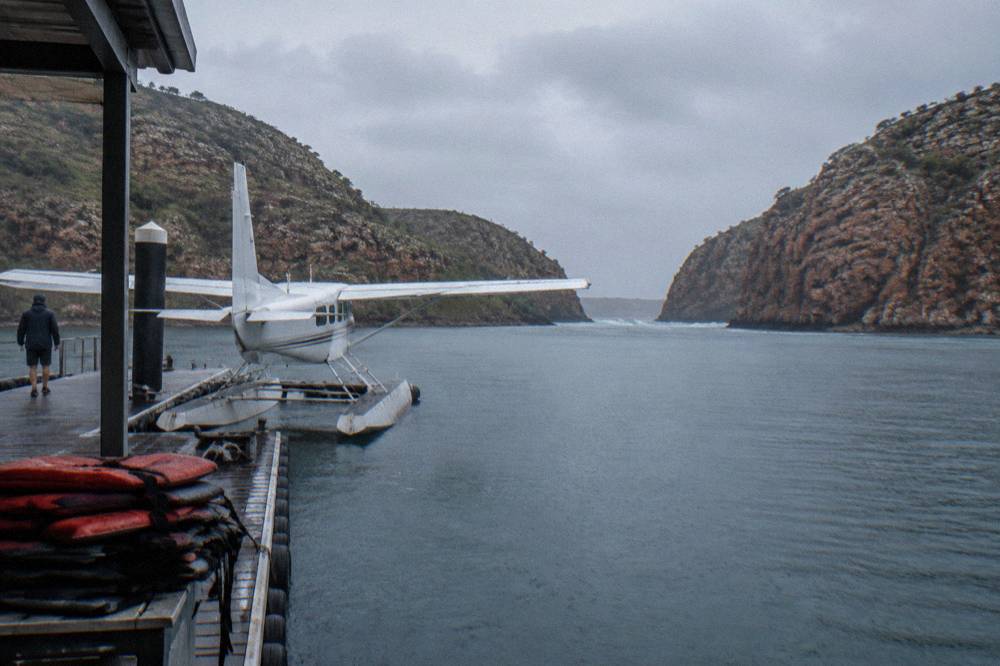
Derby departures shorten the exposure, relatively speaking: the seaplane leg from Derby to Talbot Bay takes about 35 to 40 minutes against roughly 1 hour 15 minutes from Broome, so the Derby half day tour, from A$1,390 per person with a 4.8 rating from 76 reviews, spends less time in the air and the same structured time on the water. The tours from Derby guide compares those departures in full.
One review from that Derby tour, verbatim from the listing: "Great experience absolutely loved it. From pickup to drop off all well organised. Outstanding flight over the Kimberleys and of course an unforgettable waterfall experience." Reports like that reflect the operational discipline described above rather than luck.
Are The Scenic Flights Over The Falls A Safer Option?
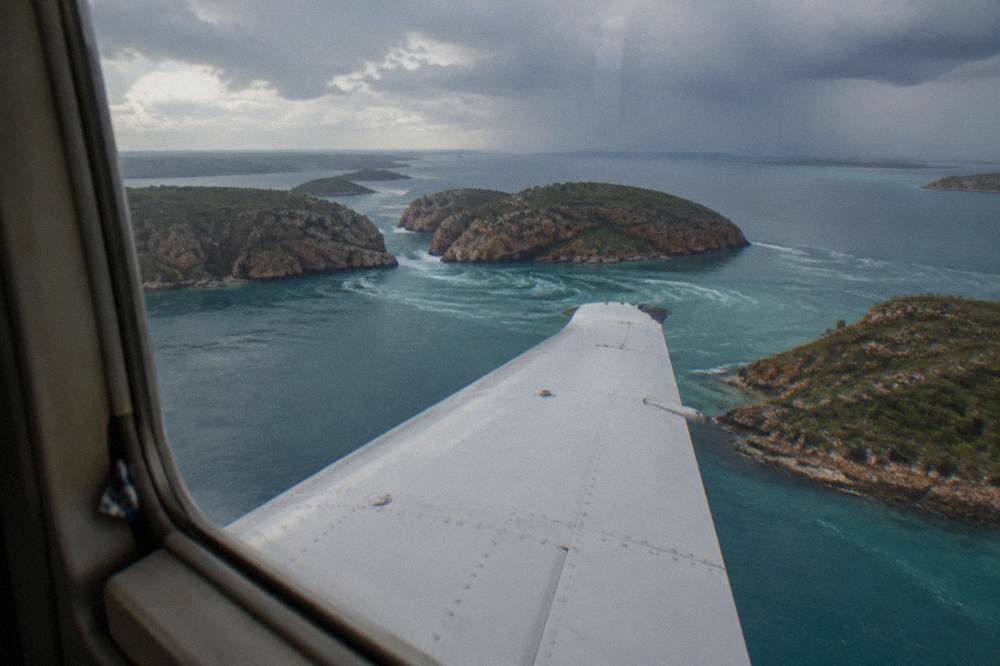
For many travellers, yes: the fixed-wing flyover tours never enter the water at the falls at all, so the turbulent-gap risk simply does not apply. Fly Broome, Air Kimberley and Broome Aviation all run scenic flights over the falls, usually paired with a landing at Cygnet Bay on the Dampier Peninsula. The safety conversation for these tours is ordinary small-aircraft safety under Australian aviation rules, not tidal flow.
That is a meaningful category difference. A flyover passenger never boards a boat at Talbot Bay; the falls are seen from the air, where the horizontal white water reads clearly against the red rock. The Buccaneer Explorer dry season tour from Air Kimberley runs about six hours, from A$895 per person plus a fuel surcharge of A$33 listed under exclusions, and carries a 4.9 rating from 716 reviews. One guest review calls the flight a bucket list experience with commentary praised alongside a beach swim and a hatchery tour. Free cancellation is offered on that listing, up to 24 hours before travel. If that beach swim sounds appealing, our guide to where swimming is allowed at Horizontal Falls explains why the falls themselves stay off limits.
The same logic applies to the Fly Broome equivalent, from A$895 plus a A$45 per person fuel surcharge, 4.9 from 285 reviews, and to the longer Cygnet Bay Explorer, a nine-hour day from A$1,220 with a 5.0 rating from 317 reviews that lands for a Cygnet Bay tidal tour. It is a boat trip, but on King Sound and the pearl farm's waters, not through the falls. The scenic flights guide compares all seven flyover options.
| Tour format | Enters the falls gaps? | Main safety considerations |
|---|---|---|
| Seaplane + power boat | Yes, wide gap only | Tide scheduling, crewed purpose-built boat |
| Fixed-wing flyover | No, aerial viewing only | Standard small-aircraft operations |
| Flyover + Cygnet Bay tidal tour | No falls boat ride; boat tour at Cygnet Bay | Small aircraft plus sheltered-water boat tour |
| Day cruise with tender boats | Tender boats to the falls, listing wording | Vessel and tender operations, long day on water |
Whichever format you lean toward, the seaplane versus boat versus cruise comparison lays out the trade-offs side by side.
Cruise And Tender Boat Safety At The Falls
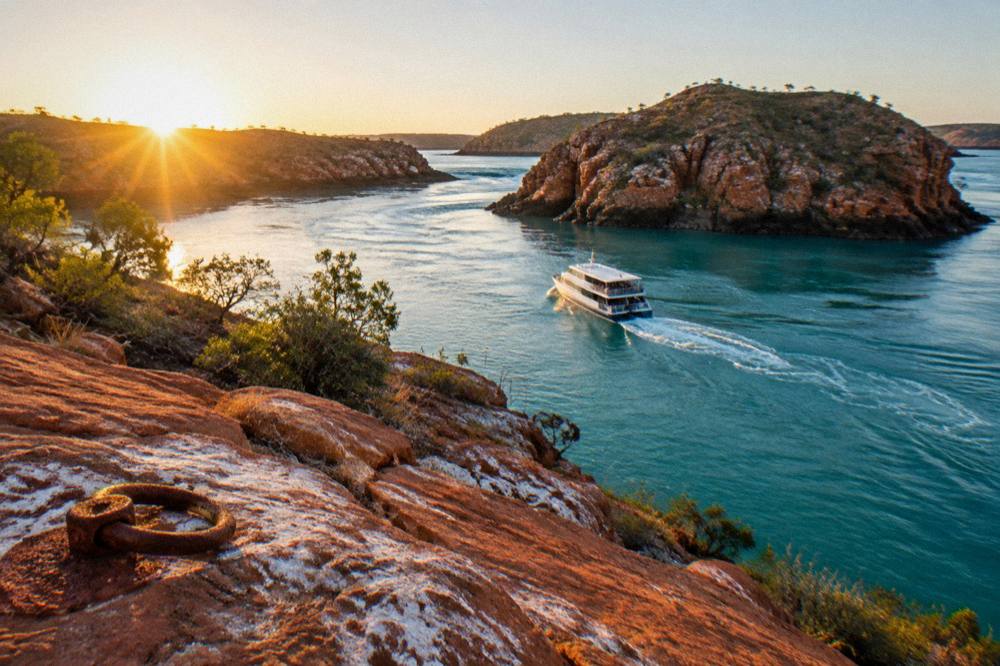
The cruise products reach the falls by sea rather than air, and the listing wording matters here: Kimberley Day Cruise tours run a purpose-built vessel to Talbot Bay with tender boats to the Horizontal Falls. The listing does not state that the vessel itself enters the gap, and this article will not claim it does. The safety profile is a long day on sheltered and open water with an experienced crew, up to 40 guests per departure.
The full day cruise from Broome runs 13 hours 30 minutes with hotel pickup from 4:30 am, from A$1,275 per person, and carries a 4.9 rating from 177 reviews. A guest review on the listing praises the quality craft, the knowledgeable crew and the food, calling it well worth the money. The Cygnet Bay departure version cuts the day to 10 hours, from A$1,075 with a 5.0 rating from 103 reviews, though it has no pickup; you make your own way to Cygnet Bay Pearl Farm on the Dampier Peninsula, about 200 to 220 km from Broome on the now-sealed Cape Leveque Road.
For passengers, the honest framing is this: a cruise day involves more hours on the water and more open-water transit than a seaplane day, and it delivers the falls from a large vessel and its tenders rather than from a fast power boat inside the gap. Neither is reckless; they are different risk appetites. The Kimberley cruises guide expands on the expedition-cruise world for multi-day options.
There is also the Cygnet Bay Explorer route worth naming, since it blends the categories: an Air Kimberley flight, a falls flyover, and the pearl farm's own boat tour, a nine-hour day with free cancellation up to 24 hours. One verbatim review from that tour calls it fabulous but long and not cheap, worth it for the pilot and the learning alike. That tour makes a sensible middle path for a reader who wants water time without any falls-gap transit at all.
What The Official Sources Actually Say
Transport WA and DBCA are the two authorities whose words matter, and both are public. Transport WA's boating guide records tides up to 11 m, water-level differences up to 5 m, dangerous unpredictable turbulent flow, prior death and serious injury, and advice that recreational vessels not enter when the tide is rushing. DBCA's April 2026 release confirms licensed wide-gap traversal through the end of the 2028 tourism season and the funded transition toward Dambimangari-led cultural tourism.
Neither authority says tourism at the falls is unsafe. The Transport WA guidance is written for private vessels, the one group nobody is guiding. DBCA's announcements are about the long-term shape of access: $5 million in the 2026-27 State Budget, of which $470,000 funds a feasibility and business case led by DBCA and $4.5 million funds infrastructure, all aimed at culturally appropriate Traditional Owner-led experiences in the marine park the state jointly manages with Dambimangari. The Landscope article describes the same two-year extension of licensed traversal, and the boating guide itself is a short read worth doing before any independent Kimberley boating plans.
The seaplane operator's own page adds the operational detail the government documents do not carry: tours skip neap-tide dates, mid-tide dates are calmer, and spring tides produce the strongest flow. In other words, the commercial calendar is built directly on the safety physics the regulator describes.
Who Should Reconsider A Horizontal Falls Tour?
Most travellers who can board a small aircraft or boat can take a licensed tour safely, but expectant mothers, people with significant mobility limits, anyone with a serious back condition, and those whose doctor restricts small-boat travel should think twice. Long days, from six hours by seaplane up to 13 hours 30 minutes cruising, plus small aircraft with step access, make checking with the operator first a smart move.
This is general framing, not medical advice, and the article will not pretend to give any. The practical step is to read the listing's requirements section and contact the operator directly with any condition that concerns you; operators answer these questions daily and would far rather answer them before a booking. The full day Dampier Peninsula tour, for instance, is a ten-hour day mixing 4x4, seaplane and two boat legs, a guest review summing it up as bus, plane, boat, boat, plane; wonderful variety, but a real day out.
| Situation | Worth checking first | Why |
|---|---|---|
| Pregnancy | With the operator and your doctor | Small aircraft and power boat motion |
| Limited mobility | With the operator | Pontoon transfers and boat boarding |
| Serious back condition | With the operator | Power boat rides can be bumpy on stronger tides |
| Very young children | With the operator | Minimum-age rules vary by listing |
| Sea or air sickness | Your own preparation | Six-hour to 13-hour days depending on the format |
Age and family questions come up constantly; the what to bring guide covers the practical side of preparing for a long day, and the day trip or overnight guide helps if the half-day formats feel like too compressed a schedule.
A Practical Safety Checklist Before You Book
Five checks cover almost everything a cautious traveller needs: confirm the tour category, since only seaplane-and-jet-boat and cruise listings involve falls water access; read the cancellation terms, which differ by listing and are final on several; check the fuel surcharge on the flyover tours; verify the season window for your dates; and ask the operator directly about any health or mobility question. None of this takes more than twenty minutes. If you're still sorting out how you'll reach the departure point on tour day, our guide to getting around Broome without a car covers the town bus, taxis, and hotel pickup options that handle most of it.
| Check | Where to look | What you are confirming |
|---|---|---|
| Boat ride or flyover | The listing's inclusions | Whether the tour enters the wide gap or views the falls from the air |
| Cancellation terms | The booking page | Final sale versus free cancellation; cutoffs differ per listing |
| Extra costs | The exclusions section | Fuel surcharges: A$45 Fly Broome, A$33 Air Kimberley dry-season tours |
| Season window | The operator's plan-your-visit page | 2026 windows run roughly March to October depending on the tour |
| Health questions | The operator directly | Mobility, pregnancy, age minimums, medical fit for small aircraft or boats |
One pattern worth naming: cancellation rules on this roster genuinely vary, so never assume. The three seaplane-and-boat listings and the Kimberley Day Cruise listings are non-refundable or near enough, per their own pages; Fly Broome and Air Kimberley list free cancellation up to 24 hours; Broome Aviation lists free cancellation up to six days. Read the specific listing you are about to pay for. The cost guide breaks the full price picture down, surcharges included.
Cancellation flexibility is one place where the flyover category quietly wins for nervous bookers: the Buccaneer Explorer dry season listing allows cancellation at no cost, while the seaplane tours are final sale. That asymmetry is worth weighing alongside the safety question itself.
So, is Horizontal Falls safe? On the licensed tours, run to a tide calendar, through a gap the state has licensed for traversal until the end of the 2028 season, with the narrow gap closed since 2022 and viewed only from a distance, the answer for the overwhelming majority of visitors is yes. The falls demand respect, and the entire commercial apparatus around them is built on exactly that respect. That is the honest reading of the record, and it is the reading Horizontal Falls Tours would stand behind for any reader deciding whether this is their trip.
These three options cover the range of risk appetites discussed above, from the full boat ride to pure flyover to the cruise format:
Common Questions About Horizontal Falls Safety
Is Horizontal Falls safe for tourists on organised tours?
Yes, for most visitors. Licensed tours schedule around the tides, traverse only the wide gap, and use purpose-built boats and local crews. The official warnings about dangerous, unpredictable flow are aimed at recreational and non-specialist vessels.
Why is the narrow gap closed?
The narrow gap has been closed to tour boats since 2022 following an accident. Operators view it from a safe distance while traversing only the wide gap, a practice the operator also frames as respecting local Indigenous beliefs.
Can private boats go through the Horizontal Falls?
Transport WA advises recreational and non-specialist vessels not to enter the gaps when the tide is rushing, records tides up to 11 m and water-level differences up to 5 m, and notes an anchoring restricted area. Traversing the wide gap is a licensed commercial activity.
Are the flyover tours safer than the boat tours?
The fixed-wing flyover tours never enter the falls water at all, so the turbulent-gap risk does not apply. Their safety profile is ordinary small-aircraft operation. Some, like the Cygnet Bay tours, add a sheltered-water boat trip at the pearl farm.
Will boat rides through the falls still run after 2028?
DBCA has confirmed licensed operators may traverse the wide gap through to the end of the 2028 tourism season. Post-2028 access is to be reassessed collaboratively, and no official post-2028 ban date has been published.
Do tours run in rough conditions or on every tide?
No. The seaplane operator states tours do not run on neap-tide dates, that mid-tide dates are calmer, and that spring tides bring the strongest flow. Weather and operator schedules decide each departure, so no tour is ever promised to run.